 Bulgaria
About
Rila Monastery, officially the Monastery of Saint John of Rila, stands as Bulgaria's largest and most significant Eastern Orthodox monastery. Founded in the 10th century by the hermit Saint John of Rila, it has weathered centuries of history, from Byzantine rule to Ottoman occupation, and remains a living spiritual center. The monastery sits in the southwestern Rila Mountains, about 117 kilometers south of Sofia, in a deep valley of the Rilska River at 1,147 meters above sea level. Its setting within Rila Monastery Nature Park adds to its serene, almost otherworldly atmosphere.
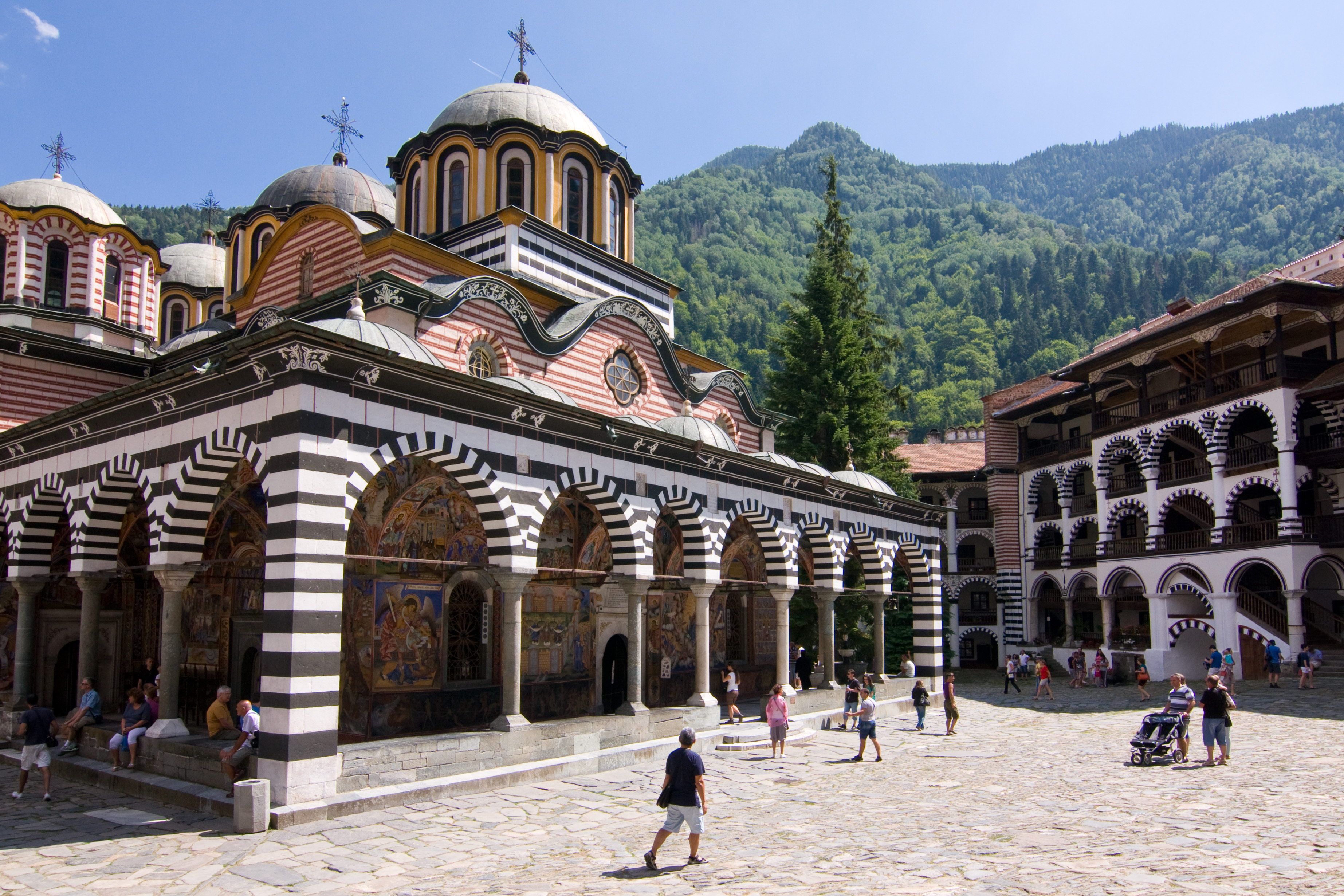
The complex is a masterpiece of Bulgarian National Revival architecture, with its striking striped arches, vivid frescoes, and the iconic Hrelyo Tower, which dates from the 14th century. The main church, the Church of the Nativity of the Virgin, is adorned with murals by masters like Zahari Zograf, whose work in the 19th century helped cement the monastery's reputation as a center of Orthodox art. While not a film or TV production, this UNESCO World Heritage Site has served as a backdrop for numerous projects and draws hundreds of thousands of visitors annually, making it a cultural landmark of immense historical and artistic value.
Mission
Rila Monastery exists to sustain the ascetic and communal life of Orthodox monks, following the tradition of its founder Saint John of Rila. Its purpose is to provide a space for prayer, spiritual growth, and the preservation of Orthodox Christian teachings. Over the centuries, the monastery has also taken on the role of a guardian of Bulgarian culture, language, and literature, especially during periods of foreign domination. Today, it continues to serve both as a living monastery and as a place where visitors can encounter the depth of Bulgarian religious heritage and history.
History
The story of Rila Monastery begins in the 10th century, when Saint John of Rila, a hermit known for his piety, settled in a cave in the Rila Mountains. After his death around 946, his disciples and followers formed a monastic community at the site, which gradually grew into a fortified complex. The monastery survived the Byzantine conquest of Bulgaria and later the Ottoman occupation, becoming a vital refuge for Bulgarian culture and Orthodox Christianity during the long centuries of foreign rule.
In the 14th century, a local feudal lord named Hrelyo built a defensive tower, which still stands today and bears his name. This was a period of relative prosperity, but the monastery suffered damage and decline in the following centuries. The 19th century brought a major reconstruction, funded by wealthy Bulgarians and completed in the National Revival style. The main church, the Church of the Nativity of the Virgin, was erected between 1834 and 1837, with frescoes painted by Zahari Zograf and other artists. This period marked the monastery's transformation into the architectural masterpiece seen today.
Throughout the Ottoman era, the monastery operated a school and a library, preserving Bulgarian manuscripts and religious texts. It became a symbol of national identity, and after Bulgaria's liberation in 1878, it continued to play a prominent role in the country's religious and cultural life. In 1983, UNESCO recognized its universal value by inscribing it on the World Heritage List. Today, the monastery remains an active religious community, welcoming pilgrims and tourists from around the world.
Subdivisions
Church of the Nativity of the Virgin
The main church, built in the 19th century, known for its extensive frescoes and iconostasis.
Hrelyo Tower
A 14th-century defensive tower, the oldest surviving structure in the complex.
Museum of the Monastery
Houses a collection of icons, manuscripts, and religious artifacts.
Monastic Living Quarters
Residential buildings with the characteristic striped arches, housing the monks and guest facilities.
Notable People
Saint John of Rila
Founder · 10th century
Hermit whose ascetic life and relics established the monastery as a holy site.
Zahari Zograf
Iconographer · 19th century
Painted major frescoes in the main church, contributing to the monastery's artistic fame.
Milestones
946
Death of Saint John of Rila; monastic community established at his hermitage.
1335
Construction of the Hrelyo Tower, the oldest surviving structure.
1834-1837
Construction of the main church, Church of the Nativity of the Virgin.
1983
Inscribed as a UNESCO World Heritage Site.
Sources
Organization Info
- Founded
- 946
- Headquarters
- Rila Mountains, Bulgaria
- Country
- Bulgaria
- Parent
- Bulgarian Orthodox Church
- Type
- Religious
- Founder
- John of Rila
- Elevation
- 1,147 meters above sea level
- Distance from Sofia
- 117 kilometers
Official Website
rilskimanastir.org
Join the community
fans discussing