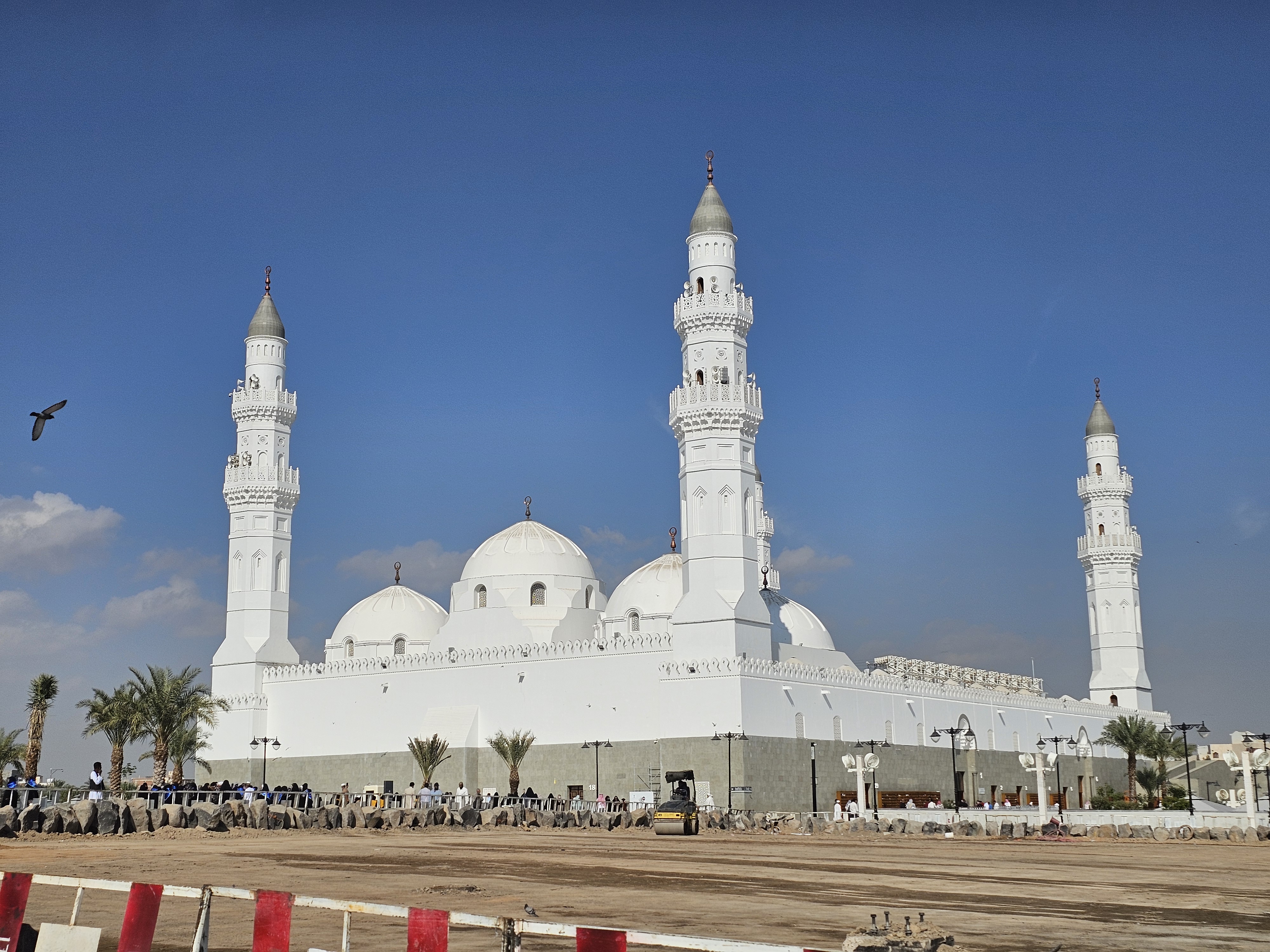
Quba Mosque
 Saudi Arabia
"The first mosque in Islam, founded by the Prophet Muhammad in Medina."
About
On the southern edge of Medina along the old Hijra Road stands a sanctuary that predates every other in Islamic history. The Quba Mosque was established in September 622 CE when the Prophet Muhammad arrived from Mecca during the Hijrah. Historical accounts state he stayed in the village of Quba for four days while waiting for Ali ibn Abi Talib to join him. During this brief stay, the Prophet personally laid the foundation stones with his own hands and worked alongside his companions to build the initial structure.
The original building was a simple rectangular enclosure made of mud bricks with a roof supported by palm trunks. It lacked a minaret entirely; the call to prayer originated from the rooftop. Despite its humble construction, this site marked the birth of the Muslim community as a distinct society based on faith and justice. For over fourteen centuries it has served as a living historical landmark welcoming pilgrims who seek to connect with the roots of their faith.
What distinguishes Quba today is not just its age but the spiritual reward associated with visiting it. Islamic tradition holds that performing two rak'ahs at this mosque equals the merit of an Umrah pilgrimage. This promise draws worshippers year-round, particularly during Hajj and Ramadan when the courtyard fills with visitors from every corner of the globe. The facility now operates under the General Presidency of the Affairs of the Two Holy Mosques which manages all major holy sites in Saudi Arabia.
Mission
The Quba Mosque serves as a center for worship, spiritual reflection, and community gathering while honoring its status as the first mosque built in Islam. It functions as a living historical landmark where Muslims can connect with the origins of their faith through prayer and education. The site also hosts Quran memorization programs and lectures to support religious learning within the community.
History
The story of the Quba Mosque begins with a journey. In September 622 CE the Prophet Muhammad left Mecca escaping persecution and heading for Yathrib which would later become Medina. On the way he stopped at the village of Quba about three kilometers from the city center. There he waited for Ali traveling separately and during those days he chose a plot of land to build a mosque. The Prophet personally carried stones and worked alongside his companions setting the foundation with his own hands.
The original mosque was a rectangular enclosure with walls of mud brick and a roof supported by palm trunks. It had no minaret; the call to prayer was made from the rooftop. For the early Muslim community this humble structure was more than a prayer hall. It was the first gathering place where the new faith could be practiced openly and where the Prophet taught and led prayers.
Over the centuries the mosque was renovated and enlarged by various rulers. The Umayyad caliph Umar ibn Abd al-Aziz rebuilt it in the early 8th century adding a minaret. Later expansions came under the Abbasids and the Mamluks each leaving their mark. The Ottoman sultan Abdulmecid I carried out a major restoration in the 19th century giving the mosque a dome and more ornate details.
The most radical transformation happened in the 1980s under the Saudi government. The old structure was leveled and a completely new mosque rose in its place. Designed by the Egyptian architect Abdel-Wahed El-Wakil the new complex kept the traditional feel with its white marble and geometric patterns but scaled everything up. It now includes a large prayer hall a library and a courtyard that can accommodate over 20,000 worshippers. The minarets six in number are a distinctive feature visible from across the city.
Subdivisions
Main Prayer Hall
A large covered area equipped with modern air conditioning capable of holding thousands of worshippers simultaneously.
Courtyard
An expansive open space used for additional prayer, movement, and gathering during peak pilgrimage seasons.
Library
A dedicated section housing rare manuscripts and books regarding Islamic history, jurisprudence, and the mosque's heritage.
Museum
A facility displaying artifacts, maps, and historical documents that trace the evolution of the mosque from its founding to the present day.
Wudu Areas
Extensive ablution facilities designed to handle high volumes of visitors requiring ritual purification before prayer.
Notable People
Muhammad
Founder · 622
Laid the foundation stones with his own hands upon arrival in Quba during the Hijrah.
Umar ibn Abd al-Aziz
Restorer · Early 8th Century
Rebuilt the structure and added the first minaret to the mosque complex.
Abdulmecid I
Restorer · 19th Century
Oversaw a major restoration that introduced a dome and more ornate architectural details.
Milestones
622
Prophet Muhammad founds the Quba Mosque during his migration to Medina.
630
The Prophet visits the mosque regularly; a verse from the Quran (9:108) is revealed referring to a mosque founded on righteousness traditionally linked to Quba.
8th century
Umayyad caliph Umar ibn Abd al-Aziz rebuilds the mosque adding a minaret.
19th century
Ottoman sultan Abdulmecid I oversees a major restoration adding a dome.
1980s
The original structure is replaced by a larger modern mosque designed by Abdel-Wahed El-Wakil.
2026
Implementation of smart transit solutions including self-driving shuttles and advanced sound reinforcement systems installed in September.
Sources
Organization Info
- Founded
- September 17, 622
- Headquarters
- Quba District, Medina
- Country
- Saudi Arabia
- Parent
- General Presidency of the Affairs of the Two Holy Mosques
- Type
- Religious
- Founder
- Muhammad
- Significance
- First mosque in Islam
- Prayer merit
- Two rak'ahs equal an Umrah
Official Website
www.meeq.com.sa/
Join the community
fans discussing