 Iran
IranAbout
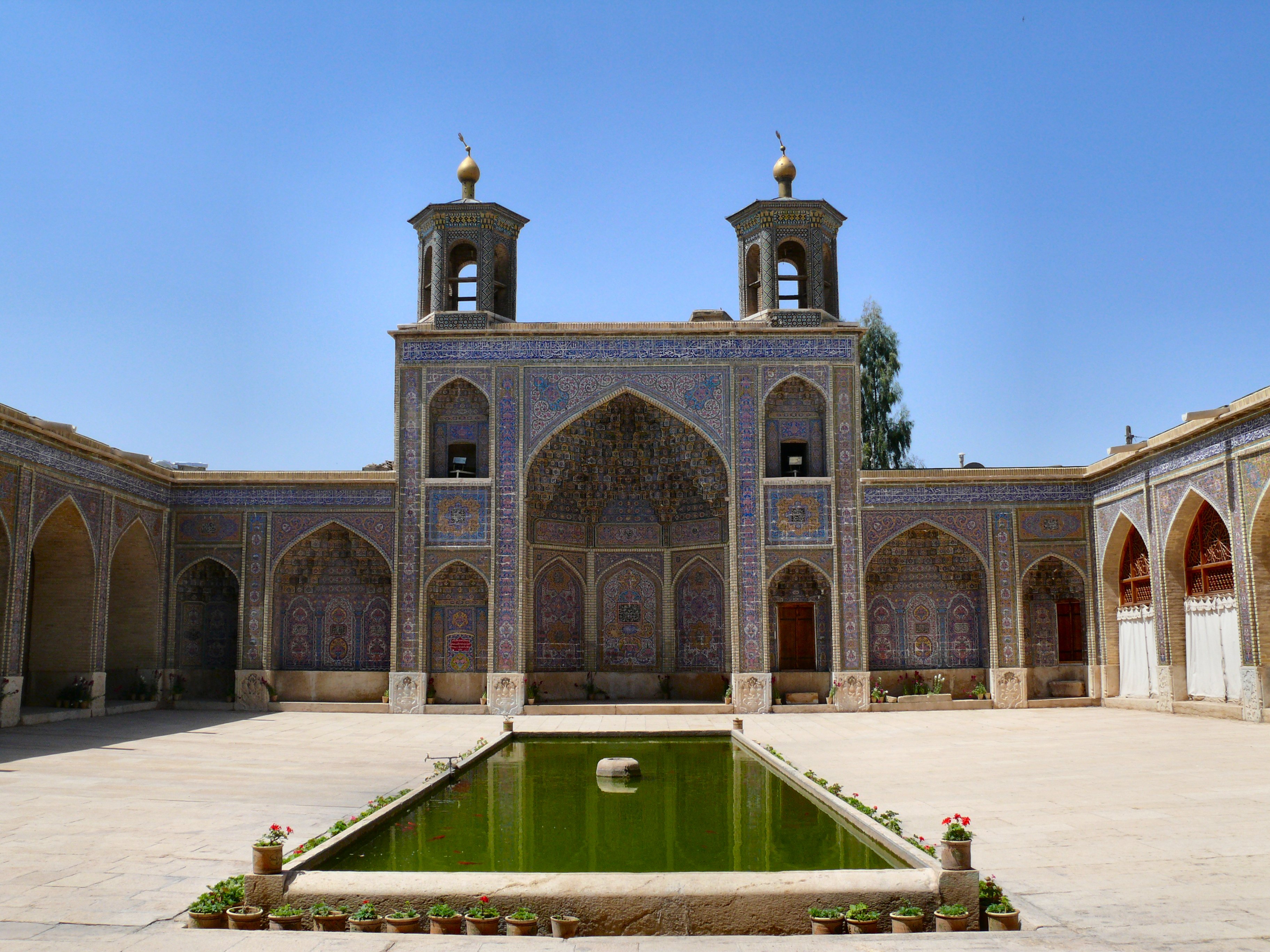
In the heart of Shiraz, Iran, stands a mosque that seems to have been painted with light itself. The Nasir-ol-Molk Mosque, often called the Pink Mosque for its rose-colored tiles, draws visitors from around the world who come to witness its famous stained glass windows. Completed in 1888 during the Qajar era, this place of worship sits in the historic Gowd-e Araban district, just south of Lotfali Khan Zand Street and next to the Shah Cheragh shrine. Its interior, filled with intricate tilework and colorful glass, has made it one of the most photographed buildings in the country.
The mosque was commissioned by Mirza Hasan Ali Nasir-ol-Molk, a wealthy Qajar nobleman, and designed by architects Mohammad Hasan-e-Memar and Mohammad Reza Kashi Paz-e-Shirazi. While it serves as an active mosque, its fame rests on a specific architectural feature: the winter prayer hall, where morning sunlight filters through stained glass, casting a kaleidoscope of colors across Persian carpets. Unlike grand imperial mosques built to awe, this one feels intimate, almost like a jewel box.
Though not a film or a franchise, the Nasir-ol-Molk Mosque has become a cultural icon, appearing in travel documentaries and countless social media posts. Its popularity has surged in recent years, making it a symbol of Iranian artistry. For those who visit, the experience is less about religious ceremony and more about witnessing a daily miracle of light and color.
Mission
The Nasir-ol-Molk Mosque serves as an active place of Islamic worship while also preserving and sharing the artistic heritage of Qajar-era Persian architecture. Its purpose extends beyond prayer, offering a space where visitors can experience the interplay of light, color, and design that defines the mosque's unique character.
History
Construction of the Nasir-ol-Molk Mosque began in 1876, during the rule of the Qajar dynasty, which governed Iran from 1785 to 1925. The project took roughly twelve years to complete, with the finishing touches applied in 1888. The mosque was the brainchild of Mirza Hasan Ali Nasir-ol-Molk, a nobleman whose name it bears, and the design came from the architects Mohammad Hasan-e-Memar and Mohammad Reza Kashi Paz-e-Shirazi.
From the start, the mosque was built to be a place of worship, but its creators also aimed to showcase the artistic possibilities of Persian tilework and glass. The winter prayer hall, with its large stained glass windows, was designed to capture the low morning sun and scatter it across the interior. This feature, more than any other, has come to define the mosque's identity.
Over the decades, the mosque remained a functioning religious site, but its reputation as a visual marvel grew slowly. In the early 21st century, the rise of social media and travel photography turned it into a global sensation. Images of the kaleidoscopic light displays spread across platforms like Instagram, drawing ever larger crowds. Today, the mosque welcomes both worshippers and tourists, and it stands as a testament to the craftsmanship of its era.
Notable People
Mirza Hasan Ali Nasir-ol-Molk
Founder and Patron · 1876-1888
Commissioned and funded the mosque's construction
Mohammad Hasan-e-Memar
Architect · 1876-1888
Co-designed the mosque
Mohammad Reza Kashi Paz-e-Shirazi
Architect · 1876-1888
Co-designed the mosque
Milestones
1876
Construction begins under the patronage of Mirza Hasan Ali Nasir-ol-Molk
1888
Construction completed after approximately 12 years
2010s
Surge in popularity due to social media exposure, becoming a major tourist attraction
Sources
Organization Info
- Founded
- 1876
- Headquarters
- Shiraz, Fars Province, Iran
- Country
- Iran
- Type
- Religious
- Architects
- Mohammad Hasan-e-Memar, Mohammad Reza Kashi Paz-e-Shirazi
- Construction Time
- 12 years
Official Website
nasiralmulk.ir
Join the community
fans discussing