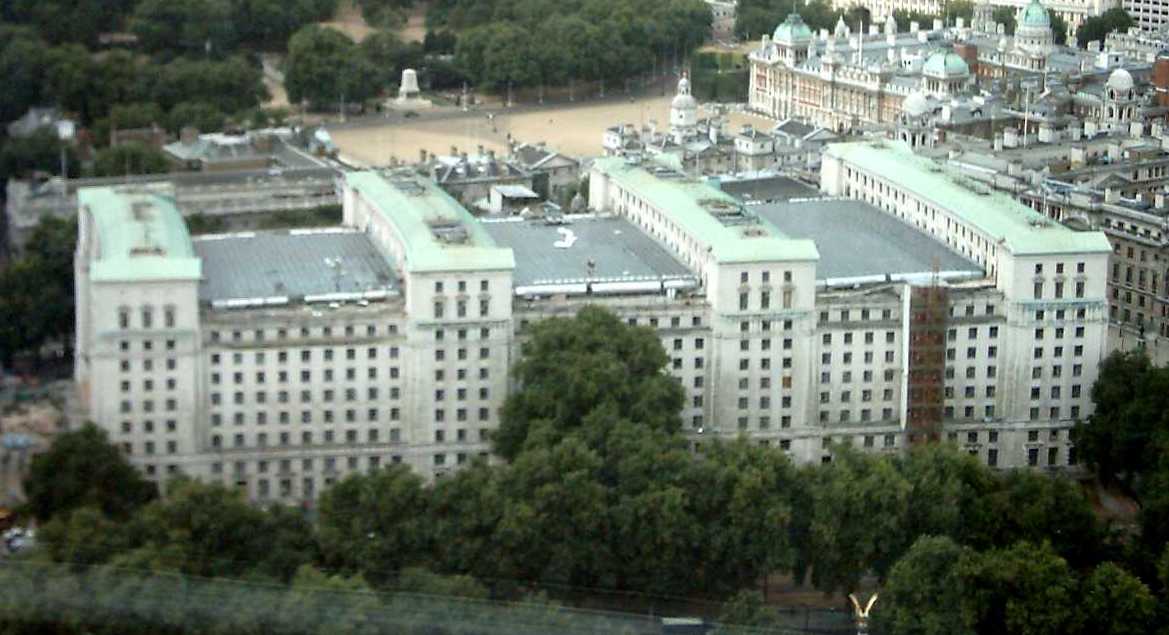
Ministry of Defence
 United Kingdom
"Central command for the United Kingdom's military operations and strategic planning"
About
The Ministry of Defence serves as the central command hub for the United Kingdom's military operations and strategic planning. This government department translates political directives into actionable defense strategies while managing the daily functions of the British Armed Forces. Its mandate extends beyond national borders to protect UK interests globally and foster international stability through diplomatic and military channels.
Operating under strict parliamentary oversight, the organization coordinates the Army, Royal Navy, and Royal Air Force to maintain readiness against evolving threats. The structure ensures seamless collaboration between civilian leadership and military commanders, allowing for rapid response during crises. By overseeing procurement, personnel management, and operational logistics, the Ministry safeguards the nation's security infrastructure while adhering to modern geopolitical challenges.
Mission
History
On April 1, 1964, the UK merged the War Office, the Admiralty, and the Air Ministry to form the Ministry of Defence. This consolidation ended over three centuries of separate administration for the Army, Navy, and Air Force. The founding was driven by the need to streamline defense policy and reduce administrative costs in the post-World War II landscape.
The unified command structure faced its first major test during the Falklands War in 1982. Subsequent decades saw participation in peacekeeping missions across the Balkans and Somalia. From 2001 to 2021, the department managed extensive involvement in the War on Terror, including operations in Afghanistan and Iraq. Recent years have focused on technological innovation and expanding capabilities through programs like GCAP.
Subdivisions
Defence Equipment and Support (DE&S)
Responsible for procuring and sustaining equipment.
Defence Infrastructure Organisation (DIO)
Manages land, buildings, and estates.
Defence Science and Technology Laboratory (Dstl)
Conducts scientific research.
NATO Headquarters (UK)
Liaison with NATO structures.
Notable People
John Healey
Secretary of State for Defence · 2024–present
Oversees current defense strategy and budget allocation.
Sir Tony Radakin
Chief of the Defence Staff · 2021–2024
Led the armed forces during significant global conflicts.
Luke Pollard
Minister for Defence Readiness and Industry · 2024–present
Focuses on industrial capacity and readiness.
Milestones
1964
Establishment of the Ministry of Defence, merging the War Office, Admiralty, and Air Ministry.
1982
Management of the Falklands War, a major test of the unified command structure.
2010
Strategic Defence and Security Review leading to significant restructuring.
2024
Launch of expanded defense investment and new fighter jet program contributions.
Departments
Sources
Organization Info
- Founded
- April 1, 1964
- Headquarters
- Whitehall, London
- Country
- United Kingdom
- Secretary of State for Defence
- John Healey
- Parent
- Government of the United Kingdom
- Type
- Government
- Employees
- 325,000
Financials
- Employees
- 325000
Official Website
www.gov.uk/government/organisations/ministry-of-defence
Join the community
fans discussing