 Italy
ItalyAbout
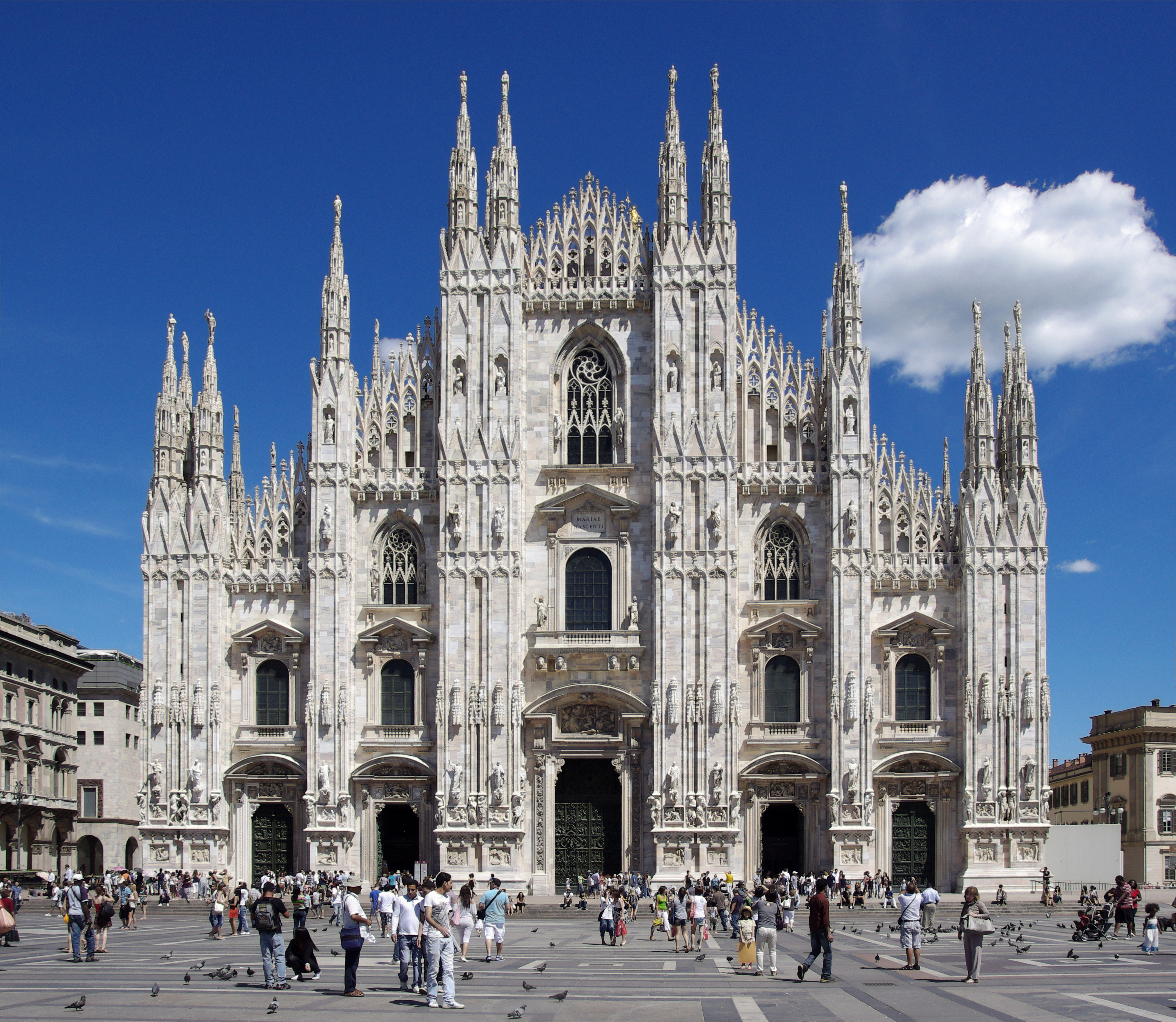
Milan Cathedral, universally known as the Duomo di Milano, dominates the Piazza del Duomo and serves as the spiritual heart of the city. This massive Gothic structure acts as the seat of the Catholic Archdiocese of Milan, currently led by Archbishop Mario Delpini. It is not just a church but a living museum where centuries of art, faith, and civic pride converge. The sheer scale of the building allows it to hold over 40,000 worshippers inside its nave, making it one of the largest churches in the world. Its exterior tells a story of endurance, covered in 135 spires and more than 3,400 statues that seem to dance in the light of the Candoglia marble used throughout its construction.
Construction began in 1386 under the direction of Archbishop Antonio da Saluzzo and Bishop Bonino Mambrini, who wanted to replace an older medieval basilica with something grander. The project was funded by the ruling Visconti and Sforza families, along with contributions from ordinary citizens eager to see their city shine. While the initial design followed the International Gothic style, the cathedral evolved over nearly six centuries. Famous figures like Leonardo da Vinci and Donato Bramante offered advice on its design, though their specific proposals were often adapted or set aside. The final spire, crowned by the gilded Madonnina statue, went up in 1774, and major facade work wrapped up in the early 19th century. Today, the complex includes the main church, the Duomo Museum, the archaeological area, and the terraces, all managed as a single entity dedicated to preservation and worship.
Mission
The institution exists to serve as the mother church of the Archdiocese of Milan, providing a vibrant space for Catholic liturgy and community gathering. Beyond its religious function, it acts as a custodian of the region's artistic heritage, ensuring that centuries of history remain accessible to the public. The organization manages the Duomo Museum and the roof terraces, balancing the needs of daily worshipers with the millions of tourists who visit annually to admire the architecture.
History
The vision for the Duomo took shape in 1386 when Archbishop Antonio da Saluzzo and Bishop Bonino Mambrini decided to build a new cathedral to replace the medieval basilica standing on the site. The ruling Visconti and Sforza families provided heavy funding, hoping to display their power through architectural magnificence, while the general populace also contributed. Builders selected Candoglia marble from quarries near Lake Maggiore, transporting it via the Navigli canal system to give the structure its signature pinkish hue. Although the project started with an International Gothic design, it shifted styles over time as different architects took the lead.
Notable names like Leonardo da Vinci and Donato Bramante were consulted on design matters, yet their specific proposals were not always implemented. The cathedral was officially consecrated in 1482, but work continued well into the modern era. The final spire, topped by the famous Madonnina statue, was erected in 1774. Major facade work finished in the early 19th century, and the most recent significant milestone was the restoration of the tiburium, an eighteen-year project that concluded in 2026.
Subdivisions
The Main Cathedral
The primary worship space and nave.
The Duomo Museum
A gallery housing artifacts related to the cathedral's history and construction.
The Archaeological Area
Excavated remains of earlier structures located beneath the square.
The Terraces
Accessible rooftop areas featuring the forest of spires and the Madonnina statue.
The Baptistery
An adjacent historic structure associated with the cathedral complex.
Notable People
Antonio da Saluzzo
Archbishop · Late 14th Century
Initiated the construction of the cathedral in 1386.
Bonino Mambrini
Bishop · Late 14th Century
Co-initiated the construction project alongside the Archbishop.
Leonardo da Vinci
Consultant · Late 15th - Early 16th Century
Provided architectural design consultations during the development phase.
Donato Bramante
Consultant · Late 15th - Early 16th Century
Contributed design ideas to the cathedral's evolving plans.
Milestones
1386
Construction begins under Archbishop Antonio da Saluzzo.
1482
The cathedral is officially consecrated.
1774
The final spire with the Madonnina statue is erected.
Early 19th Century
Major completion of the facade.
2008-2026
Restoration of the tiburium (lantern tower) takes place.
February 2026
The cathedral draws massive crowds during the 2026 Winter Olympics.
Sources
Organization Info
- Founded
- March 1386
- Headquarters
- Piazza del Duomo, Milan
- Country
- Italy
- Archbishop of Milan
- Mario Delpini
- Type
- Religious
- Architectural Style
- Gothic
- Primary Material
- Candoglia marble
- Height of highest spire
- 108.5 meters (including Madonnina statue)
- Capacity
- Over 40,000 people
- Number of spires
- 135
- Number of statues
- Over 3,400
Official Website
www.duomomilano.it/en/
Join the community
fans discussing