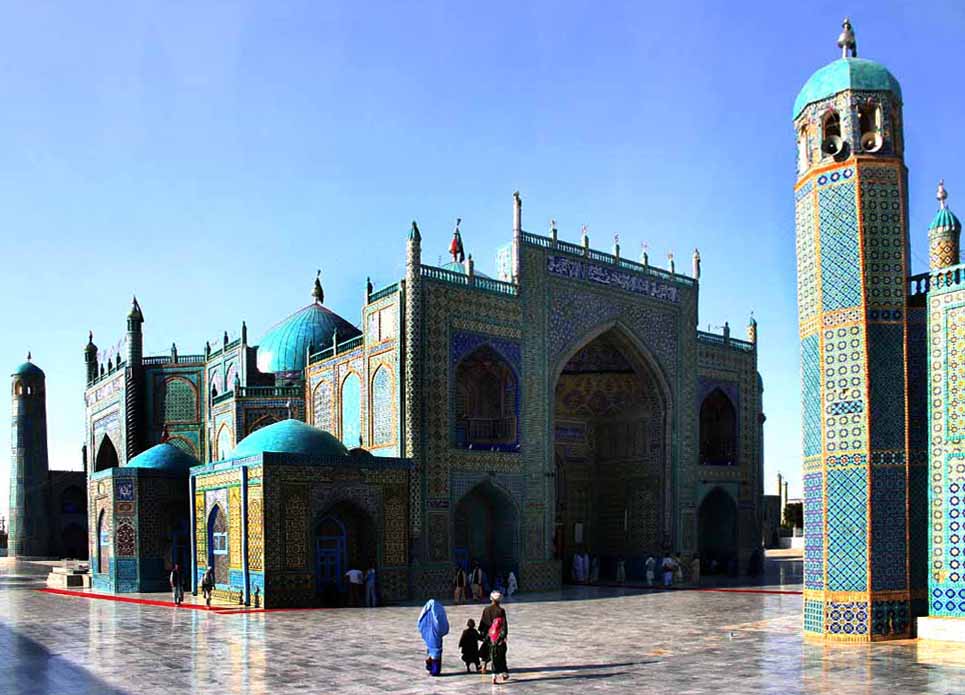
Mausoleum of Imam Ali
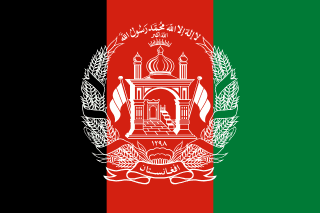 Afghanistan
"The Great Blue Mosque of Mazar-i-Sharif"
About
In the heart of Mazar-i-Sharif, Afghanistan, stands a stunning blue-tiled complex that draws visitors from around the world. The Mausoleum of Imam Ali, also called the Shrine of Hazrat Ali or the Great Blue Mosque, is a place of pilgrimage and tourism, revered by Shia and Sunni Muslims alike. Its name, Mazar-i-Sharif, meaning "Noble Shrine," reflects the city's identity, which grew around this sacred site.
The complex is believed by many to house the tomb of Ali ibn Abi Talib, the cousin and son-in-law of the Prophet Muhammad, and the first Imam of Shia Islam. While historians debate the authenticity of this claim, the shrine's spiritual significance is undeniable. It is a masterpiece of Islamic architecture, with its turquoise domes and minarets dominating the city's skyline. The site attracts hundreds of thousands of visitors annually, especially during the Nowruz celebrations, when the famous Jahenda Bala flag-raising ceremony takes place.
Despite Afghanistan's turbulent history, the mausoleum has remained a symbol of peace and unity. It has been restored and maintained by various rulers and governments, from the Timurids to the present day. The complex serves as a reminder of the region's rich cultural heritage and the enduring appeal of a figure who transcends sectarian divides. For many, it is not just a tourist attraction but a place of deep spiritual connection.
Mission
The mausoleum serves as a living center of worship, pilgrimage, and cultural heritage. It aims to provide a sacred space for prayer and reflection, welcoming Muslims of all backgrounds, and to preserve the architectural and historical legacy of the Timurid era. Through its annual ceremonies, especially the Jahenda Bala flag-raising during Nowruz, it fosters a sense of unity and peace among the diverse communities of Afghanistan and beyond.
History
The Mausoleum of Imam Ali was founded in 1481, during the Timurid dynasty, a period known for its architectural patronage across Central Asia. The city of Mazar-i-Sharif grew around the shrine, its name literally meaning "Noble Shrine." According to local tradition, the site was chosen after a dream revealed the location of Ali's burial, though the claim remains contested.
Earlier, in 977–978 CE, the Buyid ruler Adud al-Dawlah had built a grand mausoleum for Ali at Najaf in Iraq, with teakwood walls and a white stone dome. The poet Husayn ibn al-Hajjaj al-Baghdadi even composed verses praising its healing powers. That shrine in Najaf is widely accepted by Shia Muslims as the true burial site, while many Sunni Muslims hold that the Afghan site is authentic. This divergence has never diminished the reverence for either location.
Over the centuries, successive Afghan rulers and governments have maintained and restored the complex, from the Timurids through the Mughals and into the modern era. Despite wars and political upheaval, the mausoleum has survived as a resilient symbol of faith. In recent decades, restoration efforts have continued, ensuring the turquoise domes remain a vibrant landmark in northern Afghanistan.
Notable People
Ali ibn Abi Talib
Honored figure · 600–661 CE
Fourth Rashidun Caliph and first Shia Imam; the shrine is dedicated to his memory.
Milestones
1481
Mausoleum founded in Mazar-i-Sharif during the Timurid period.
977–978
Earlier mausoleum for Ali built at Najaf by Adud al-Dawlah.
661
Death of Ali ibn Abi Talib; his burial site becomes a matter of debate.
Sources
Organization Info
- Founded
- 1481
- Headquarters
- Mazar-i-Sharif, Balkh Province, Afghanistan
- Country
- Afghanistan
- Type
- Religious
- Also known as
- Great Blue Mosque
Join the community
fans discussing