 India
IndiaAbout
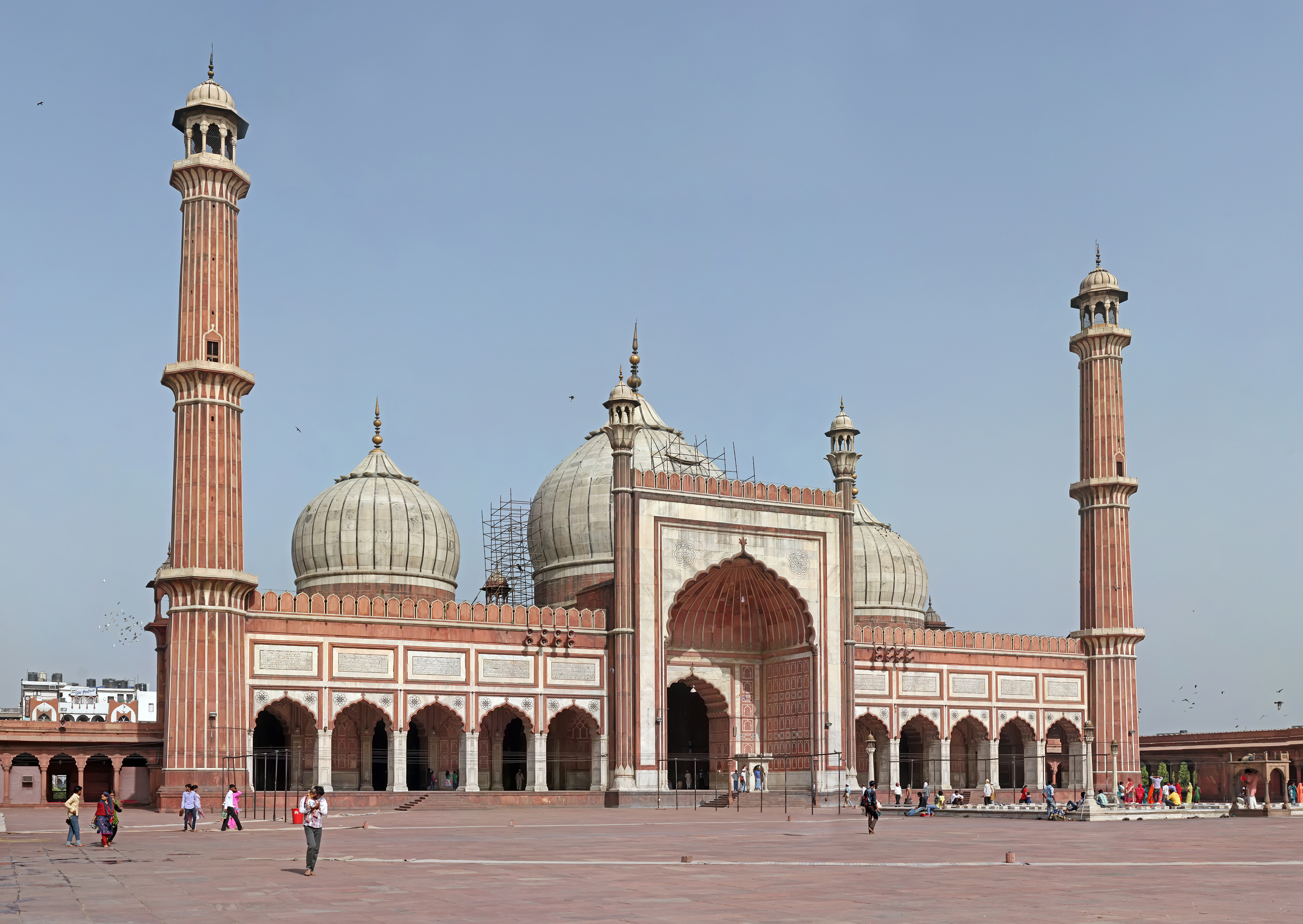
The Jama Masjid, officially Masjid-i-Jehan-Numa, is one of India's largest mosques and a defining landmark of Old Delhi. Built by Mughal emperor Shah Jahan between 1644 and 1656, it served as the imperial mosque of the Mughal court until the empire collapsed in 1857. The mosque's name, which translates to "mosque commanding a view of the world," reflects its elevated position on a hilltop overlooking the city's bustling lanes.
Designed by Ustad Ahmad Lahori, the architect behind the Taj Mahal, the mosque is a striking example of Mughal architecture, with red sandstone walls, white marble domes, and two towering minarets. Its vast courtyard can accommodate up to 25,000 worshippers, making it the largest mosque in India by capacity. The structure has four entrances and three grand gates, with the eastern gate historically reserved for the emperor.
Today, the Jama Masjid remains a fully functioning place of worship, drawing thousands for Friday prayers and especially during Ramadan, when the sighting of the crescent moon is announced from its minarets. It is also a major tourist attraction, offering panoramic views of Old Delhi from its minarets. The mosque has served as a backdrop for numerous Bollywood films and is a vibrant hub of the city's Muslim community, surrounded by the colorful chaos of Chandni Chowk.
Mission
The Jama Masjid serves as a central place of worship for Delhi's Muslim community, hosting daily prayers, Friday congregational prayers, and major Islamic festivals. It also functions as a cultural and historical landmark, preserving the legacy of Mughal architecture and providing a space for community gatherings, religious education, and interfaith dialogue. The mosque's leadership, through the hereditary Shahi Imam, plays a role in guiding the community on religious and social matters.
History
The Jama Masjid was commissioned by Emperor Shah Jahan as part of his grand plan to establish Shahjahanabad, the new capital of the Mughal Empire. Construction began in 1644 and took over a decade, employing thousands of workers and costing roughly one million rupees. The mosque was deliberately placed on a hilltop in what is now Old Delhi, symbolizing both imperial power and religious devotion.
Upon completion in 1656, the mosque was inaugurated by Syed Abdul Ghafoor Shah Bukhari, a descendant of a saintly lineage from Bukhara. He became the first Shahi Imam, a hereditary position that has remained within his family for nearly four centuries. The mosque served as the imperial mosque for the Mughal court until 1857, when the empire fell to British rule.
Over the years, the mosque has witnessed significant historical events, including its use as a rallying point during India's independence movement. In the 21st century, it has faced challenges such as encroachment disputes and legal proceedings involving its current imam. Despite these, it remains a vital religious and cultural center.
Notable People
Shah Jahan
Commissioner · 1644-1656
Commissioned the construction of the mosque as part of his new capital Shahjahanabad
Ustad Ahmad Lahori
Architect · 1644-1656
Designed both the Jama Masjid and the Taj Mahal
Syed Abdul Ghafoor Shah Bukhari
First Imam · 1656-?
Inaugurated the mosque and established the hereditary line of Shahi Imams
Maulana Ahmad Bukhari
Current Shahi Imam · 2000-present
Has been a prominent public figure, though also involved in legal controversies
Milestones
1644
Construction begins under Shah Jahan
1656
Mosque completed and inaugurated; Syed Abdul Ghafoor Shah Bukhari appointed first Imam
1857
Mughal Empire falls; mosque loses its imperial status
2022
14-hour curfew imposed during COVID-19 pandemic leaves area empty
January 2026
Delhi High Court orders survey in encroachment case
May 2026
Special cooling zone set up near Jama Masjid metro station
July 2026
Shahi Imam Maulana Ahmad Bukhari surrenders in 2007 poll code violation case
Sources
Organization Info
- Founded
- 1656
- Headquarters
- Old Delhi, Delhi, India
- Country
- India
- Shahi Imam
- Maulana Ahmad Bukhari
- Type
- Religious
- Capacity
- 25,000 worshippers
- Architect
- Ustad Ahmad Lahori
- Construction cost
- Approximately 1 million rupees (17th century)
Official Website
www.quran.org.in
Join the community
fans discussing