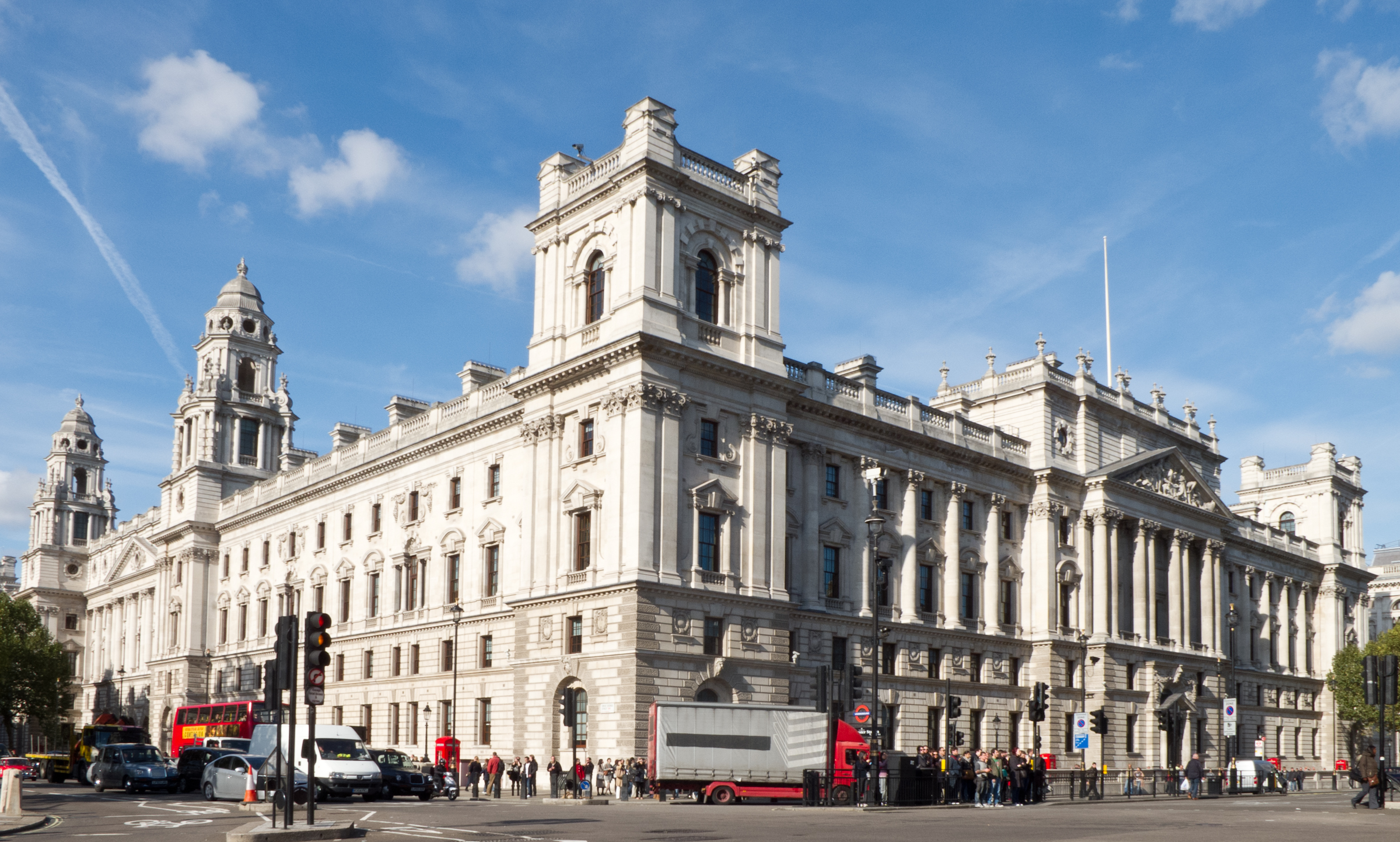
HM Revenue and Customs
 United Kingdom
"The UK's tax, payments, and customs authority"
About
HM Revenue and Customs (HMRC) is a non-ministerial government department of the United Kingdom, responsible for collecting taxes, administering financial support such as Child Benefit and tax credits, and managing customs and border controls. It also issues National Insurance numbers, enforces the National Minimum Wage, and provides property valuations for taxation and benefits. HMRC contributes to intelligence gathering and analysis for the British government. The department was established on 18 April 2005 under the Commissioners for Revenue and Customs Act 2005, merging the Inland Revenue and HM Customs and Excise. The merger was announced by Chancellor Gordon Brown in the March 2004 Budget, with David Varney appointed as the first executive chairman in May 2004. Staff began occupying the new headquarters at 100 Parliament Street, Whitehall, on 21 November 2004. HMRC's logo features the Tudor Crown within a circle. The department reports to Parliament through the Treasury and is overseen by a Board comprising Executive Committee members and non-executive directors.
HMRC manages the collection of taxes that fund UK public services. In the 2023-24 financial year, it had an annual budget of £7.4 billion and employed 63,645 full-time equivalent staff. The department is led by Chief Executive and First Permanent Secretary John-Paul Marks, with Angela MacDonald serving as Deputy Chief Executive and Second Permanent Secretary. The Exchequer Secretary to the Treasury, currently Daniel Tomlinson, is the departmental minister. HMRC operates across the UK, with its headquarters at 100 Parliament Street, Westminster, London, and a significant presence in Newcastle upon Tyne. The department is divided into several operational divisions, including Personal Tax, Corporate or Business Tax, Benefits and Credits Payment and Administration, and Reporting and Compliance Enforcement, each led by a Director-General.
HMRC has faced notable controversies, including the 2007 loss of two computer discs containing personal data of 25 million child benefit recipients, which led to a public inquiry and the resignation of the then-Chairman. The introduction of the High Income Child Benefit Charge in 2013 was criticized for its complexity, and the 2019 Loan Charge, targeting disguised remuneration schemes, sparked widespread protest. During the COVID-19 pandemic, HMRC managed the Coronavirus Job Retention Scheme, paying out billions in support. The department has since focused on digital transformation, including the Making Tax Digital initiative, and in 2024-25 delivered £216 million in new sustainable efficiencies, partly through IT modernisation and estate optimisation.
Mission
HMRC's mission is to collect the money that pays for the UK's public services, help families and individuals with targeted financial support, and provide property valuations that support taxation and benefits. It also aims to administer customs and compliance rules efficiently, safeguard public revenue and borders, and contribute to intelligence collection and analysis on behalf of the British government. The department is committed to modernising its services through digital transformation, improving customer experience, and ensuring tax compliance.
History
The roots of HMRC trace back to 1862, when a Treasury Committee considered merging the Inland Revenue and Customs and Excise, but the proposal was overturned. In 1909, excise duties were removed from the Inland Revenue and combined with the Board of Customs to form the Board of Customs and Excise. The modern HMRC was born from the March 2004 Budget, when Chancellor Gordon Brown announced the merger of the Inland Revenue and HM Customs and Excise. David Varney was appointed as the first executive chairman in May 2004, and staff began moving into the new headquarters at 100 Parliament Street, Whitehall, on 21 November 2004. The department was formally established on 18 April 2005 under the Commissioners for Revenue and Customs Act 2005.
HMRC's early years were marked by the 2007 data loss scandal, when two computer discs containing the personal data of 25 million child benefit recipients went missing, leading to a public inquiry and the resignation of the then-Chairman. The department then embarked on a major transformation program in the 2010s, including office closures and the shift toward digital services under the Making Tax Digital initiative. During the COVID-19 pandemic, HMRC played a central role in administering the Coronavirus Job Retention Scheme, paying out billions in support. In 2024-25, the department continued its modernisation, delivering £216 million in efficiencies through IT system upgrades, estate optimisation, and productivity improvements. The current chief executive, John-Paul Marks, took over from Jim Harra in 2024.
Subdivisions
Personal Tax Division
Handles tax administration for individuals, including Income Tax, National Insurance, and tax credits.
Corporate or Business Tax Division
Manages tax compliance and collection for businesses, including Corporation Tax and VAT.
Benefits and Credits Payment and Administration Division
Administers state financial support such as Child Benefit, Tax Credits, and Universal Credit elements.
Reporting and Compliance Enforcement Division
Enforces tax compliance, investigates fraud, and handles debt collection.
Notable People
Jim Harra
Chief Executive and First Permanent Secretary · 2021-2024
Oversaw HMRC's response to the COVID-19 pandemic, including the furlough scheme.
Jon Thompson
Chief Executive and First Permanent Secretary · 2016-2021
Led HMRC through major digital transformation and Brexit preparations.
David Varney
Executive Chairman · 2004-2008
First head of HMRC, oversaw the merger of Inland Revenue and Customs and Excise.
Milestones
1862
A Treasury Committee considered merging the Inland Revenue and Customs and Excise, but the proposal was overturned.
1909
Excise duties were removed from the Inland Revenue and combined with the Board of Customs to form the Board of Customs and Excise.
March 2004
Chancellor Gordon Brown announced the merger of the Inland Revenue and HM Customs and Excise.
18 April 2005
HMRC was formally established under the Commissioners for Revenue and Customs Act.
2007
HMRC lost two computer discs containing the personal data of 25 million child benefit recipients, leading to a public inquiry.
2013
Introduction of the High Income Child Benefit Charge, criticized for its complexity.
2019
The Loan Charge, targeting disguised remuneration schemes, sparked widespread protest.
2020-2021
HMRC administered the Coronavirus Job Retention Scheme during the COVID-19 pandemic, paying out billions in support.
2024-2025
HMRC delivered £216 million in new sustainable efficiencies, including £50 million from IT modernisation.
Departments
Sources
Organization Info
- Founded
- 18 April 2005
- Headquarters
- 100 Parliament Street, Westminster, London, SW1A 2BQ, England
- Country
- United Kingdom
- Chief Executive and First Permanent Secretary
- John-Paul Marks
- Type
- Government
- CEO
- John-Paul Marks
- Budget (2023-24)
- £7.4 billion
- Employees
- 63,645 (FTE)
Financials
- Budget
- 7400000000
- Employees
- 63645
Official Website
www.gov.uk/government/organisations/hm-revenue-customs
Join the community
fans discussing