 Iceland
About
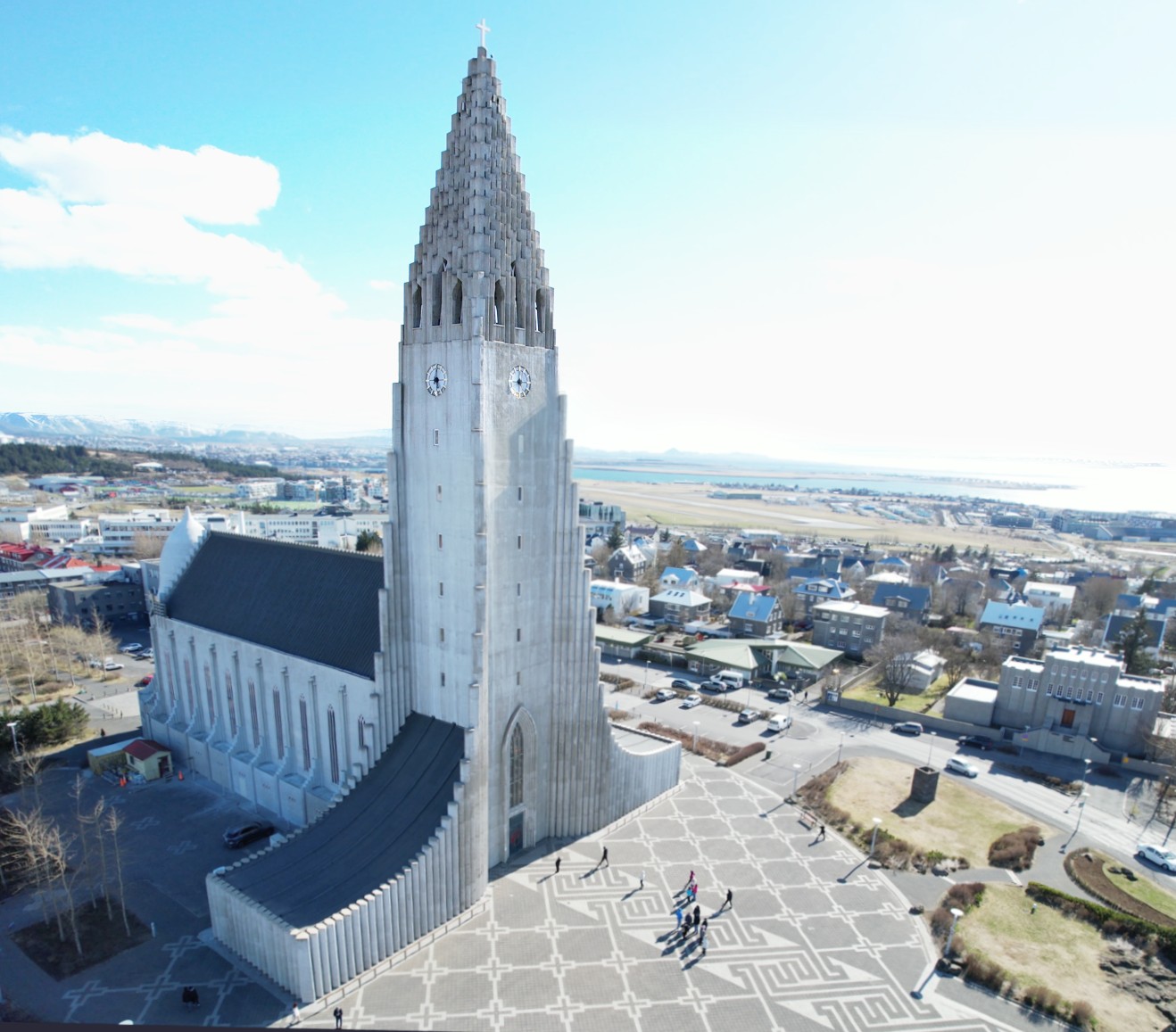
Hallgrímskirkja dominates the Reykjavík skyline with its stark, expressionist silhouette that mimics the hexagonal basalt columns found throughout the Icelandic landscape. Standing 74.5 meters tall, it is the largest church in Iceland and the second-tallest building in the country after the Perlan tower. The structure was designed by Guðjón Samúelsson, the nation's State Architect, whose vision sought to create a monument that reflected the volcanic geology of the island. Construction began in 1945 and stretched over four decades, finally concluding with the consecration on October 26, 1986.
While often photographed as a tourist icon, the building functions primarily as an active parish for the Church of Iceland. It hosts regular Lutheran services, pastoral care, and community gatherings alongside its role as a cultural hub. Visitors can ascend the tower via elevator to enjoy panoramic views of the capital and Faxaflói Bay. The interior houses a massive pipe organ with 5,275 pipes, which performs daily matinee concerts that draw both locals and travelers. The church stands on Skólavörðuholt hill, serving as a spiritual anchor and a symbol of national identity since its inception.
Mission
The church operates as a living parish within the Evangelical-Lutheran Church of Iceland, providing regular worship services, sacraments, and pastoral care to its congregation. Beyond religious duties, it serves as a cultural institution that bridges faith, history, and heritage. The organization welcomes thousands of visitors annually, offering educational programs, classical music concerts, and access to its observation deck. Its goal is to maintain a space where architecture, art, and spirituality intersect for the benefit of both the local community and international guests.
History
The concept for a grand church honoring Hallgrímur Pétursson emerged in the early 20th century. In 1937, the design by Guðjón Samúelsson received official approval. His plan created a sweeping, curved facade that mimics cooling lava flows, reflecting the volcanic nature of Iceland. Construction officially started in 1945 but moved slowly due to funding challenges and the project's complexity. The crypt was finished in 1948, followed by the nave in 1962. The tower reached completion in 1974, timed to coincide with Iceland's 1,100th anniversary of settlement. The entire complex was finally consecrated on October 26, 1986, ending more than forty years of building work.
A massive pipe organ containing 5,275 pipes and 72 stops was installed in 1992. This instrument ranks among the largest in the world and powers the church's reputation for musical excellence. The site includes the main sanctuary, the crypt, the tower with an observation deck, and surrounding grounds that serve as a public gathering space. Despite being a single physical location, its cultural footprint extends globally through tourism and media representation.
Subdivisions
The Nave
The main sanctuary used for Sunday services and major liturgical events.
The Crypt
Completed in 1948, this lower level hosts smaller services, exhibitions, and intimate concerts.
The Tower
Features an elevator leading to an observation deck at 73 meters, offering 360-degree views of Reykjavík.
The Organ Room
Houses the massive instrument with 5,275 pipes, used for daily recitals and special services.
Administrative Offices
Managed by the parish council to handle operations and community outreach.
Notable People
Guðjón Samúelsson
Architect · 1937–1950
Designed the church and other major Icelandic landmarks; his work is considered a masterpiece of expressionism.
Hallgrímur Pétursson
Namesake · 1614–1674
17th-century poet and minister whose Passion Hymns remain central to Icelandic Lutheran devotion.
Tuuli Rähni
Organist · Active 2026
Performs daily matinee organ concerts featuring international repertoire.
Milestones
1937
Design by Guðjón Samúelsson approved
1945
Construction begins
1948
Crypt completed
1962
Nave completed
1974
Tower completed for 1,100th anniversary of settlement
1986
Church consecrated on October 26
1992
Great organ installed
Sources
Organization Info
- Founded
- October 26, 1986
- Headquarters
- Hallgrímstorg 1, 101 Reykjavík, Iceland
- Country
- Iceland
- Parent
- Church of Iceland
- Type
- Religious
- Height
- 74.5 meters
- Architect
- Guðjón Samúelsson
- Organ Pipes
- 5,275
Official Website
www.hallgrimskirkja.is/
Join the community
fans discussing