 Tunisia
About
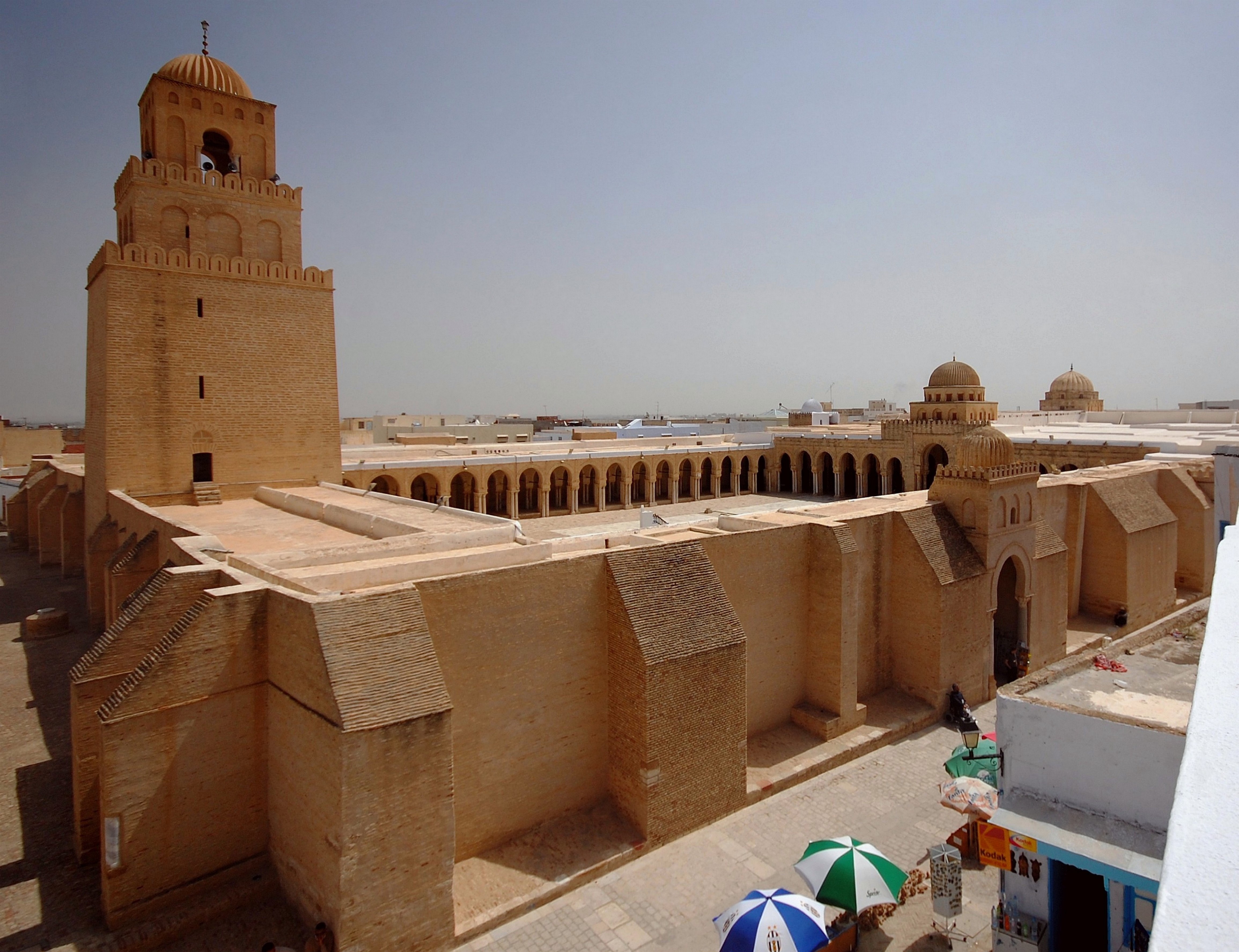
The Great Mosque of Kairouan, also called the Mosque of Uqba, anchors the UNESCO World Heritage town of Kairouan in Tunisia. Founded by the Arab general Uqba ibn Nafi in 670/671 CE, the same year the city was established, it holds the distinction of being the oldest Muslim place of worship in Africa. Covering more than 9,000 square meters, it ranks among the largest Islamic monuments on the continent.
Its architecture weaves together Roman, Byzantine, and early Islamic traditions. Hundreds of columns were recycled from ancient Roman and Byzantine buildings, giving the hypostyle prayer hall a forest of varied capitals. The square minaret, rising 32 meters, is the oldest standing minaret in the world and still dominates the city's skyline. The vast courtyard, with its smooth stone paving, offers a quiet contrast to the bustling streets outside.
Beyond its religious function, the mosque has shaped Islamic art and architecture across North Africa. Its design influenced countless later mosques, and it remains a major pilgrimage destination. Non-Muslims can enter the courtyard but not the prayer hall, a rule that has held for centuries. The site draws scholars, tourists, and the faithful alike, and its image appears in travel guides, documentaries, and art history courses worldwide.
Mission
The Great Mosque of Kairouan serves as a living place of worship, a center for Islamic learning, and a symbol of the faith's deep roots in the Maghreb. It welcomes pilgrims and visitors, preserves centuries of architectural heritage, and continues to host daily prayers and religious gatherings. Its mission is to maintain the mosque's spiritual and historical significance for future generations.
History
The mosque's story begins with the Arab conquest of North Africa. In 50 AH (670/671 CE), Uqba ibn Nafi planted the flag of Islam in the Tunisian steppe and laid the foundations for both a city and a mosque. That first structure was simple, built of mud and wood, and served the small garrison community. But as Kairouan grew into a thriving center of trade and religion, the mosque needed to keep pace.
The turning point came in the 9th century under the Aghlabid dynasty. Emir Ziyadat Allah I ordered a complete rebuilding between 817 and 838 CE, tearing down the old structure and raising a far grander one. His successor, Abu Ibrahim Ahmad, added the final touches between 856 and 863 CE. The builders scavenged columns and capitals from Roman and Byzantine ruins across the region, giving the prayer hall its eclectic, storied look.
Over the following centuries, the mosque underwent periodic repairs and renovations. The minaret, though often attributed to the Aghlabid period, may have been rebuilt later, but its form has remained essentially unchanged since the 9th century. In 1988, Kairouan was inscribed as a UNESCO World Heritage site, with the mosque as its centerpiece. Today, the structure stands much as it did over a thousand years ago, a living link to the early Islamic world.
Notable People
Uqba ibn Nafi
Founder · 670-683
Founded the mosque and the city of Kairouan in 670/671 CE
Ziyadat Allah I
Aghlabid Emir · 817-838
Commissioned the complete rebuilding of the mosque in the 9th century
Abu Ibrahim Ahmad
Aghlabid Emir · 856-863
Oversaw further expansions and embellishments of the mosque
Milestones
670/671 CE
Founded by Uqba ibn Nafi alongside the city of Kairouan
817-838 CE
Rebuilt and expanded under Aghlabid Emir Ziyadat Allah I
856-863 CE
Further enhancements by Emir Abu Ibrahim Ahmad
1988
Kairouan, including the mosque, inscribed as a UNESCO World Heritage site
Sources
Organization Info
- Founded
- 670/671 CE
- Headquarters
- Kairouan, Tunisia
- Country
- Tunisia
- Type
- Religious
- Area
- 9,000+ square meters
- Minaret height
- 32 meters (104 feet)
- Oldest standing minaret
- Yes
- UNESCO World Heritage
- 1988
Join the community
fans discussing