 Germany
About
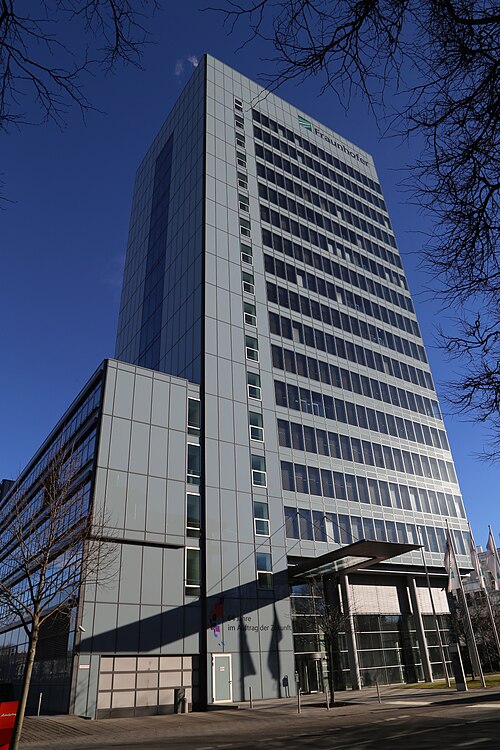
The Fraunhofer Society, formally the Fraunhofer-Gesellschaft zur Förderung der angewandten Forschung e. V., is a German non-profit organization dedicated to applied research. Founded in Munich in 1949, it operates 76 institutes and research units across Germany, with additional locations in the United States and the United Kingdom. The organization employs roughly 32,000 people, the majority of whom are scientists and engineers. Its annual research budget exceeds €3.6 billion, with about two-thirds generated through contract research for industry and public-sector clients.
Fraunhofer's core model is contract research: it takes on projects commissioned by companies, governments, and other institutions, bridging the gap between university basic research and commercial products. This approach has made it a critical driver of innovation in fields such as information technology, life sciences, materials science, energy, and medical technology. The organization is named after Joseph von Fraunhofer, a 19th-century Munich optician and inventor known for his advances in glass manufacturing and spectroscopy.
Fraunhofer institutes operate semi-autonomously, each focusing on a specific technological domain. They often collaborate with universities, and many institute directors hold concurrent professorships. The society's work is credited with numerous inventions that have become embedded in everyday products, from smartphone components to medical imaging systems. It is consistently ranked among the most attractive employers for scientists and engineers in Germany.
Mission
The Fraunhofer Society's mission is to perform applied research of direct utility to industry and society. It aims to transfer scientific knowledge into marketable products and processes, thereby strengthening the competitiveness of the German and European economy. The organization pursues this by offering contract research services, particularly to small and medium-sized enterprises, and by training the next generation of scientists and engineers. Its work is guided by principles of sustainability, economic viability, and social responsibility.
History
The Fraunhofer Society was founded on March 26, 1949, in Munich, as part of a post-war effort to rebuild Germany's research infrastructure and stimulate economic development in Bavaria, then a predominantly agricultural region. The initiative was led by Hugo Geiger, state secretary in the Bavarian Ministry of Economic Affairs, and Walther Gerlach, a nuclear physicist and rector of the University of Munich, who became the first president. The organization was named after Joseph von Fraunhofer, a celebrated Munich optician and entrepreneur, reflecting its ambition to combine scientific excellence with practical application.
In its early years, the society operated as a small administrative office with just three employees, primarily raising and distributing funds for industry-relevant research projects. Initial focus areas included mining, iron and steel, and mechanical engineering in Bavaria. A major turning point came in 1951 when the society received its first funds from the Marshall Plan through the European Recovery Program, confirming its political acceptance and providing crucial financial support.
Throughout the 1960s and 1970s, Fraunhofer expanded its network of institutes across West Germany, each concentrating on specific applied research fields. The 1990s saw international expansion: Fraunhofer USA was established in 1994 as an independently incorporated non-profit entity, partnering with American universities to extend contract research capabilities. By 2024, the society had grown to 76 institutes and a budget of over €3.6 billion, celebrating 75 years of operation and 30 years of Fraunhofer USA.
Subdivisions
Fraunhofer Institute for Applied Polymer Research (IAP)
Focuses on polymer materials and their applications.
Fraunhofer Institute for Manufacturing Engineering and Automation (IPA)
Specializes in production technology and automation.
Fraunhofer Institute for Solar Energy Systems (ISE)
Conducts research on solar energy and energy efficiency.
Fraunhofer Institute for Telecommunications, Heinrich Hertz Institute (HHI)
Works on communication technologies and photonic components.
Notable People
Walther Gerlach
First President · 1949–1951
Nuclear physicist who led the founding of the society
Hugo Geiger
Founding Patron and Senate Chair · 1949–?
State secretary who initiated the society's establishment
Holger Hanselka
President · 2023–present
Current president, modernizing the organization
Milestones
1949
Foundation of the Fraunhofer Society in Munich
1951
First funding from the Marshall Plan via the European Recovery Program
1994
Establishment of Fraunhofer USA as a non-profit subsidiary
2023
Holger Hanselka becomes the 11th president
2024
75th anniversary of the society
Sources
Organization Info
- Founded
- 1949-03-26
- Headquarters
- Munich
- Country
- Germany
- President
- Holger Hanselka
- Type
- Research
- Employees
- 32000
Financials
- Budget
- 3600000000
- Employees
- 32000
Official Website
www.fraunhofer.de/
Join the community
fans discussing