 Italy
ItalyAbout
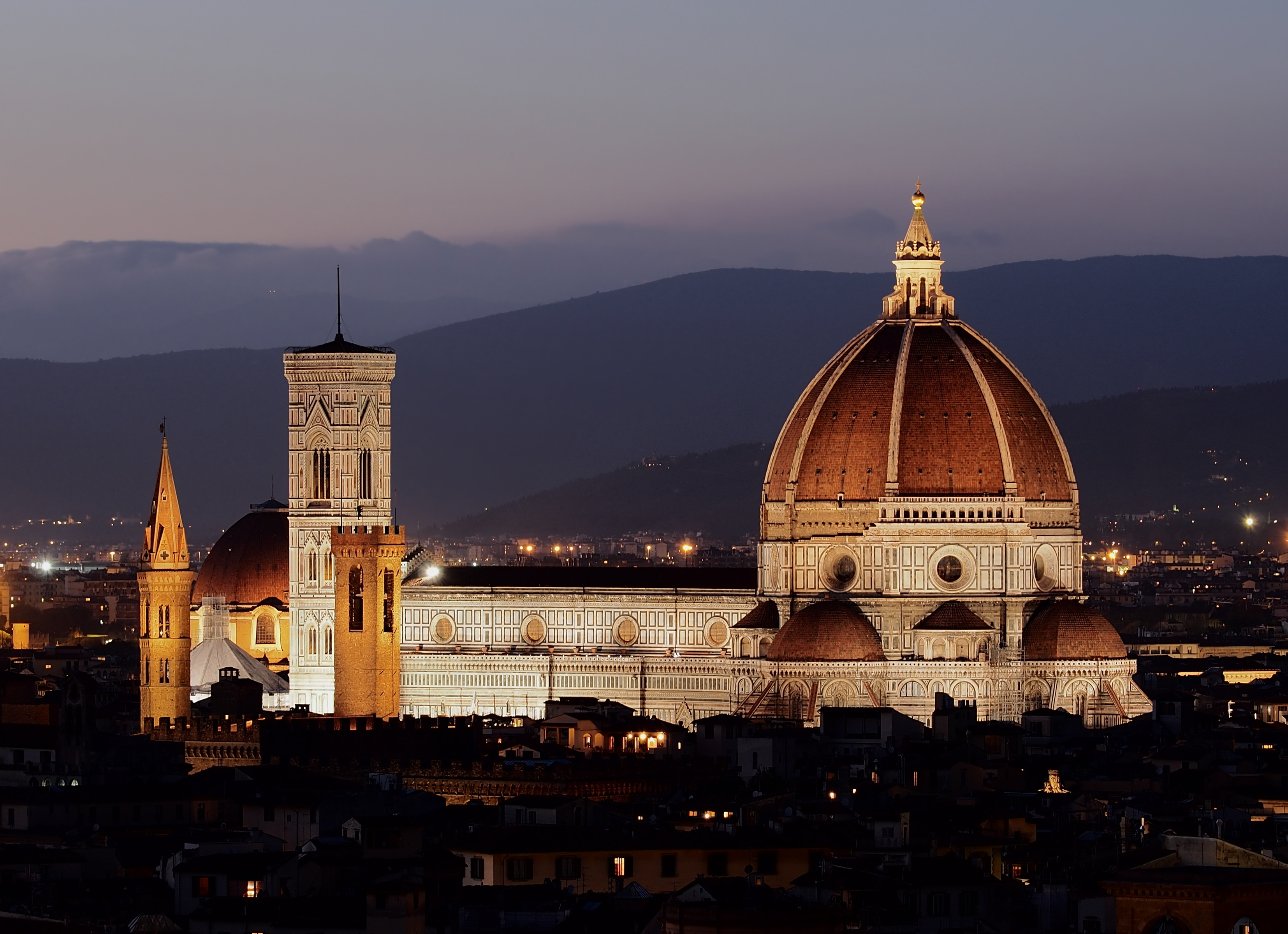
Florence Cathedral, known in Italian as the Duomo di Firenze, is the principal church of Florence and one of the most recognizable landmarks in Italy. Its official name, Cattedrale di Santa Maria del Fiore, honors the city's patron saint and the lily, a symbol of Florence. The cathedral's construction began in 1296 under the direction of architect Arnolfo di Cambio, who designed it in the Gothic style. However, the building remained incomplete for over a century, most notably lacking a dome. That changed in 1436 when Filippo Brunelleschi completed his engineering marvel, a massive dome that still dominates the city's skyline. The exterior is clad in polychrome marble panels in shades of green, white, and pink, creating a striking visual pattern that has become iconic.
The cathedral is part of the larger Piazza del Duomo complex, which also includes the Baptistery of St. John and Giotto's Campanile. Together, they form a UNESCO World Heritage site and draw millions of visitors each year. While the cathedral is a religious building, it also stands as a testament to the artistic and architectural achievements of the Renaissance. The dome, in particular, is considered a masterpiece of engineering, built without any supporting scaffolding, a feat that was unprecedented at the time. Today, visitors can climb to the top of the dome for a panoramic view of Florence, and the interior houses notable artworks, including frescoes by Giorgio Vasari and Federico Zuccari. The cathedral remains an active place of worship and a symbol of the city's rich cultural heritage.
Mission
The cathedral's primary mission is religious: it serves as the seat of the Archbishop of Florence and an active center of Catholic worship. Beyond its liturgical function, the institution is dedicated to preserving and presenting the artistic and architectural heritage of the Renaissance, including the works of Brunelleschi, Giotto, and Vasari. It also manages the monumental complex's preservation, educational programming, and visitor access, ensuring that this cultural treasure remains accessible to the public.
History
The story of Florence Cathedral begins in the late 13th century when the city decided to replace the ancient church of Santa Reparata with a grander structure. On September 8, 1296, the first stone was laid under the direction of Arnolfo di Cambio, who conceived a vast Gothic edifice. The project was so ambitious that it took over a century to complete the main body, with the exterior clad in distinctive polychrome marble by around 1367. Yet the most daunting challenge remained: covering the enormous crossing, which measured over 45 meters in diameter.
For decades, the unfinished cathedral stood with a gaping hole in its roof. In 1418, the Opera del Duomo announced a competition for a solution. Filippo Brunelleschi, a goldsmith and engineer, won with an audacious plan to construct a double-shell dome without traditional wooden centering. His innovative herringbone brick pattern and the use of a lantern to cap the structure were unprecedented. Work began in 1420 and culminated in the dome's completion in 1436. On March 25 of that year, Pope Eugenius IV consecrated the cathedral, which at the time was the largest church in the world, able to hold 30,000 worshippers.
Subsequent centuries saw the addition of the façade, completed in the 19th century by Emilio De Fabris, and the interior decorations, including Vasari and Zuccari's frescoes of the Last Judgment on the dome's interior. The cathedral complex, including the Baptistery and Giotto's Campanile, was designated a UNESCO World Heritage site in 1982 as part of the historic center of Florence.
Subdivisions
Baptistery of St. John
One of the oldest buildings in Florence, famous for its bronze doors and mosaics.
Giotto's Campanile
The bell tower designed by Giotto, offering panoramic views of the city.
Museo dell'Opera del Duomo
The cathedral museum housing original artworks, including Ghiberti's Gates of Paradise.
Crypt of Santa Reparata
Archaeological remains of the earlier church beneath the cathedral.
Notable People
Arnolfo di Cambio
First architect · c. 1245–1302
Designed the original Gothic structure and began construction in 1296.
Filippo Brunelleschi
Engineer and architect · 1377–1446
Designed and built the dome, the largest masonry dome ever constructed.
Giotto
Designer of the campanile · c. 1267–1337
Designed the bell tower that bears his name.
Giorgio Vasari
Painter · 1511–1574
Created frescoes on the dome interior.
Federico Zuccari
Painter · c. 1540–1609
Completed frescoes on the dome interior.
Pope Eugenius IV
Consecrator · 1436
Consecrated the cathedral on March 25, 1436.
Milestones
1296
Construction begins under Arnolfo di Cambio.
1367
Main structure completed and exterior clad in polychrome marble.
1418
Competition for dome design announced.
1420
Brunelleschi starts building the dome.
1436
Dome completed; cathedral consecrated by Pope Eugenius IV.
1982
Historic center of Florence, including the cathedral, becomes a UNESCO World Heritage site.
Sources
Organization Info
- Founded
- September 8, 1296
- Headquarters
- Piazza del Duomo, Florence, Italy
- Country
- Italy
- Parent
- Archdiocese of Florence
- Type
- Religious
- Employees
- 7
- Architect
- Arnolfo di Cambio
- Dome engineer
- Filippo Brunelleschi
- Height of dome
- 114.5 meters
Financials
- Employees
- 7
Official Website
www.duomofirenze.it/
Join the community
fans discussing