 Armenia
About
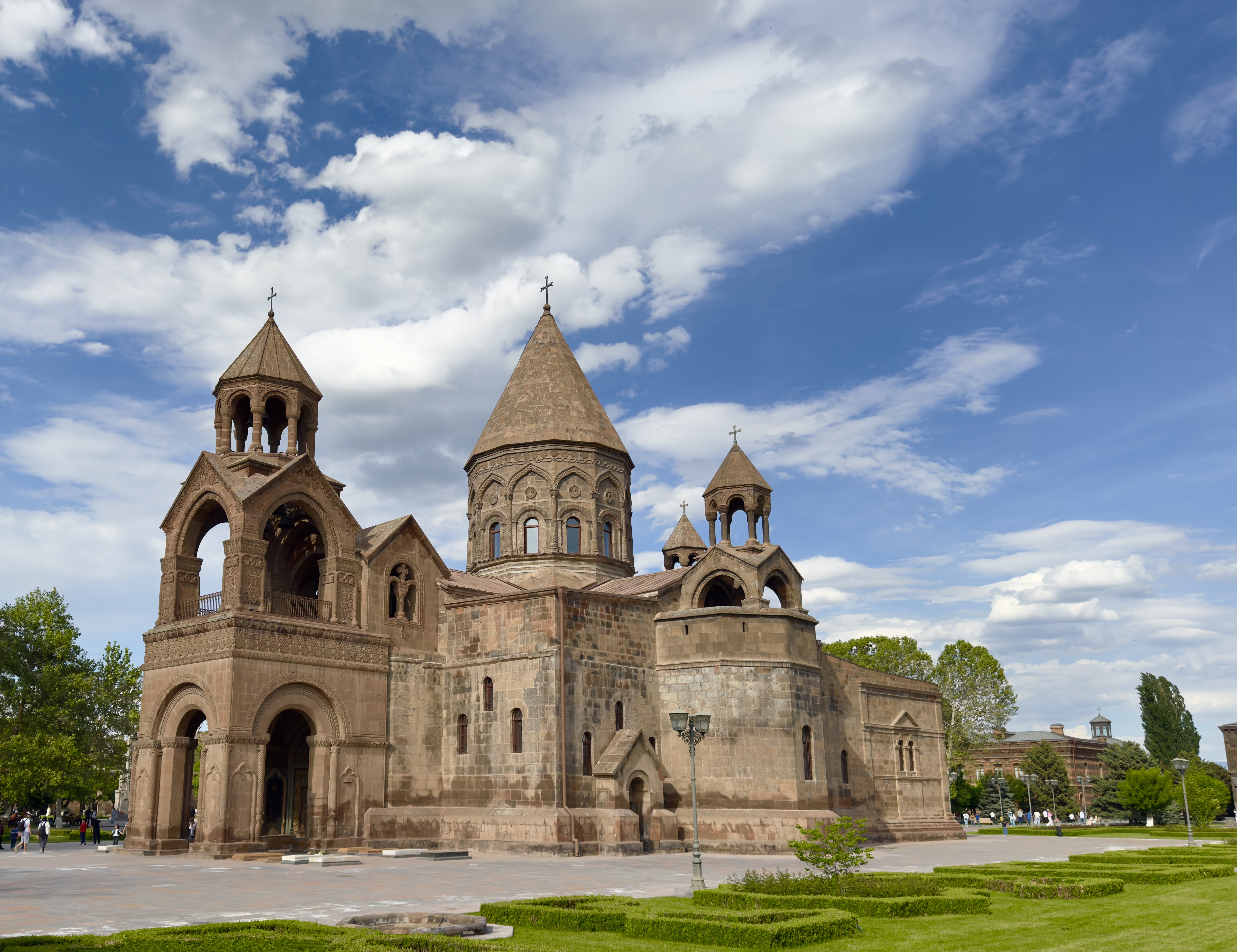
Etchmiadzin Cathedral, located in Vagharshapat, Armenia, is the spiritual and administrative heart of the Armenian Apostolic Church. Traditionally dated to 301–303 AD, it was built by Saint Gregory the Illuminator over the ruins of a pagan temple, making it a strong candidate for the oldest cathedral in the world. The name Etchmiadzin means 'the descent of the Only-Begotten,' recalling Gregory's vision of Christ descending from heaven and striking the ground with a golden hammer to mark the site. Armenia was the first nation to adopt Christianity as a state religion, and this cathedral stands as the enduring symbol of that pivotal moment.
The original structure was a simple vaulted basilica, but over seventeen centuries it has evolved into a rich blend of architectural styles. The central dome was added in the seventh century, and the bell tower at the western entrance dates from the seventeenth century. Inside, frescoes and relics trace the story of Armenian Christianity from its founding to the present. In 2000, UNESCO inscribed the cathedral as part of the 'Cathedral and Churches of Echmiatsin and the Archaeological Site of Zvartnots' World Heritage Site. The complex, often called the 'Armenian Vatican,' serves as the seat of the Catholicos of All Armenians and draws pilgrims and tourists from around the world.
Mission
The mission of the Mother See of Holy Etchmiadzin is to preserve and spread the Christian faith as handed down by the Armenian Apostolic Church. It serves as the spiritual center for Armenians worldwide, maintaining liturgical traditions, theological education, and pastoral care. The cathedral itself is a place of continuous worship, hosting daily services, major feast days, and the anointing of holy chrism (muron) every seven years. Beyond worship, the Mother See engages in cultural preservation, inter-church dialogue, and social outreach, acting as a moral voice for the Armenian people in Armenia and the diaspora.
History
Construction of Etchmiadzin Cathedral began in 301 AD, following the conversion of King Tiridates III by Saint Gregory the Illuminator. Armenia's adoption of Christianity as a state religion was unprecedented, and the cathedral was built on the site of a pagan temple to symbolize the new faith. The original basilica was modest, but subsequent centuries saw significant additions. The central dome was erected in the seventh century, transforming the building's silhouette. The cathedral suffered damage during Persian, Arab, and Mongol invasions, yet each period contributed to its architectural fabric. The bell tower was added in the seventeenth century, and extensive renovations occurred in the eighteenth and nineteenth centuries under Russian rule. In 2000, UNESCO recognized the cathedral and surrounding churches as a World Heritage Site, acknowledging its universal cultural value.
The cathedral has been the seat of the Catholicos since its founding, except for periods when the seat moved to other locations such as Sis and Hromkla. It has witnessed numerous consecrations of holy chrism, a ceremony that takes place every seven years and draws Armenians from across the globe. The cathedral's history is intertwined with the Armenian people's struggles and triumphs, from the medieval kingdom of Cilicia to the genocide of 1915 and the Soviet era. Today, it stands as a living monument, with daily worship and ongoing restoration efforts.
Subdivisions
Armenian Church of America (Eastern Diocese)
One of the largest dioceses of the Armenian Apostolic Church, serving Armenian communities across the eastern United States.
Armenian Church of America (Western Diocese)
Diocese covering the western United States, including California, with numerous parishes and community organizations.
Geghard Monastery
A medieval monastery in Armenia, partially carved into rock, associated with the Mother See and a UNESCO World Heritage Site.
Khor Virap Monastery
A historic monastery near Mount Ararat, closely tied to the life of Gregory the Illuminator and a major pilgrimage site.
Notable People
Gregory the Illuminator
Founder · 3rd–4th century
Converted King Tiridates III and established Christianity as the state religion of Armenia; built the original cathedral.
Karekin II
Catholicos of All Armenians · 1999–present
Current supreme head of the Armenian Apostolic Church, leading the church through political challenges and advocating for Armenian heritage.
Milestones
301
Construction begins under Gregory the Illuminator over a pagan temple site.
7th century
Central dome added, marking a significant architectural evolution.
17th century
Bell tower constructed at the western entrance.
2000
UNESCO inscribes the cathedral as part of the 'Cathedral and Churches of Echmiatsin and the Archaeological Site of Zvartnots' World Heritage Site.
May 2025
Ongoing crisis begins between the Armenian Church and Prime Minister Nikol Pashinyan's government.
April 2026
Sacred Flame lit at Etchmiadzin for Easter Eve celebrations, observed by Armenians worldwide.
August 7, 2026
The head of the Armenian Apostolic Church appears in court for a trial on criminal charges, the latest confrontation with the government.
Departments
Sources
Organization Info
- Founded
- 301
- Headquarters
- Vagharshapat, Armenia
- Country
- Armenia
- Catholicos of All Armenians
- Karekin II
- Type
- Religious
- Founder
- Gregory the Illuminator
- UNESCO World Heritage
- 2000
Official Website
www.armenianchurch.org/
Join the community
fans discussing