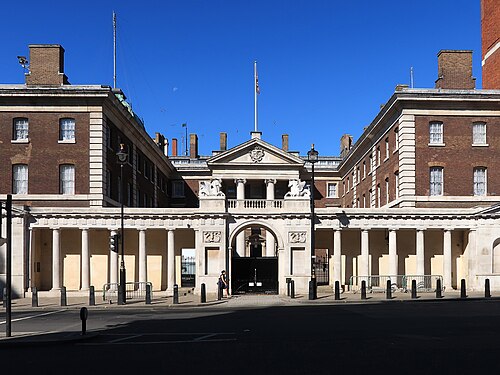
Department for Science, Innovation and Technology
 United Kingdom
About
The Department for Science, Innovation and Technology (DSIT) operated as a ministerial department of the United Kingdom government from February 7, 2023, until July 21, 2026. Prime Minister Rishi Sunak established the body to consolidate scientific research, technological development, and digital infrastructure under a single roof. This restructuring absorbed significant policy responsibilities from the former Department for Business, Energy and Industrial Strategy (BEIS) and the Department for Digital, Culture, Media and Sport (DCMS). The creation of DSIT marked a deliberate attempt to elevate science and technology to a central position within the British government's strategic planning.
During its three-year existence, the department managed a wide array of initiatives ranging from artificial intelligence strategy to quantum computing investments. It allocated funds such as the £1.1 billion plan designed to boost chip development and deployment for British AI projects. DSIT also engaged directly with the wider scientific community, notably selecting 71 experts in May 2026 to advise on national science and technology policy. Its operations spanned London and influenced regional innovation hubs across the country through partnerships with universities and tech clusters.
The organization ceased to exist following a general election that brought a new administration led by Keir Starmer. On July 21, 2026, officials announced the shutdown of DSIT as part of a broader Whitehall shake-up. Functions were transferred back to the newly formed Department for Business, Innovation, Science and Trade (DBIST), while other portfolios returned to DCMS and the Cabinet Office. Critics argued this move risked fragmenting expertise, while supporters suggested the department had allowed science to take a back seat compared to other priorities.
Mission
The department existed to foster, advance, and oversee the United Kingdom's progress in scientific research, technological development, and digital infrastructure. Its primary goal was to position the UK as a global leader in these fields by driving economic growth through strategic investment. DSIT aimed to create an environment conducive to innovation, encouraging collaboration between academia, industry, and the state to translate scientific breakthroughs into tangible economic and social advantages.
History
On February 7, 2023, Prime Minister Rishi Sunak announced the formation of the Department for Science, Innovation and Technology as part of a cabinet reshuffle. This decision merged key policy functions previously held by the Department for Business, Energy and Industrial Strategy and the Department for Digital, Culture, Media and Sport. The new department took immediate control over areas including digital safety, artificial intelligence, and space exploration. Michelle Donelan served as the first Secretary of State, tasked with defining the department's direction and securing funding for high-priority projects like the £1.1 billion AI chip initiative.
Throughout 2023 and 2024, DSIT launched several strategies focused on quantum computing and digital infrastructure. The department maintained an active presence on social media platforms including X, YouTube, Facebook, and LinkedIn to communicate updates to the public and industry partners. In May 2026, the leadership appointed a panel of 71 experts to guide future science policy, signaling an effort to broaden input beyond civil service channels. Andrew Griffith succeeded Donelan in leading the department during this period of expanded engagement with the scientific community.
The department's tenure ended abruptly on July 21, 2026, following a general election victory for the Labour Party. The new Prime Minister, Keir Starmer, ordered the dissolution of DSIT as part of a major government reorganization. Reports confirmed that by July 22, 2026, responsibilities were being transferred to the Department for Business, Innovation, Science and Trade, the Department for Digital, Culture, Media and Sport, and the Cabinet Office. By September 2026, government officials admitted that the transition left UK tech policy in a state of limbo, with analysis suggesting the brief experiment had highlighted challenges in maintaining coordinated science policy across shifting political administrations.
Notable People
Michelle Donelan
Secretary of State · 2023–2024
Inaugural head of the department responsible for establishing initial AI and quantum strategies.
Andrew Griffith
Secretary of State · 2024–2026
Led the department during its expansion phase and the selection of 71 external policy advisors.
Milestones
2023
Established on February 7 by Prime Minister Rishi Sunak, absorbing powers from BEIS and DCMS.
2023
Launched the £1.1 billion plan to boost British artificial intelligence chip development.
2026
Appointed a panel of 71 experts to advise on national science and technology policy in May.
2026
Shut down on July 21 following a change in government and subsequent Whitehall restructuring.
Sources
Organization Info
- Founded
- February 7, 2023
- Headquarters
- London, United Kingdom
- Country
- United Kingdom
- Secretary of State for Science, Innovation and Technology
- Andrew Griffith
- Parent
- Cabinet Office
- Type
- Government
- Founded Date
- February 7, 2023
- Dissolved Date
- July 21, 2026
Official Website
www.gov.uk/government/organisations/department-for-science-innovation-and-technology
Join the community
fans discussing