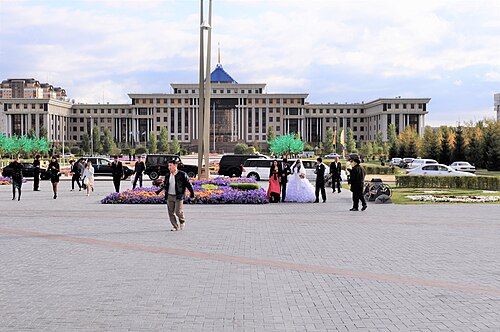
defence ministry
"The government arm that shapes national defense and commands armed forces"
About
Every sovereign nation runs a ministry of defence, though the titles differ: Department of Defense in the United States, Ministry of Defence in the UK and India, Forsvarsministeriet in Denmark. It's the government branch responsible for a country's military and national security. The ministry decides how armed forces are organized, funded, and deployed, and it's typically led by a defence minister or secretary of defence. Responsibilities vary from nation to nation, but the core mission stays consistent: protect the state from external threats and support foreign policy goals.
In most countries, the ministry oversees all military branches, army, navy, air force, and sometimes marines or space forces, and coordinates with intelligence agencies, defense contractors, and allied nations. It also shapes defense policy, manages defense budgets, and prepares for potential conflicts. The ministry often works directly with the head of government, such as the prime minister or president, and may influence military appointments and strategic decisions.
The structure and influence of a defence ministry can vary widely. In some nations, it's a powerful institution with direct command over the military; in others, it's more administrative, with military leadership holding operational control. Regardless of its form, the ministry of defence stands as a central pillar of state governance, reflecting national priorities and security approaches. The US Department of Defense states its mission as 'to provide the military forces needed to deter war and ensure our nation's security,' while the UK's Ministry of Defence works 'for a secure and prosperous United Kingdom with global reach and influence.'
Mission
The primary mission of a ministry of defence is to protect the state from external threats and support its foreign policy objectives. That means organizing, funding, and deploying the armed forces, and coordinating defense policy with other government bodies and international allies. Ministries also work to deter aggression, maintain readiness, and ensure the security of citizens and territories. In practice, this covers everything from setting military doctrine and procuring equipment to conducting operations and building alliances.
History
Ministries of defence, or their predecessors, have existed in various forms throughout history as states formalized their military structures. The modern concept of a dedicated ministry responsible for national defense evolved significantly with the rise of standing armies and the increasing complexity of warfare. These organizations are fundamental to a nation's sovereignty, tasked with ensuring security and projecting power.
In August 2026, defence ministries around the world were busy. North Korea fired a ballistic missile on August 12, and Japan's Defence Ministry confirmed the launch, calling it a threat to peace and security in the region. This was the second such launch in days, ahead of major US-South Korea military drills. Poland's deputy minister expressed interest in unused EU SAFE defence funds, hoping to bolster capabilities. The UK Ministry of Defence denied any data breach related to Chinese components in Royal Navy drones, insisting no sensitive information was accessed. Nigeria hosted former AFRICOM Commander General William E. Ward to strengthen bilateral ties, and the Israeli Ministry of Defence awarded a multi-million-dollar strategic tender to American company Ondas.
Subdivisions
Army
The land warfare branch responsible for ground operations.
Navy
The maritime force that protects sea lanes and projects power at sea.
Air Force
The aerial warfare branch providing air superiority and strike capabilities.
Notable People
Shinjiro Koizumi
Defence Minister of Japan · 2026
Confirmed North Korea's ballistic missile launch and condemned it as a threat to regional peace.
Luke Pollard MP
UK Minister for Defence Readiness and Industry · 2026
Visited Indo-Pacific partners to boost radar cooperation under AUKUS.
General William E. Ward
Former AFRICOM Commander · 2026
Hosted by Nigeria's Ministry of Defence to strengthen bilateral ties.
Milestones
2026-08-12
North Korea launches a ballistic missile; Japan's Defence Ministry confirms and condemns it.
2026-08-11
Poland expresses interest in unused EU SAFE defence funds.
2026-08-11
UK Ministry of Defence denies data breach from Chinese components in Royal Navy drones.
2026-08-11
Nigeria's Ministry of Defence hosts former AFRICOM Commander General William E. Ward to strengthen US ties.
2026-08-11
Israel's Ministry of Defence awards a multi-million-dollar strategic tender to Ondas.
Sources
Organization Info
- Type
- Government
Join the community
fans discussing