 Germany
About
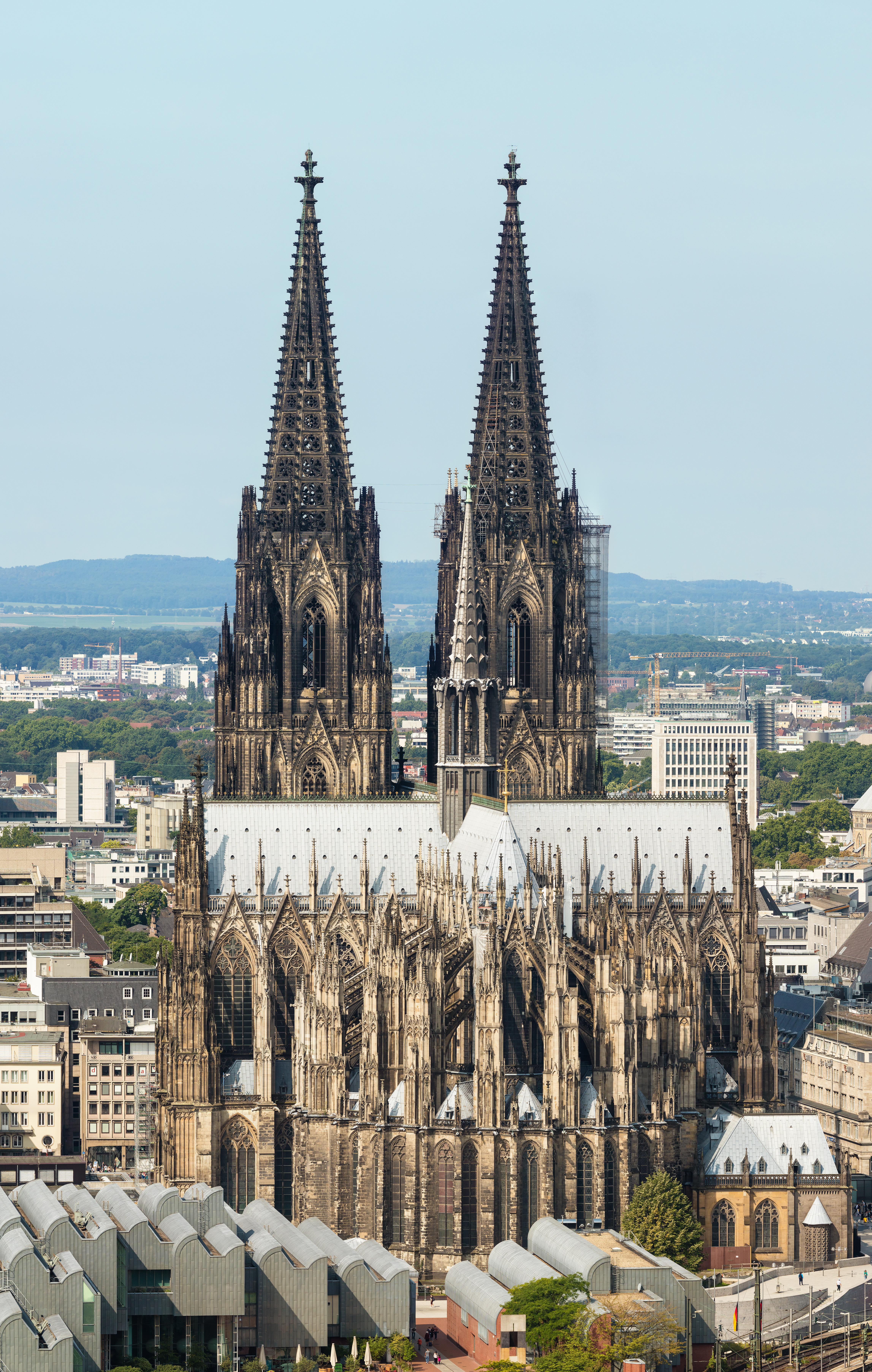
Cologne Cathedral, known in German as Kölner Dom, is a Catholic cathedral in Cologne, North Rhine-Westphalia. It serves as the seat of the Archbishop of Cologne and the administration of the Archdiocese of Cologne. This Gothic masterpiece is a symbol of German Catholicism and architecture, earning a spot on the UNESCO World Heritage list in 1996. With an average of 6 million visitors annually, it stands as Germany's most visited landmark. Soaring to 157 meters (515 feet), it is the tallest twin-spired church in the world, a title it held from its completion in 1880 until 1884, and again from 1990 to 2004.
The cathedral's construction began in 1248 but was halted in 1473, leaving the south tower unfinished for centuries. It wasn't until the 19th century that work resumed, driven by a wave of Romantic enthusiasm for the Middle Ages, and the cathedral was finally completed in 1880 according to medieval plans. This long history gives the structure a layered character, blending original Gothic elements with later additions. The cathedral survived heavy bombing during World War II, standing tall amid the ruined city, and its resilience has made it a powerful symbol of endurance.
While it is a working church, hosting regular services and religious ceremonies, it also functions as a major cultural hub, drawing pilgrims and tourists alike. Its imposing facade, intricate stained glass windows, and the Shrine of the Three Kings, said to hold the relics of the Magi, make it a must-see for anyone visiting the Rhineland.
Mission
The cathedral's mission is to serve as a living house of God, a place of worship, prayer, and pilgrimage, while also preserving its architectural and cultural heritage for future generations. It welcomes millions of visitors each year, inviting them to experience the sacred and the historical, and to find a moment of reflection amidst the bustle of the modern city.
History
The site of the cathedral has been sacred ground for centuries. Archaeological digs have uncovered the remains of Roman and early Christian buildings beneath the current structure, including a 4th-century church. The present Gothic cathedral was begun in 1248, under Archbishop Konrad von Hochstaden, to house the relics of the Three Kings, which had been brought from Milan in 1164. The design followed the French High Gothic style, inspired by cathedrals like Amiens and Beauvais.
Construction proceeded fitfully for two centuries, but by 1473 the work had ground to a halt, leaving the south tower just over 50 meters tall, capped with a crane that became a local landmark. The unfinished cathedral stood like that for over 300 years, a symbol of medieval ambition left unrealized. It wasn't until the 19th century, when Romanticism rekindled interest in the Middle Ages, that the project was revived. With the backing of the Prussian state and the tireless efforts of architects like Ernst Friedrich Zwirner and Richard Voigtel, the cathedral was finally completed in 1880, following the original medieval plans. The completion was celebrated as a national event, with the towers reaching 157 meters into the sky.
During World War II, the cathedral was hit by 14 aerial bombs and numerous incendiary devices, but remarkably it did not collapse. It stood as a lone survivor in the fire-bombed city, a symbol of resilience. After the war, reconstruction of the cathedral and the city began. In 1996, it was added to the UNESCO World Heritage list, recognizing its outstanding universal value. In recent years, the cathedral has faced new challenges, including the introduction of visitor fees in 2026 to help cover maintenance costs, a decision that sparked public debate about access to religious heritage sites.
Notable People
Choir stalls in Cologne Cathedral
Masterpieces of medieval woodcarving, dating from the 14th century, with intricate details and biblical scenes.
Judensau at the choir stalls of Cologne Cathedral
A controversial medieval carving depicting anti-Semitic imagery, which has been the subject of debate and calls for contextualization.
Organs of Cologne Cathedral
Several historic organs, including the famous 'Swell Organ' and the 'Transept Organ', used in liturgical services and concerts.
Stained glass windows of Cologne Cathedral
A collection of over 10,000 square meters of stained glass, including the modern 'Kölner Fenster' by Gerhard Richter, installed in 2007.
Bells of Cologne Cathedral
The cathedral houses 11 bells, including the famous 'Dicke Pitter' (St. Peter's Bell), which weighs 24 tons and is one of the largest free-swinging bells in the world.
Shrine of the Three Kings
A golden reliquary believed to contain the bones of the Magi, making the cathedral a major pilgrimage destination since the 12th century.
Milestones
1248
Construction begins under Archbishop Konrad von Hochstaden
1473
Work halts, leaving the south tower unfinished
1880
Cathedral completed according to medieval plans
1945
Survives heavy bombing during World War II
1996
Designated a UNESCO World Heritage Site
2007
Gerhard Richter's new stained glass window installed in the south transept
2025
New LED lighting system illuminates the cathedral
2026
Visitor entry fee introduced for tourists
Sources
Organization Info
- Founded
- 1248
- Headquarters
- Cologne, North Rhine-Westphalia, Germany
- Country
- Germany
- Parent
- Archdiocese of Cologne
- Type
- Religious
- Height
- 157.22 meters
- Length
- 144.5 meters
- Width
- 86.25 meters
- Annual visitors
- 6 million
- UNESCO World Heritage Site
- Since 1996
- Entry fee for tourists
- €12 (from July 2026)
Official Website
www.koelner-dom.de/
Join the community
fans discussing