California Institute of Technology
 United States
"The truth shall make you free"
About
The California Institute of Technology, better known as Caltech, is a private research university in Pasadena, California. It's a place where the line between science fiction and science fact blurs. From the jet propulsion lab that powers NASA's deep-space missions to the quantum computing breakthroughs that could redefine computing, Caltech has been a launchpad for modern innovation. It's a small school with a giant footprint, consistently ranking among the world's top universities for science and engineering.
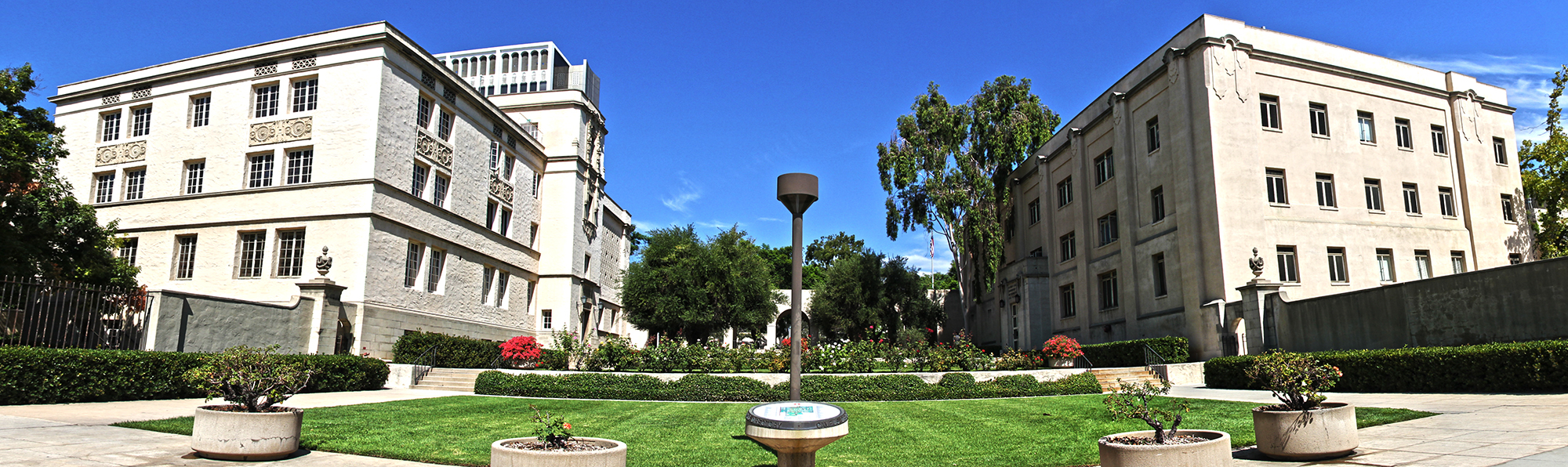
Founded in 1891 by Amos G. Throop as a vocational school, Caltech's transformation into a research powerhouse began when astronomer George Ellery Hale joined its board in 1907. Hale recruited physicist Robert Andrews Millikan, whose oil-drop experiment measured the electron's charge and won a Nobel Prize. Together, they built a place where pure and applied sciences are taught with an intensity matched only by its small student body. The campus, with its Spanish-style architecture and orange trees, sits in the shadow of the San Gabriel Mountains, a fitting backdrop for a school that looks to the stars.
Caltech's influence extends far beyond its 124 acres. Its Jet Propulsion Laboratory, which it manages for NASA, has sent rovers to Mars and probes to the edge of the solar system. Its faculty and alumni include 46 Nobel laureates, and its research output per capita is staggering. The school's motto, "The truth shall make you free," is more than a slogan; it's a working philosophy. With a budget of around $3 billion and a reputation that attracts the best minds, Caltech remains a quiet giant in the world of science.
Mission
Caltech's mission is to expand human knowledge and benefit society through research integrated with education. It aims to attract the brightest minds, foster an environment where curiosity drives discovery, and translate breakthroughs into technologies that solve real-world problems. The university is committed to training future leaders in science and engineering while maintaining the highest standards of integrity and intellectual rigor.
History
Caltech's story begins in 1891 when Amos G. Throop, a businessman and politician, founded a vocational school in Pasadena. Originally called Throop University, it soon became Throop Polytechnic Institute, offering practical training in mechanics, arts, and science. The school was small and unremarkable until 1907, when astronomer George Ellery Hale joined its board of trustees. Hale had a vision: to build a world-class research institution on the West Coast. He recruited physicist Robert Andrews Millikan, whose oil-drop experiment had measured the electron's charge and earned him a Nobel Prize, to lead the effort.
Under Hale and Millikan, the curriculum was overhauled to emphasize pure and applied sciences. The school was renamed the California Institute of Technology in 1920, and by the 1930s it had established itself as a major center for physics, chemistry, and geology. In 1936, Caltech took over management of the Jet Propulsion Laboratory (JPL) for NASA, a partnership that would define its role in space exploration. Over the decades, Caltech scientists have made breakthroughs in fields from quantum mechanics to genomics, and its alumni and faculty have earned numerous Nobel Prizes.
Recent years have brought new leadership and expansion. In June 2026, astrophysicist Ray Jayawardhana became the tenth president, succeeding Thomas F. Rosenbaum. That same month, the university dedicated the Ginsburg Center for Quantum Precision Measurement, a state-of-the-art facility for quantum research. In July 2026, Caltech announced plans to build a massive deep-space radio telescope in the Nevada desert, described as a "game changer" for observing the universe. The university also continues its commitment to public service, hosting programs like the Warrior-Scholar Project for military veterans.
Subdivisions
Jet Propulsion Laboratory (JPL)
A NASA field center managed by Caltech, responsible for robotic space missions including Mars rovers and deep-space probes.
Dr. Allen and Charlotte Ginsburg Center for Quantum Precision Measurement
A dedicated research center for quantum science, opened in June 2026.
Notable People
Amos G. Throop
Founder · 1891
Established Caltech as Throop University, a vocational school that later became a leading research institution.
George Ellery Hale
Trustee and visionary · 1907-1938
Transformed Caltech into a research powerhouse by recruiting top scientists and shaping its science-focused curriculum.
Robert Andrews Millikan
Physicist and President · 1921-1945
Won the Nobel Prize in Physics in 1923 for measuring the electron's charge; led Caltech's rise to prominence.
Ray Jayawardhana
President · 2026-present
Tenth president of Caltech, appointed in 2026; an astrophysicist formerly at Johns Hopkins University.
Milestones
1891
Founded as Throop University by Amos G. Throop
1907
George Ellery Hale joins the board, beginning the transformation into a research institution
1920
Renamed the California Institute of Technology
1936
Takes over management of the Jet Propulsion Laboratory for NASA
2026
Ray Jayawardhana appointed as tenth president
2026
Ginsburg Center for Quantum Precision Measurement dedicated
2026
Announces plans for Nevada deep space telescope
Departments
Sources
Organization Info
- Founded
- 1891
- Headquarters
- Pasadena, California
- Country
- United States
- President
- Ray Jayawardhana
- Type
- University
- Employees
- 979
- Budget
- $3 billion
- Revenue
- $2.3 billion
- Nobel Laureates
- 46
Financials
- Revenue
- $2.3 billion
- Budget
- $3 billion
- Employees
- 979
Official Website
caltech.edu
Join the community
fans discussing