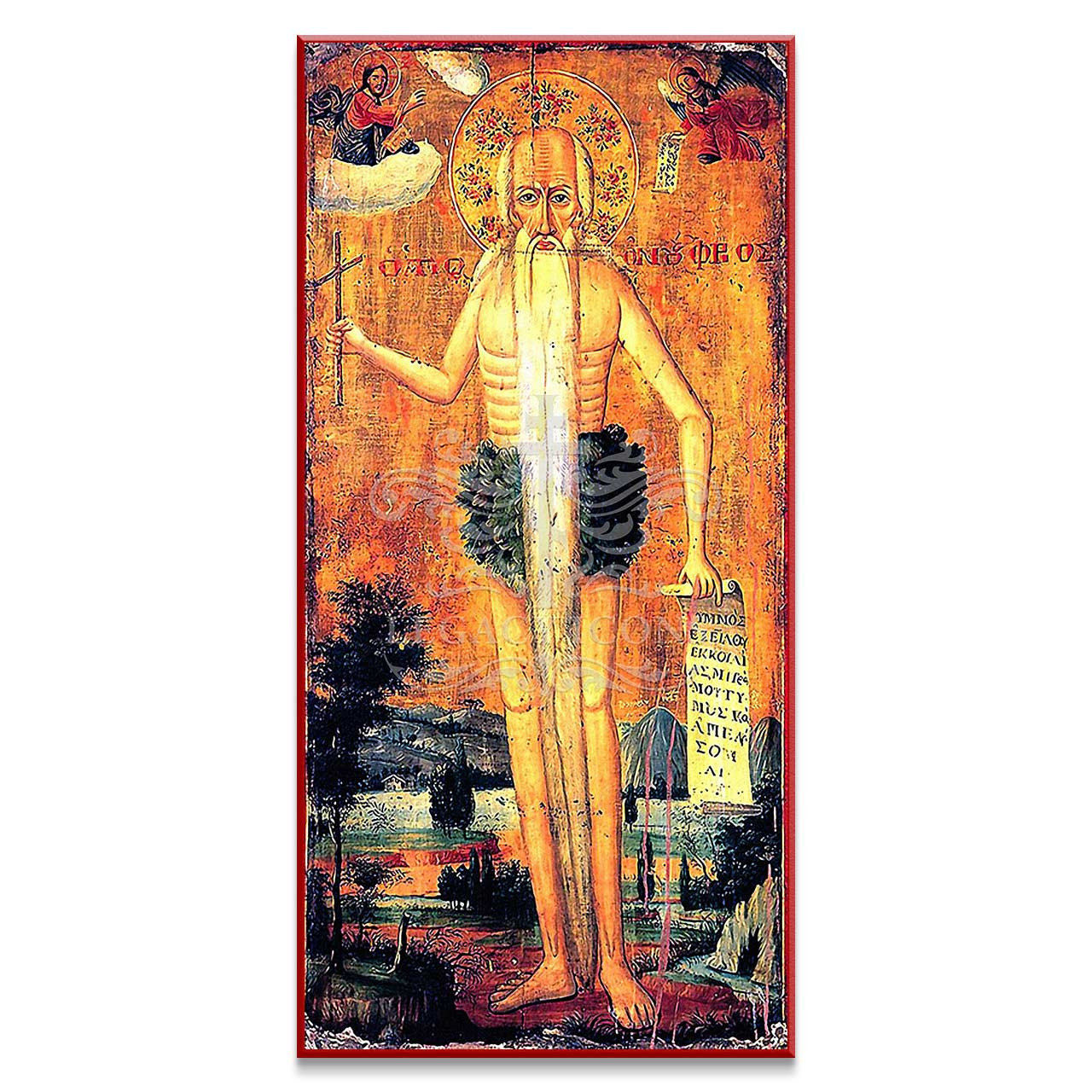
Onuphrius
 Egypt
EgyptAlso known as: Onoufrios, Saint Nofer the Anchorite, Venerable Onuphrius
Birthday
Birth Sign
Birthplace
Roman Empire
Age
Died at 80
About
Onuphrius, also known as Onoufrios in Greek, was a Christian hermit who lived in the desert of Upper Egypt during the 4th or 5th century. Born around 320 AD in the Roman Empire, he devoted his life to solitary prayer and asceticism, spending decades in the harsh wilderness. His reputation for holiness spread, and he is now venerated as Saint Onuphrius in the Roman Catholic and Eastern Catholic churches, as Venerable Onuphrius in Eastern Orthodoxy, and as Saint Nofer the Anchorite in Oriental Orthodoxy. He died around 400 AD at the age of 80, having inspired countless others through his example of extreme devotion and self-denial.
Early Life & Background
According to hagiographic tradition, Onuphrius first lived in a coenobitic monastery in Hermopolis, in the Thebaid region of Egypt. As a young man, he reportedly entered this monastery, but the pull of the desert proved stronger than communal religious life. Emulating Saint John the Baptist and the Prophet Elijah, he left the monastery to wander into the wilderness as an anchorite. He lived for decades in total solitude, wearing only rough garments made of leaves and surviving on wild herbs and dates. According to tradition, his only companion was said to be a palm tree that provided shade and fruit, and a raven miraculously brought him bread.
Career Growth
Onuphrius's reputation for holiness spread even during his lifetime. According to the account of Saint Paphnutius, who led an ascetical life in the Thebaid desert and left a written record of his encounter, Paphnutius met Onuphrius near the end of the hermit's life. Onuphrius shared his story of decades of solitary devotion before dying peacefully in Paphnutius's presence. Paphnutius buried him and later spread the tale, ensuring Onuphrius's legacy. His life has been depicted in art and hagiography for centuries. Notable artistic depictions include the painting "Saint Onuphrius" (ca. 1630) by the Spanish-Italian Baroque artist Jusepe de Ribera, also known as "Lo Spagnoletto." The work is held in the collection of the Museo del Prado in Madrid. His image also appears in the collection of Saint Sophia Cathedral in Kiev.
Career Timeline
Public Image & Style
Onuphrius's public image is that of the archetypal desert hermit, a figure of extreme asceticism and spiritual devotion. He is depicted in icons and religious art as an elderly, emaciated man with long white hair and beard, dressed in leaves or rough animal skins, often with the palm tree that sustained him. His legacy represents the eremitic ideal of complete withdrawal from worldly concerns. There is no formal fandom in the modern sense, but he maintains a devoted following among Orthodox and Catholic Christians who honor his feast days.
Fame & Fandom
Saint Onuphrius never courted a modern audience. His followers were not fans who organized chart pushes or viral campaigns but believers marking feast days and pilgrims seeking solace in ancient liturgies. No formal fandom name exists for this 4th-century desert hermit, whose legacy rests on institutional veneration rather than grassroots fan movements. The only rituals are the annual commemorations of his death on June 12 and the quiet devotion of Orthodox communities worldwide. While no social media accounts or digital billboards celebrate him, his image endures as a stark symbol of ascetic withdrawal. This enduring spiritual presence now registers within the broader metrics of global cultural attention tracked by the iFANN Global Fame Rankings. In August 2026, he stands as the 70th most famous person from Egypt, a position holding steady from the previous cycle. He also ranks as the 50th most famous person in Religious Leaders, maintaining that spot without fluctuation.
Interesting Facts and Legends
Onuphrius bears different names across Christian traditions: Saint Onuphrius in the West, Venerable Onuphrius in Eastern Orthodoxy, and Saint Nofer the Anchorite in Oriental Orthodoxy. A persistent legend claims a raven miraculously delivered bread to sustain him during his decades of isolation in the Egyptian wilderness. He serves as the patron saint of weavers, linking his solitary labor to the craft of textile production. Variants of his name appear globally, including Onofre in Spanish and Portuguese, Onufrio in Italian, Onufry in Polish, and Онуфрий in Russian. A contentious land dispute involving the Monastery of St Onuphrius in Jerusalem erupted in 2026 between Greek Orthodox authorities and Israeli officials. Folklore often retells a dramatic transformation story where a woman named Onuphria asked God to turn her into a man so she could live as a hermit. Another iconic moment involves his discovery by St. Paphnutius; the elderly monk initially hid in shame before being comforted, an event that brought his existence to the wider church and inspired countless icons.
Notable Quotes
“Godly-wise Father Onuphrius, by separating thyself from the turbulence of the world, thou wast lifted to the height that is found far above the passions.”
Family & Personal Life
Onuphrius lived in complete solitude for over 60 years in the desert, and no documented family members exist in any hagiographic source. His life was defined by radical withdrawal from human society, and he had no spouse, children, or known relatives. His only companions were the palm tree that sustained him and the raven that brought him bread, according to legend.
Notable Connections
Relationships & Dating History
Onuphrius lived in complete solitude for over 60 years in the desert, and no documented romantic relationships, spouse, or children exist in any hagiographic source. His life was defined by radical withdrawal from human society and total devotion to ascetic practice and prayer. This aspect of his biography is consistent across all sources.
Death & Aftermath
Death Place
Upper Egypt
Saint Onuphrius died around the year 400 AD in the desolate wilderness of Upper Egypt, bringing an end to over six decades of solitary asceticism. His passing occurred peacefully in the presence of Saint Paphnutius, a fellow desert father who discovered the hermit after years of searching for him. Tradition holds that Onuphrius had sustained himself on palm leaves and water from a spring until his final days, with no specific medical cause recorded in the hagiographic accounts that have survived from antiquity. Paphnutius buried the body within the cave where the saint had lived, ensuring the site remained a place of reverence rather than a forgotten grave. The immediate aftermath was defined not by legal proceedings or public mourning, but by the oral transmission of the saint's story.
Paphnutius carried the narrative back to the monastic communities, spreading tales of Onuphrius's extreme devotion and self-denial. This account became foundational to the Desert Fathers tradition, cementing the hermit's status as a model of spiritual endurance. Centuries later, the legacy of this death manifested through artistic veneration, most notably in Jusepe de Ribera's Baroque painting "Saint Onuphrius" held at the Museo del Prado. The feast day commemorating his life remains a focal point for Orthodox jurisdictions, with annual services celebrated at the Holy Monastery of Saint Onuphrius in Jerusalem.
Net Worth (Estate Value)
As a 4th-century desert hermit, Onuphrius owned no worldly possessions and had no personal wealth. His legacy is entirely spiritual and devotional. The Monastery of St Onuphrius the Great in Jerusalem holds significant religious and historical value, and its annual feast-day celebrations draw pilgrims and clergy from around the world. The monastery's land has been the subject of a 2026 dispute, highlighting its ongoing importance to the Christian community.
Awards & Accolades
View 4 records, honours and achievementsKnown For
Desert hermitage in Upper Egypt
4th–5th century · Hermit
Keywords
Sources
Quick Facts
- Profession
- monk, hermit
- Born
- c. 320 AD
- Birthplace
- Roman Empire
- Died
- c. 400 AD
- Death Place
- Lower Egypt
- Gender
- Male
- Feast Day (Western)
- June 12
- Feast Day (Eastern)
- June 15
Frequently Asked Questions
Who was Saint Onuphrius?
When is the feast day of Saint Onuphrius?
What is Saint Onuphrius the patron saint of?
How did Saint Onuphrius die?
Where is the Monastery of Saint Onuphrius?
Similar People
Join the community
fans discussing