 Japan
Japan“Shindo's direction is nothing short of genius, creating a world where the wind itself seems to whisper threats, and the human heart is the darkest monster of all.”
A.O. Scott
The New York Times
Set in the chaotic landscape of 14th-century Japan during the Nanboku-chō period, Onibaba follows two women trapped in a desolate swamp where men are scarce and death is constant. An older mother and her younger daughter-in-law survive by ambushing wandering samurai who have been separated from their armies. They drag these victims into the marsh, kill them with sickles, and strip their bodies for armor and valuables to sell at local markets.
The film explores the erosion of morality under extreme pressure. When Hachi, the older woman's son, returns from war maimed and broken, he disrupts the fragile equilibrium between the two survivors. His presence sparks intense jealousy and paranoia, transforming their alliance into a psychological battleground. The rustling pampas grass becomes a character in itself, masking their movements and amplifying the isolation that drives them toward madness.
Stream
Availability and pricing can change. Confirm on the provider's site before purchasing.
The story opens on a windswept plain dominated by tall, rustling pampas grass near a murky swamp. Two unnamed women live in a small bamboo hut at the edge of this desolate landscape. Their husbands and sons were conscripted years ago to fight in the civil wars tearing Japan apart, and they never returned. With no food sources and facing starvation, the pair has developed a grim routine. They wait in ambush within the tall grass or their hut, looking for lone samurai who have deserted or lost their way. Once a victim approaches, they drag him into the water, kill him with a large sickle, and strip his body of armor and weapons. They take these items to a nearby merchant town to trade for rice and supplies. This cycle of violence sustains their lives but slowly erodes their humanity.
The atmosphere shifts when Hachi, the son of the older woman, returns home. He is not the heroic figure they imagined but a broken man who has lost an eye and his spirit. He works as a farmer nearby, bringing a flicker of hope for stability. However, his arrival complicates their dynamic. The older woman sees him as a burden and a reminder of her fading power, while the younger woman views him as a potential savior and husband. She desires to escape the swamp and build a life with him, but the older woman refuses to let go of her control over the household and the only remaining male figure.
Tension mounts as the older woman becomes increasingly possessive. She suspects the younger woman of plotting against her and growing too close to Hachi. The younger woman feels trapped and resentful, her desperation growing with every passing day. The oppressive heat and the relentless sound of wind through the grass create a claustrophobic environment that mirrors their internal turmoil. Their shared goal of survival fractures as personal desires take precedence.
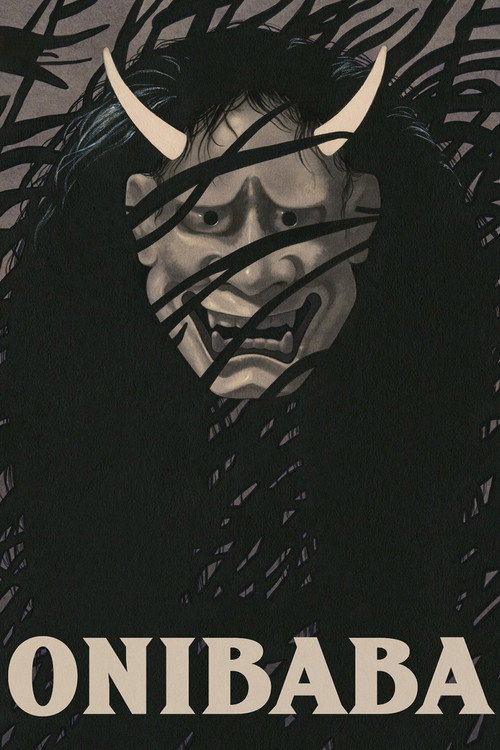
The narrative intensifies with the arrival of a mysterious samurai wearing a grotesque, demonic mask. Unlike previous victims, this stranger does not flee or attack immediately. He engages the women in a complex dance of seduction and deception. The younger woman is captivated by his beauty and the promise of a different life, while the older woman grows paranoid and suspicious. The masked stranger becomes the catalyst for the complete unraveling of their alliance. As they compete for his affection, their moral boundaries dissolve further. The older woman plots to eliminate the younger woman, while the younger woman manipulates the situation to secure her future.
The conflict escalates into a violent confrontation where reality and hallucination blur. The women's actions become erratic, driven by fear, greed, and sexual frustration. The setting seems to close in around them, reflecting their descent into madness. The film uses light and shadow, along with a haunting score, to maintain suspense. The audience questions whether the supernatural elements are real or projections of their own guilt and despair. The story builds toward a tragic climax where the women must face the consequences of their choices, leading to a final revelation about the true nature of evil and the cost of survival in a world stripped of civilization.
ONIBABA Original Theatrical Trailer (Masters of Cinema)
Critical Consensus
Onibaba stands as a visceral masterpiece of Japanese horror, blending historical drama with primal terror. Its stark black-and-white cinematography and haunting score create an atmosphere of suffocating dread. The performances by Nobuko Otowa and Jitsuko Yoshimura deliver a raw, psychological portrait of desperation and moral decay. A timeless exploration of human nature under extreme pressure.
“Shindo's direction is nothing short of genius, creating a world where the wind itself seems to whisper threats, and the human heart is the darkest monster of all.”
A.O. Scott
The New York Times
“The film's use of the pampas grass as a visual metaphor for the characters' inner turmoil is breathtaking, making every rustle a potential death knell.”
Todd McCarthy
Variety
“Shindo strips away the glamour of samurai films to reveal the ugly truth of survival, where morality is the first casualty and the only currency is blood.”
Roger Ebert
RogerEbert.com
“This is not just a horror film; it is a profound meditation on the human condition, executed with a visual style that is both beautiful and terrifying.”
Peter Bradshaw
The Guardian
“The interplay between the two women is electric, driven by a tension that builds to a crescendo of emotional and physical violence that leaves you breathless.”
David Ehrlich
IndieWire
Nobuko Otowa
Older Woman
Jitsuko Yoshimura
Younger Woman
Kei Satō
Hachi
Jūkichi Uno
Masked Samurai
Director
Kaneto Shindō
Writer
Kaneto Shindō
Composer
Hikaru Hayashi
Cinematographer
Kiyomi Kuroda
Producers
Tamotsu Minato, Hisao Itoya, Setsuo Noto
Mainichi Film Concours (1965)
Best Actress: Won
Kinema Junpo Awards (1965)
Best Film: Won
Kinema Junpo Awards (1965)
Best Director: Won
Blue Ribbon Awards (1965)
Best Director: Nominated
Cannes Film Festival (1965)
Competition: Selected
Join the community
fans discussing