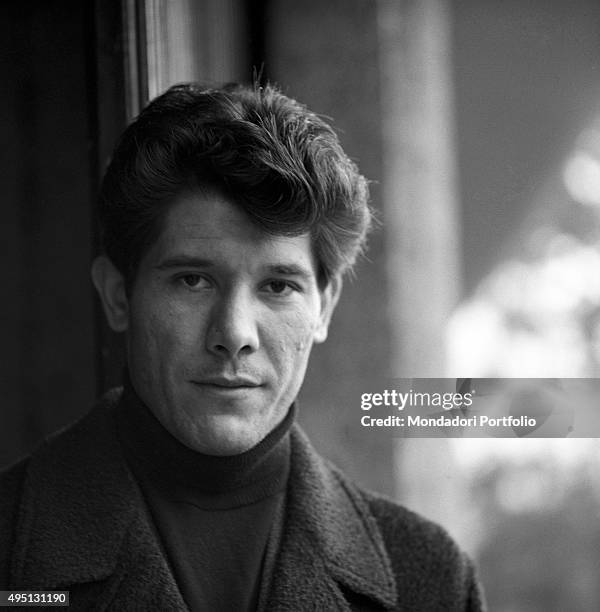
Omar Sívori
 Germany
Football player•football manager
Also known as: El Cabezón
Birthday
October 2, 1935
Birth Sign
Libra
Birthplace
San Nicolás de los Arroyos, Buenos Aires Province, Argentina
Age
Died at 69
Height
5 ft 4 in (163 cm)
About
Omar Sívori was an Argentine-Italian footballer widely regarded as one of the most electrifying forwards of his era. He is famous for his dazzling left-footed dribbling, audacious creativity, and fearless style. Sívori won the Ballon d'Or in 1961, the first Argentine-born player to do so, and remains a Juventus icon. His career spanned River Plate, Juventus, and Napoli, and he represented both Argentina and Italy internationally. Today, he is remembered as a pioneer of South American talent in European football, with his legacy cemented by his individual accolades and championship titles. Fans continue to admire his distinctive flair and the indelible mark he left on the sport.
Early Life & Background
Enrique Omar Sívori was born on October 2, 1935, in San Nicolás de los Arroyos, a city nestled within the Buenos Aires Province of Argentina. From his earliest days, Sívori was immersed in a culture where football was not just a sport, but a way of life, passionately embraced across the entire region. His formative years were spent navigating the tight, bustling streets of his neighbourhood, which inadvertently became his first training ground. These cramped urban spaces forced him to develop an extraordinary agility and a masterful close control of the ball, skills that would later define his electrifying play style and become his unmistakable trademark on the pitch. Even as a child, Sívori's innate talent shone brightly; he quickly became known for his dazzling left-footed dribbling, audacious creativity, and a fearless, direct approach to the game that captivated anyone who watched him play.
As a teenager, Sívori's prodigious abilities did not go unnoticed, leading him to join the prestigious youth system of River Plate, one of Argentina's most storied football clubs. It was during this period that his self-assured demeanor and his distinctive, perhaps somewhat oversized, haircut earned him the memorable nickname El Cabezón, "bighead." His confident style and evident skill propelled him rapidly through the youth ranks, culminating in his professional debut in 1954, at the young age of 19. From his very first appearances, Sívori shared the pitch with revered club legends like Ángel Labruna, a testament to his immediate impact and promise. Demonstrating an exceptional ability to not only hold his own but also to excel among seasoned professionals, Sívori quickly became a pivotal player. By 1957, his contributions had been instrumental in securing three Argentine league titles for River Plate. During this golden era, he cemented his reputation as a formidable forward, notably forming a deadly and dynamic attacking partnership known as the "Trio of Death" alongside fellow talents Humberto Maschio and Antonio Angelillo. This period marked the definitive breakthrough in his burgeoning career, establishing him as one of Argentina's most exciting footballing prospects.
Career Growth
Sívori's big move came in 1957 when Juventus paid a then-record fee to bring him to Italy. He won Serie A in his first season and added two more titles by 1961. That same year, he claimed the Ballon d'Or, cementing his status as Europe's best. He also won three Coppa Italia trophies and was Serie A's top scorer in 1959-60 with 28 goals. After acquiring Italian citizenship in 1961, he played for Italy at the 1962 World Cup. In 1965 he moved to Napoli, helping them finish second in Serie A — their highest ever at the time. A knee injury forced his retirement in 1968. After playing, he managed Argentine clubs and worked as a sharp-tongued TV commentator in Italy.
Career Timeline
Public Image & Style
Sívori is remembered as a flamboyant, technically gifted forward whose style was both admired and controversial. Media portray him as a pioneering Argentine talent who became an Italian icon. His playing style featured dazzling dribbling, left-footed precision, and provocative flair — he often tried to humiliate opponents with his skill. No official fandom name is documented, but he remains a cult figure among Juventus supporters.
Fame & Fandom (iFAMOUS Rankings)
Omar Sívori remains a towering figure in football history, revered not as a modern celebrity with a dedicated cult following, but as a foundational legend within the broader communities of Juventus supporters and Argentine fans. His legacy is defined by deep historical reverence rather than organized fan clubs or digital campaigns; the "Bianconeri" celebrate him as one of the finest players to ever wear the black and white stripes, while his dual identity as an Argentine who became an Italian icon cements his status across borders. There is no formal name for his specific fanbase, reflecting the era in which he played before social media allowed for distinct fandom organization. While fans today remember his theatrical style and audacious skill through retrospective appreciation, there are no documented rituals or interactive movements solely dedicated to his memory. Regarding his current standing in global recognition, iFANN has evaluated Omar Sívori and determined that he does not currently hold a placement in the published rankings, including the Global Top 1,000 or any scope-specific top lists. This absence of a numeric rank reflects his status as a historical figure whose fame is anchored in specific sporting achievements rather than contemporary search volume or media consumption metrics.
Interesting Facts and Legends
Sívori popularized the nutmeg move in Italian football and was known for always playing with his stockings rolled down around his ankles. Despite his small stature, he displayed remarkable bravery, often taking kicks to the face during aggressive tackles. His volatile character frequently led to arguments with officials, contributing to his controversial reputation. After the 1957 South American Championship, the Argentine football establishment banned him and his Trio of Death teammates from the national team, a decision that significantly hurt Argentina's campaign in the 1958 World Cup. He is also widely cited as the first major foreign star to play for Juventus, arriving from River Plate at age 21 and paving the way for international talents. His victory in the 1961 Ballon d'Or remains a cornerstone of his lore, marking him as the first non-European player to win the award and the only Italian club player to do so at the time.
Family & Personal Life
Sívori was the son of Adeodato Publio Sivori, whose father emigrated from Cavi di Lavagna in Genoa, and Carolina Tiracchia, who came from Abruzzo in central Italy. His father died in 1939 when Sívori was only four years old. He was raised by his mother in San Nicolás de los Arroyos. He married and had a family, though details about his spouse and children are not publicly documented. He returned to his hometown in his later years and died there in 2005.
Notable Connections
Relationships & Dating History
Sívori was married, but details about his spouse and relationship timeline are not publicly documented. He had a family, though no specific partner names or children are recorded in available sources. As of his death in 2005, he was married.
- Married? - 2005Spouse name not publicly documented.
Death & Aftermath
Died
February 17, 2005 (aged 69)
Death Place
Unknown
Cause of Death
Unknown
Juventus.com published a tribute titled "Omar Sivori remembered" shortly after his passing, honoring him as one of the finest players to wear the club's black and white stripes. This reverence was echoed by The Guardian in an obituary on February 21, 2005, which described him as possessing one of the finest left feet since the war. The football world lost a pioneer when Sívori passed away at the age of 69 on February 17, 2005, though specific details regarding the location of his death or the medical cause remain unrecorded in available reports. Tributes continued well beyond the initial announcement, with Juventus reiterating their respect on the tenth anniversary of his death in February 2015. His legacy endured through consistent placement on lists of the greatest Argentine footballers alongside Diego Maradona and Lionel Messi. Specific details regarding funeral arrangements, burial locations, or private ceremonies have not been made public, leaving the focus on his enduring status as a celebrated figure in football history.
Net Worth (Estate Value)
$5 Million
iFANN Editorial Team estimate
As a player from the 1950s and 1960s, Sívori's earnings were modest by modern standards. His transfer to Juventus in 1957 represented a then-world record fee, though exact figures remain unavailable. Following his retirement, he worked as a manager and television commentator, generating additional income throughout his later years. Per iFANN's editorial analysis, his estate value is estimated at around $5 million as of 2026, primarily derived from legacy rights and memorabilia sales. No posthumous earnings from endorsements or licensing have been documented.
Awards Won (4)
Sívori won the Ballon d'Or in 1961, becoming the first Argentine-born player to receive the award. He also won the Copa América with Argentina in 1957 and was named Best Player of the tournament. He was Serie A top scorer in 1959-60.
1961 · Best Player in Europe
Juventus
1957 · Winner
Argentina national team
Known For
Juventus
1957 · Forward
River Plate
1954 · Forward
Napoli
1965 · Forward
Argentina national team
1956 · Forward
Italy national team
1961 · Forward
Keywords
Sources
Quick Facts
- Profession
- Football player, football manager
- Born
- October 2, 1935
- Birthplace
- San Nicolás de los Arroyos, Argentina
- Died
- February 17, 2005
- Death Place
- San Nicolás de los Arroyos, Argentina
- Gender
- Male
- Birth Sign
- Libra
- Height
- 5 ft 4 in (163 cm)
Personal Details
- Full Name
- Enrique Omar Sívori
- Height
- 5 ft 4 in (163 cm)
Frequently Asked Questions
How old was Omar Sívori when he died?
Did Omar Sívori win the Ballon d'Or?
What teams did Omar Sívori play for?
Why did Omar Sívori play for Italy?
How many goals did Omar Sívori score?
Similar People
Join the community
fans discussing