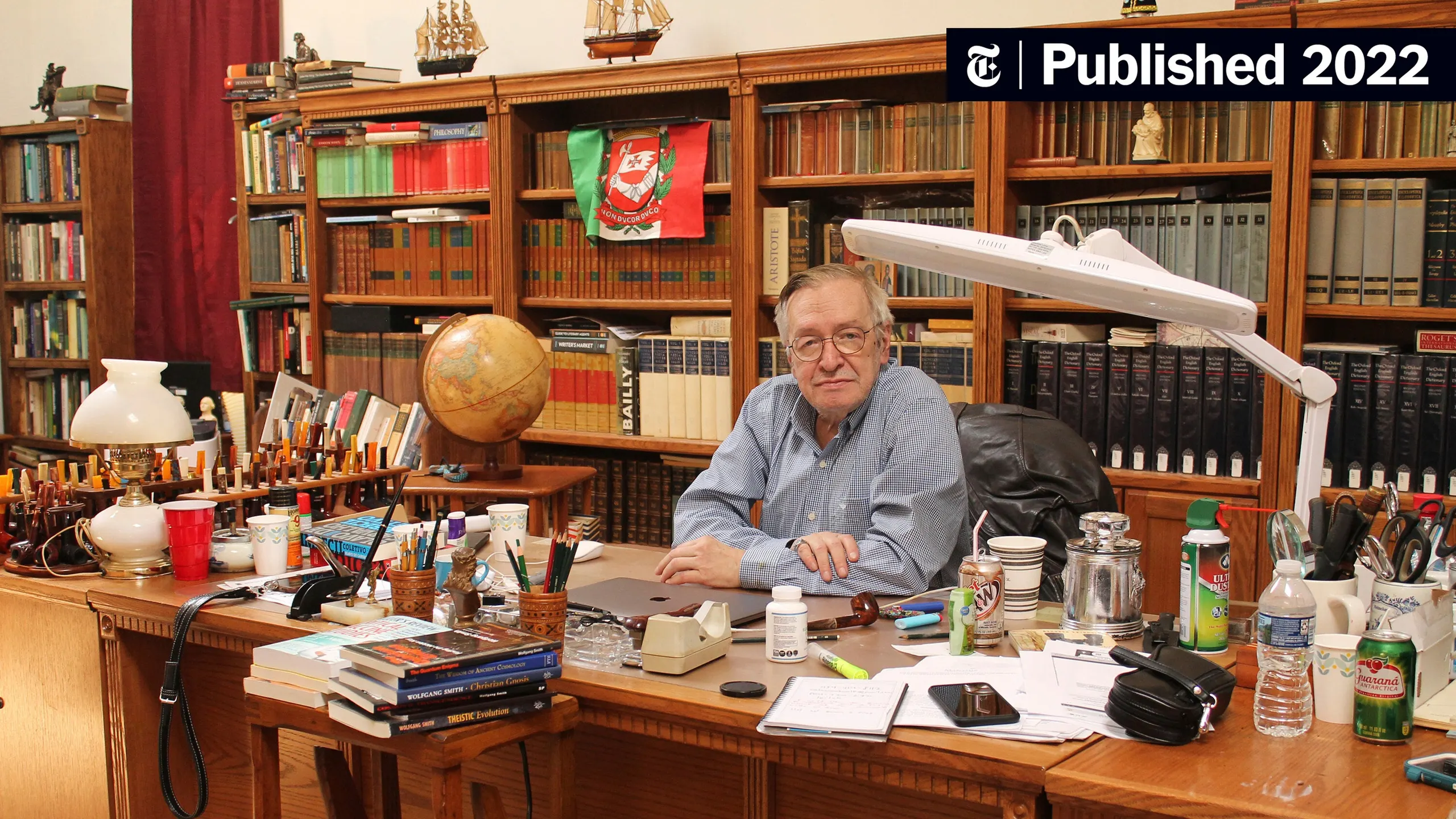
Olavo de Carvalho
 Brazil
Also known as: Olavo Luiz Pimentel de Carvalho
Birthday
April 29, 1947
Birth Sign
Sagittarius
Birthplace
Campinas, São Paulo, Brazil
Age
Died at 74
Height
5 ft 9 in (175 cm)
About
Olavo Luiz Pimentel de Carvalho was a Brazilian essayist, journalist, and self-proclaimed philosopher who became one of the most polarizing figures in modern Brazilian history. Born in Campinas, São Paulo, he rose to prominence not through traditional academic channels but via a unique blend of esotericism, conspiracy theory, and anti-communist rhetoric. He is widely regarded as the intellectual godfather of the Brazilian far-right movement and the primary ideological influence behind former President Jair Bolsonaro, despite never holding public office himself. His work focused on metaphysics, classical philosophy, and political critique, often challenging secular humanism and Marxist ideology from a conservative Catholic perspective.
Carvalho's legacy remains a subject of intense debate, viewed by admirers as a genius exposing globalist lies and by critics as a dangerous conspiracist who undermined democratic institutions. He established a vast digital ecosystem including video lectures, written essays, and online forums that continue to operate posthumously. His influence extended beyond Brazil, reaching audiences in the United States and Portugal, where his translations sparked significant political discourse. The scale of his success is measured not in corporate wealth but in the sheer volume of his digital footprint and the enduring nature of the political movements he inspired.
Early Life & Background
Olavo Luiz Pimentel de Carvalho entered the world on April 29, 1947, in Campinas, a city in the state of São Paulo, Brazil. His early years were defined by a deep fascination with literature, philosophy, and the occult, interests that would later form the bedrock of his eclectic worldview. Unlike many intellectuals of his time who pursued formal academic paths, Carvalho's education was largely self-directed. He briefly attended the University of Campinas (UNICAMP) but did not complete a degree in philosophy, a fact often cited by critics to question his academic credentials. This lack of formal certification did not deter him from developing a distinct voice that combined historical analysis with sharp political critique.
Before achieving widespread notoriety, Carvalho worked as a journalist and wrote columns for major Brazilian publications during the 1980s. He contributed to outlets like O Globo and Folha de S.Paulo, where he began honing the style that would later define his career. During this period, he also translated works and engaged in literary criticism, establishing a reputation within niche circles. While his writing appeared in mainstream media, his reputation remained relatively obscure until the 1990s when he began publishing more controversial essays that challenged established narratives about culture and politics.
His transition from print journalism to digital influence marked the beginning of his rise. In the late 1990s and early 2000s, Carvalho migrated from traditional media to blogs and social platforms. This shift allowed him to bypass gatekeepers and speak directly to his audience, spreading his ideas rapidly across Brazil and eventually the United States. By the time he moved to Virginia in 2005, he had already laid the groundwork for a massive online following that would eventually transform him into a key political influencer.
Career Growth
Carvalho's career trajectory shifted significantly in the late 1990s and early 2000s. While he published books in the 1990s, such as A Nova Era e a Revolução Cultural (The New Age and the Cultural Revolution), his true breakthrough arrived with the advent of the internet. He migrated from traditional print media to blogs and social media, establishing a direct line to his audience. This shift allowed him to bypass mainstream gatekeepers and spread his ideas rapidly across Brazil and the United States.
By the late 2010s, he had amassed a massive following, with millions of views on his YouTube channel and a dedicated network of students. His influence peaked during the rise of Jair Bolsonaro. Although Carvalho lived in Richmond, Virginia, since 2005, he acted as a remote architect for Bolsonaro's political vision. Through video lectures, emails, and online forums, Carvalho provided the theoretical framework for what would become the "Bolsonarismo" movement. The Washington Post described him in 2019 as the "Rush Limbaugh of Brazil," noting his ability to shape the rhetoric of a presidency from rural Virginia.
Despite rejecting the title of "mentor" publicly, his impact on Brazilian conservatism was undeniable, earning him the moniker "the Gramsci of the Brazilian Right" in retrospective analyses. His books and articles were rife with conspiracy theories and false information, and he faced accusations of fomenting hate speech and anti-intellectualism. Mainstream philosophers dismissed his views, yet Carvalho amassed a devoted following whose influence on Brazilian conservatism was undeniable. His legacy continues to resonate within the Brazilian right, ensuring his ideas will be debated for generations.
Career Timeline
Public Image & Style
Carvalho was known for his distinctive appearance: often seen wearing suits or casual attire, with a beard and glasses. He stood at an average height, estimated around 5'9" (175 cm). His public image was that of a stern, uncompromising intellectual, often delivering long, rambling lectures with a serious tone. He rarely engaged in humor or self-deprecation, maintaining a demeanor of absolute certainty in his views. His style of communication was confrontational, often attacking opponents with a mix of philosophical jargon and aggressive rhetoric.
Media perception of Carvalho was sharply divided. To his supporters, he was a genius who exposed the lies of the globalist elite and defended traditional values against modern decay. To his detractors, he was a dangerous conspiracy theorist who undermined democracy and spread harmful misinformation. This duality made him a polarizing figure whose presence commanded attention regardless of one's stance on his ideas. His visual identity, characterized by his glasses and serious expression, became instantly recognizable in memes and political cartoons across Latin America.
Fame & Fandom (iFAMOUS Rankings)
Olavo de Carvalho never commanded the adoring crowds of a pop star. His supporters were not fans in the traditional sense, but rather students and disciples bound by a shared ideological fervor. They gathered around his video lectures, absorbing his conspiratorial theories and philosophical rants without the fan rituals of autograph lines or birthday billboards. The movement he inspired was a political force, a far-right intellectual current that flowed from rural Virginia back to Brazil, shaping the rhetoric of a presidency while its architect remained a remote figure. There is no formal name for this audience; they are simply identified as followers of his specific brand of anti-establishment thought. Their devotion manifested in the relentless circulation of his words, turning his controversial statements into viral incidents that defined Brazilian politics long after his passing. This legacy of influence stands distinct from celebrity worship, rooted instead in the dissemination of ideas that mobilized a nation. Despite the depth of his impact on a specific political sphere, global metrics have not yet elevated him to a position within the world's most visible public figures. Olavo de Carvalho is currently evaluated by iFANN but holds no placement in the Global Top 1,000 or any Top-100 scope list.
Interesting Facts and Legends
The defining legend of Olavo de Carvalho's life centers on the irony of his death. While he spent years denying the severity of the coronavirus pandemic, mocking mask mandates and dismissing vaccines as tools of control, he died of complications from the very virus he claimed was a hoax. His daughter, Mariana, confirmed the cause of death, creating a stark contradiction between his public denialism and his private fate. This narrative has become a central piece of folklore within his movement, used by supporters to argue that even if he was wrong about the science, his political insights were correct, while critics use it to highlight the dangers of his ideology.
Another iconic moment in his career was his role in the 2018 Brazilian election. His influence on Jair Bolsonaro was so profound that many analysts argued Carvalho effectively won the election from afar. The story of a Brazilian president taking policy advice from a man living in a rural Virginia farmhouse is a unique chapter in modern political history. Critics often compared him to Rush Limbaugh, though his influence delved deeper into theoretical foundations than typical punditry. His reputation also rests on the dichotomy of being viewed simultaneously as a genius and a madman, a label frequently cited in retrospective analyses of his confrontational lecture style.
Notable Quotes
“The left is not interested in truth; it is interested in power.”
“If you want to understand the world, you must first understand the enemy.”
“The virus is just a flu, nothing to worry about.”
Family & Personal Life
Olavo de Carvalho maintained a relatively private personal life compared to his public profile. He was married to Lidia Carvalhal, a Brazilian educator and writer, whom he met in Brazil before moving to the United States. They were married for decades and had two children: Mariana de Carvalho and João Victor de Carvalho. Mariana later became a prominent figure in her own right, managing her father's digital legacy and confirming details of his final days.
He and Lidia moved to the United States in 2005, settling in a rural area near Richmond, Virginia, where they lived quietly away from the Brazilian media spotlight until his death. As of his passing on January 24, 2022, he was widowed; his wife Lidia survived him and managed his estate. There is no evidence of divorce or other long-term partners. His family life was characterized by a strict adherence to traditional values, mirroring his public philosophical stances. The household in Richmond served as a sanctuary from the intense public scrutiny he faced in Brazil, allowing him to focus on his writing and teaching without the distractions of celebrity culture.
Notable Connections
Relationships & Dating History
Olavo de Carvalho maintained a relatively private personal life compared to his public profile. He was married to Lidia Carvalhal, a Brazilian educator and writer, whom he met in Brazil before moving to the United States. They were married for decades and had two children: Mariana de Carvalho and João Victor de Carvalho. Mariana later became a prominent figure in her own right, managing her father's digital legacy and confirming details of his final days.
There are no widely documented romantic relationships outside of his marriage to Lidia. Unlike celebrities with high-profile dating histories, Carvalho's public persona was defined by his intellectual output rather than his romantic life. He and Lidia moved to the United States in 2005, settling in a rural area near Richmond, Virginia, where they lived quietly away from the Brazilian media spotlight until his death. As of his passing on January 24, 2022, he was widowed; his wife Lidia survived him and managed his estate. There is no evidence of divorce or other long-term partners.
- MarriedLidia CarvalhalUnknown - 2022Married for decades until his death; she managed his estate.
Death & Aftermath
Died
January 24, 2022 (aged 74)
Death Place
Richmond, Virginia, United States
Cause of Death
Complications from COVID-19
Olavo de Carvalho passed away on January 24, 2022, at his home in Richmond, Virginia, at the age of 74. His death came just days after he tested positive for SARS-CoV-2, creating an immediate and stark irony given his decades-long public campaign denying the severity of the pandemic. For years, Carvalho had dismissed coronavirus as a hoax or a minor flu, mocked mask mandates, and ridiculed vaccination efforts as tools of social control. His daughter, Mariana de Carvalho, confirmed that he succumbed to complications from the virus, a fact that silenced many of his critics while galvanizing his supporters.
The reaction to his passing was deeply polarized. Supporters viewed his death through the lens of martyrdom, arguing that he died fighting for conservative truths despite the odds, while detractors saw it as a fitting end for a man who spread misinformation that endangered public health. The funeral was a small, private affair held in Virginia, attended by close family members and a select group of disciples who had traveled to pay their respects. Following his death, the digital infrastructure he built remained active, with his YouTube channel continuing to generate millions of views and serving as a primary hub for Brazilian far-right discourse.
In the aftermath, his estate was managed by his wife Lidia Carvalhal and daughter Mariana, who worked to preserve his vast archive of lectures, books, and articles. The movement known as Olavismo continued to operate without its central figure, though its influence fluctuated alongside Brazil's political landscape. Posthumous releases and reprints of his works maintained a steady revenue stream, ensuring his ideas remained accessible to new generations of students. The legacy of his life ended not with silence, but with a continued, fervent circulation of his words that continues to shape political conversations in South America today.
Net Worth (Estate Value)
$1.8 Million
iFANN Editorial Team estimate
As a self-published author and independent lecturer, Olavo de Carvalho did not accumulate wealth through corporate salaries or endorsement deals typical of pop stars. His financial standing was derived primarily from book sales, paid seminars, and donations from his followers. Estimates of his net worth at the time of death vary. Research by the iFANN Editorial Team puts his fortune at around $1.8 million.
His wealth sources included book sales, with best-selling titles in Brazil and translations into Portuguese generating significant royalties. He also earned income from high-ticket paid lectures and courses offered online and in person. Contributions from his loyal followers, often channeled through his website, provided a steady stream of revenue. Additionally, he owned real estate in Richmond, Virginia, which formed a substantial part of his assets. The estate value is likely closer to the lower end of the spectrum, approximately $1.5 million to $2 million, with the majority of assets being real estate in Virginia and intellectual property rights. No official audited financial statements exist, and these figures are estimates based on the scale of his operations.
Awards & Accolades
Known For
A Nova Era e a Revolução Cultural
1990s · Author
YouTube Lectures
2010s · Content Creator
Keywords
Sources
Quick Facts
- Profession
- essayist, journalist, lecturer
- Born
- April 29, 1947
- Birthplace
- Campinas, São Paulo, Brazil
- Died
- January 24, 2022
- Death Place
- Richmond, Virginia, United States
- Gender
- Male
- Birth Sign
- Sagittarius
Personal Details
- Full Name
- Olavo Luiz Pimentel de Carvalho
- Height
- 5 ft 9 in (175 cm)
- Spouse
- Lidia Carvalhal
- Children
- Mariana de Carvalho, João Victor de Carvalho
- Education
- University of Campinas (UNICAMP) - did not complete degree
Frequently Asked Questions
Who was Olavo de Carvalho?
How did Olavo de Carvalho die?
What was Olavo de Carvalho's relationship with Jair Bolsonaro?
Did Olavo de Carvalho have any children?
Is Olavo de Carvalho still alive?
Similar People

Join the community
fans discussing