“Mike Judge's 'Office Space' is a comic cry of rage against the nightmare of modern office life.”
Roger Ebert
Chicago Sun-Times
 United States
"Work sucks."
User Score
500,000 votes
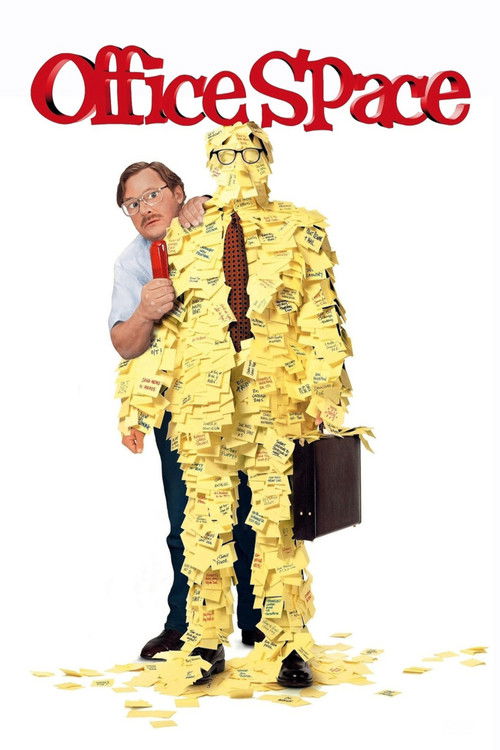
Mike Judge directed Office Space, a sharp satire that landed in theaters on February 19, 1999. The film follows Peter Gibbons, played by Ron Livingston, a software engineer who feels utterly drained by his job at a Dallas tech firm. His life changes when he tries hypnotherapy to cure his insomnia, only to wake up with a strange lack of motivation and an inability to care about corporate nonsense.
This shift sets off a chain reaction involving his coworkers, including the timid Milton Waddams portrayed by Stephen Root and the aggressive manager Bill Lumbergh voiced by Gary Cole. The story captures the soul-crushing nature of modern white-collar work through a biting lens that resonates with anyone who has ever felt trapped in a cubicle farm.
Availability and pricing can change. Confirm on the provider's site before purchasing.
The drab fluorescent lights of Initech in Dallas hum over rows of cubicles where Peter Gibbons spends his days staring at computer screens. He is a brilliant programmer who has lost all interest in his career or his future. His home life offers no escape from the stress either; he lives with Joanna, a woman who constantly pushes him to be more ambitious while he just wants to sleep. The pressure builds until Peter suffers from severe insomnia and anxiety attacks that keep him awake at night.
Desperate for relief, Peter visits Dr. Swanson for hypnotherapy. The doctor accidentally hypnotizes Peter into a state where he simply does not care about anything that does not bring him immediate pleasure. Upon waking, this apathy becomes his new normal. He arrives late to work without guilt, ignores requests for status updates, and stares blankly at his monitor while his boss Bill Lumbergh rants about synergy and deadlines.
Lumbergh, defined by his passive-aggressive tone and constant interruptions, grows increasingly frustrated by Peter's calm indifference. Meanwhile, Peter's friends Michael Bolton and Samir notice his transformation. Michael, a nervous IT support guy terrified of losing his job, and Samir, a programmer who loves his work but struggles to fit in, begin to question their own situations. They also witness the bullying of Milton Waddams, an elderly employee who has been quietly tormented by the aggressive middle manager Bob Slydell.
Peter decides to stop caring about the consequences of his actions. He starts skipping meetings and ignoring the company's demands. His behavior inspires Michael and Samir to join him in a rebellion against the absurdity of their workplace. They decide to embezzle money from the company to fund a life of leisure, viewing it as a way to reclaim their dignity from a system that treats them like numbers.
The group navigates the complexities of their scheme while dealing with the chaotic personalities of their colleagues. They face the looming threat of corporate downsizing and the relentless pursuit of authority figures like Lumbergh and Slydell. The film builds tension through a series of escalating confrontations between the employees and the management, highlighting the absurdity of corporate bureaucracy.
As the plot thickens, the stakes rise. The trio must execute their plan to steal $100,000 from Initech's account. They navigate the risks of getting caught and the moral implications of their actions. The narrative explores themes of alienation and the search for meaning in a soulless system. Peter learns to prioritize his own happiness over societal expectations, even if it means breaking the law.
The story culminates in a series of events that force the characters to confront the consequences of their actions. They must decide whether they can escape the cycle of office drudgery or if they are doomed to remain trapped in the cubicle farm forever. The film ends with a resolution that challenges the very foundations of the corporate world they inhabit.
#TBT Trailer
Official Trailer
Teaser
Critical Consensus
A sharp deadpan satire that perfectly captures the frustration of modern office life. With its relatable characters and biting humor, the film resonates with anyone who has ever felt trapped in a corporate nightmare. While some may find the cynicism overwhelming, its timeless themes and iconic moments have cemented its place as a cult classic.
“Mike Judge's 'Office Space' is a comic cry of rage against the nightmare of modern office life.”
Roger Ebert
Chicago Sun-Times
“A masterpiece of workplace comedy that skewers the absurdity of corporate culture with surgical precision.”
A.O. Scott
The New York Times
“Judge's script is a perfect blend of dark humor and social commentary, making it a must-watch for anyone who has ever worked in an office.”
Peter Travers
Rolling Stone
“The film's enduring appeal lies in its ability to turn the mundane into the hilarious, creating a universal language of office despair.”
Owen Gleiberman
Entertainment Weekly
“A timeless satire that continues to resonate with audiences decades after its release.”
Manohla Dargis
The New York Times
Ron Livingston
Peter Gibbons
Jennifer Aniston
Joanna
Gary Cole
Bill Lumbergh
Stephen Root
Milton Waddams
David Herman
Michael Bolton
Ajay Naidu
Samir
Diedrich Bader
Lawrence
Ali Wentworth
Anne
Joe Bays
Dom Portwood
John C. McGinley
Bob Slydell
Richard Riehle
Tom Smykowski
Paul Willson
Bob Porter
Director
Mike Judge
Writer
Mike Judge
Composer
John Frizzell
Cinematographer
Tim Suhrstedt
Producers
Daniel Rappaport, Michael Rotenberg
MTV Movie Awards (2000)
Best Comedic Performance: Nominated
Saturn Awards (2000)
Best Science Fiction Film: Nominated
Independent Spirit Awards (2000)
Best First Screenplay: Nominated
Golden Raspberry Awards (2000)
Worst Supporting Actor: Won
Join the community
fans discussing