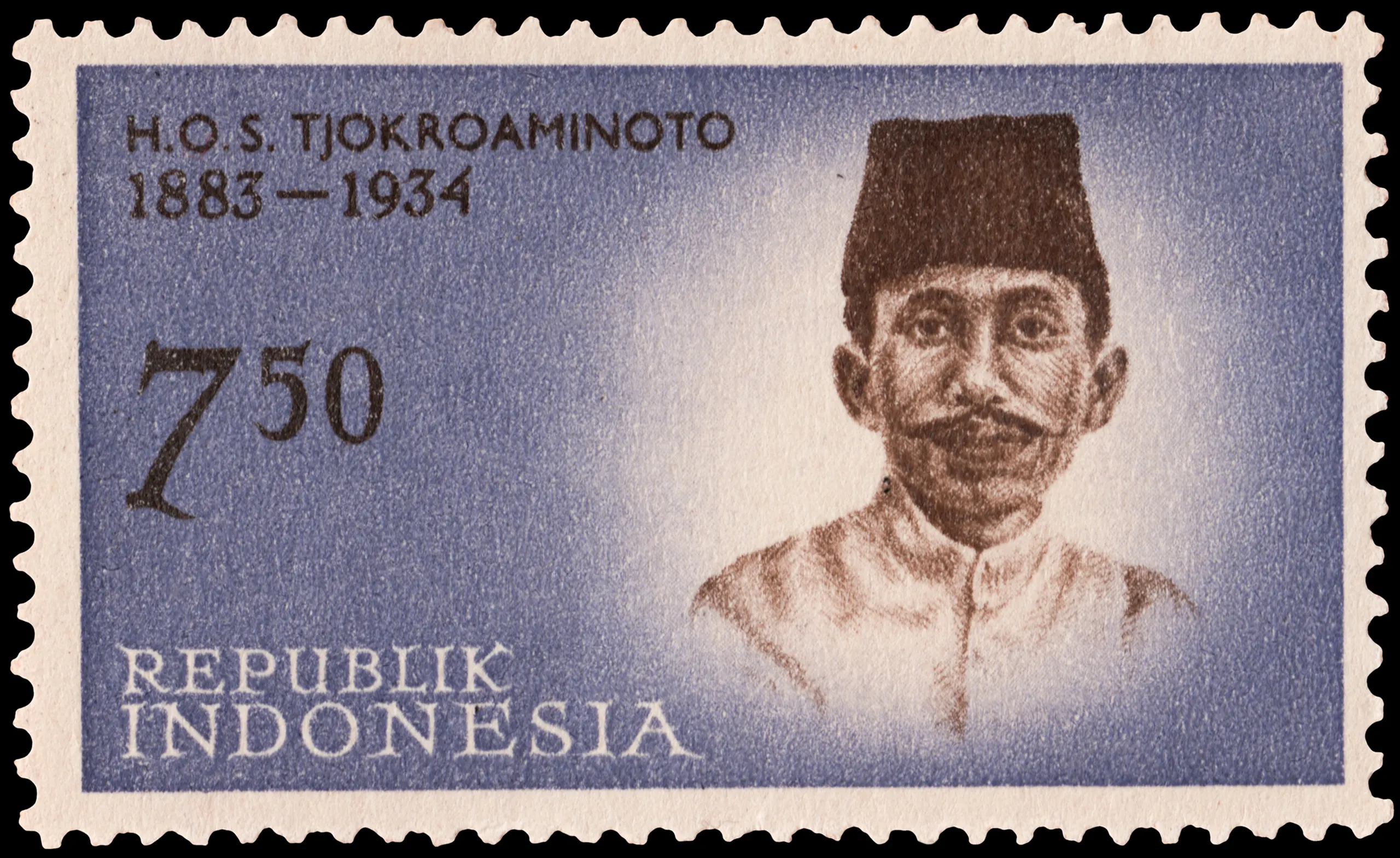
Oemar Said Tjokroaminoto
 Indonesia
politician•nationalist leader•writer
Also known as: H.O.S. Tjokroaminoto, Haji Oemar Said Tjokroaminoto, Oemar Said Cokroaminoto
Birthday
August 16, 1882
Birth Sign
Leo
Birthplace
Ponorogo, East Java
Age
Died at 52
About
Oemar Said Tjokroaminoto, often known by his honorific H.O.S. Tjokroaminoto, was a seminal Indonesian nationalist politician and the mentor of Sukarno, the first president of Indonesia. Born into a noble Javanese family in Ponorogo, he rose to become the leader of Sarekat Islam, transforming it into the largest mass organization in the Dutch East Indies. His political philosophy blended Islamic values with socialist ideals, creating a unique framework for the independence movement. He passed away in 1934, leaving behind a legacy that shaped the nation's identity and political consciousness.
Early Life & Background
Radon Mas Hadji Oemar Said Tjokroaminoto entered the world on August 16, 1882, in Ponorogo, East Java, as the second of twelve children in a respected priyayi noble family. His upbringing was deeply rooted in traditional Javanese culture and Islamic values, which would later form the bedrock of his political identity. Unlike many of his contemporaries who pursued purely Western education, Tjokroaminoto embraced a mixed curriculum. He attended Dutch-language schools, gaining fluency in the language of the colonizers, while simultaneously immersing himself in rigorous Islamic studies. This dual education allowed him to navigate both worlds, articulating complex political ideas in Arabic and Dutch alike. Before his rise to national prominence, he worked within local community affairs, building a reputation as a scholar and an articulate speaker who could connect with diverse groups. His early years were defined by a quiet determination to understand the structures of power and the needs of the common people, setting the stage for his eventual transformation of the Islamic Trade Union into a revolutionary force.
Career Growth
Tjokroaminoto's career shifted dramatically in 1911 when he joined the Sarekat Dagang Islam, an organization co-founded by Samanhudi to protect Muslim merchants from Dutch economic dominance. Recognizing its potential, he revitalized the group and transformed it into Sarekat Islam in 1912. Under his leadership, the organization exploded in size, becoming the largest mass movement in the Dutch East Indies by the early 1920s with over one million members. He organized massive rallies where hundreds of thousands gathered, creating a unified front that terrified the colonial administration. In 1916, he co-founded the Indische Partij with Douwes Dekker and Suwardi Suryaningrat to advocate for immediate independence. His intellectual contributions peaked in 1924 with the publication of Islam dan Sosialisme, arguing that Islamic teachings inherently supported socialist ideals of equality. Even as internal conflicts split the movement in 1927, he remained a central figure, continuing to lecture and write until his health declined. His influence extended beyond his own organizations; he mentored a generation of leaders including Sukarno, Alimin, and Musso, effectively shaping the ideology of modern Indonesia.
Career Timeline
Public Image & Style
Tjokroaminoto projected the image of a traditional Javanese nobleman who embraced modern political activism. He was often depicted wearing formal attire that reflected his dual identity as a religious scholar and a political leader. His speaking style was commanding, capable of mobilizing masses with a mix of religious rhetoric and socialist theory. Media and historical records portray him as a man of immense moral authority, bridging the gap between the elite priyayi class and the working masses. Unlike modern celebrities, his public persona was defined by substance and political conviction rather than aesthetic trends or commercial endorsements.
Fame & Fandom (iFAMOUS Rankings)
The reverence for Oemar Said Tjokroaminoto exists not as a modern fandom but as a sustained national devotion to a foundational statesman and intellectual mentor. Unlike contemporary celebrities who command organized fan clubs or viral social media movements, his legacy is preserved through state-sponsored education, the naming of streets and universities across Indonesia, and the enduring influence of the political cadres he trained. While no formal fandom name has ever been documented for him, his historical role as the teacher of Sukarno and other founding fathers created a following that functioned as a revolutionary network rather than a consumer base. The mass organizations he led, such as Sarekat Islam, mobilized over one million members in the early 1920s, yet these gatherings were political rallies focused on anti-colonial struggle rather than fan rituals or birthday campaigns. In the realm of global celebrity metrics, iFANN has evaluated his standing with precision. Oemar Said Tjokroaminoto is currently the subject of an evaluation by the iFANN Global Fame Engine, though he does not currently hold a placement in the published rankings. This status reflects his position as a historical figure whose fame is localized within national history rather than measured against living global pop culture icons. Consequently, no numeric rank or score is assigned to him in the current scope lists. His cultural footprint remains anchored in the verified history of the Indonesian independence movement, where his death in 1934 marked the loss of a primary architect of sovereignty.
Interesting Facts and Legends
The most enduring legend surrounding Tjokroaminoto is his mentorship of Sukarno. Historical accounts describe how he took the young student into his home in Surabaya around 1913, providing shelter and a rigorous education in politics. This relationship is considered the origin story of Indonesian independence, with historians crediting Tjokroaminoto as the true architect of Sukarno's political consciousness. Another iconic element of his lore is the sheer scale of the Sarekat Islam rallies he organized, where hundreds of thousands of people gathered in open fields under his leadership. These events are verified historical occurrences that paralyzed the Dutch colonial government through their display of unity. Despite being born into nobility, he chose to live among the common people, earning their trust and earning the moniker "Uncrowned King of Java." His house in Surabaya, where he housed Sukarno, is now a historical site and museum dedicated to preserving this legacy.
Notable Quotes
“Islam and Socialism are not contradictory.”
“The nation must be built from the bottom up.”
“Freedom can only be achieved through unity.”
Family & Personal Life
Tjokroaminoto was married to Suharsikin, who served as his primary spouse throughout his life. While details regarding specific dates of marriage or divorce are not extensively documented in modern public sources, consistent with the norms of his era, she was a constant presence in his personal life. He had several children who continued his lineage, though their specific names and biographies are less frequently cited in general summaries compared to his political achievements. His household in Surabaya became a hub for political activity, housing not only his family but also young activists like Sukarno. The family values he instilled were deeply tied to his religious faith and his commitment to social justice, reflecting the broader goals of the nationalist movement he led.
Notable Connections
Relationships & Dating History
Tjokroaminoto's personal life was largely private, consistent with the norms of his era where family matters were less publicized than today. He was married to Suharsikin, who remained his partner throughout his life. Historical records do not extensively document specific dates of marriage, divorce, or subsequent relationships, nor is there evidence of multiple romantic partners or high-profile dating history as understood in contemporary celebrity culture. His life was dedicated to his family and the nationalist struggle. As of his death in 1934, he was widowed by his wife's prior existence, though the exact status of her later life is not detailed in the provided texts. He had children, continuing his lineage, though specific names and numbers of offspring are less frequently cited in general biographical summaries compared to his political achievements.
- MarriedSuharsikinHis primary spouse; details of marriage date not widely recorded.
Death & Aftermath
Died
December 17, 1934 (aged 52)
Death Place
Yogyakarta, Indonesia
Cause of Death
Tuberculosis
Oemar Said Tjokroaminoto spent his final years in Yogyakarta, where the chronic progression of tuberculosis eventually claimed his life on December 17, 1934. The illness had been a persistent burden during his later years, but the official ruling confirmed it as the direct cause of death. His passing marked a profound loss for the Indonesian nationalist movement, with peers and followers universally revering him as the "Father of the Nation" and acknowledging the disappearance of a central unifier who bridged Islamic and socialist ideologies against colonial rule. Tributes from the community focused heavily on his role as a mentor who guided future leaders like Sukarno toward sovereignty, cementing his legacy as a pivotal figure in the struggle for independence. Funeral arrangements were conducted shortly after his death within the city of Yogyakarta, though historical records vary slightly regarding the specific cemetery site. Posthumously, the Indonesian government officially conferred upon him the title of National Hero in 1961, ensuring his name remains attached to numerous streets, schools, and universities across the archipelago. No major estate disputes arose over his assets, as his wealth was primarily intellectual and organizational rather than financial.
Net Worth (Estate Value)
$0
iFANN Editorial Team estimate
Oemar Said Tjokroaminoto did not accumulate wealth in the commercial sense typical of modern celebrities or business tycoons. His resources were derived from his work as a writer, lecturer, and leader of social organizations, allowing him to live modestly. There are no estimates of estate value or posthumous earnings from licensing deals, as his assets were primarily intellectual and organizational rather than financial. His legacy continues to generate cultural and educational value through state-sponsored commemorations, academic study, and the naming of institutions in his honor. The iFANN Editorial Team's analysis of his life and impact points to a net worth of $0, reflecting his focus on service rather than accumulation.
Awards Won (1)
Oemar Said Tjokroaminoto received the highest honor bestowed by the Indonesian state posthumously. In 1961, President Soekarno declared him a National Hero of Indonesia, a title that recognizes his immense contribution to the country's independence movement. This award ensured his name would be permanently attached to streets, schools, and universities across the archipelago.
1961 · National Honor
Posthumous recognition for contribution to Indonesian independence
Known For
Sarekat Islam
1912 · Leader
Indische Partij
1916 · Co-founder
Mentor to Sukarno
1913 · Political Mentor
Keywords
Sources
Quick Facts
- Profession
- politician
- Born
- August 16, 1882
- Birthplace
- Ponorogo
- Died
- December 17, 1934
- Death Place
- Yogyakarta
- Gender
- Male
- Spouse
- Suharsikin
- Birth Sign
- Leo
Personal Details
- Full Name
- Raden Mas Hadji Oemar Said Tjokroaminoto
- Spouse
- Suharsikin
- Children
- Multiple children (names not widely documented)
- Education
- Dutch-language schools, Islamic studies
Frequently Asked Questions
Who was Oemar Said Tjokroaminoto?
When did Oemar Said Tjokroaminoto die?
What caused Oemar Said Tjokroaminoto's death?
Did Oemar Said Tjokroaminoto have children?
Was Oemar Said Tjokroaminoto a National Hero?
Similar People
Join the community
fans discussing