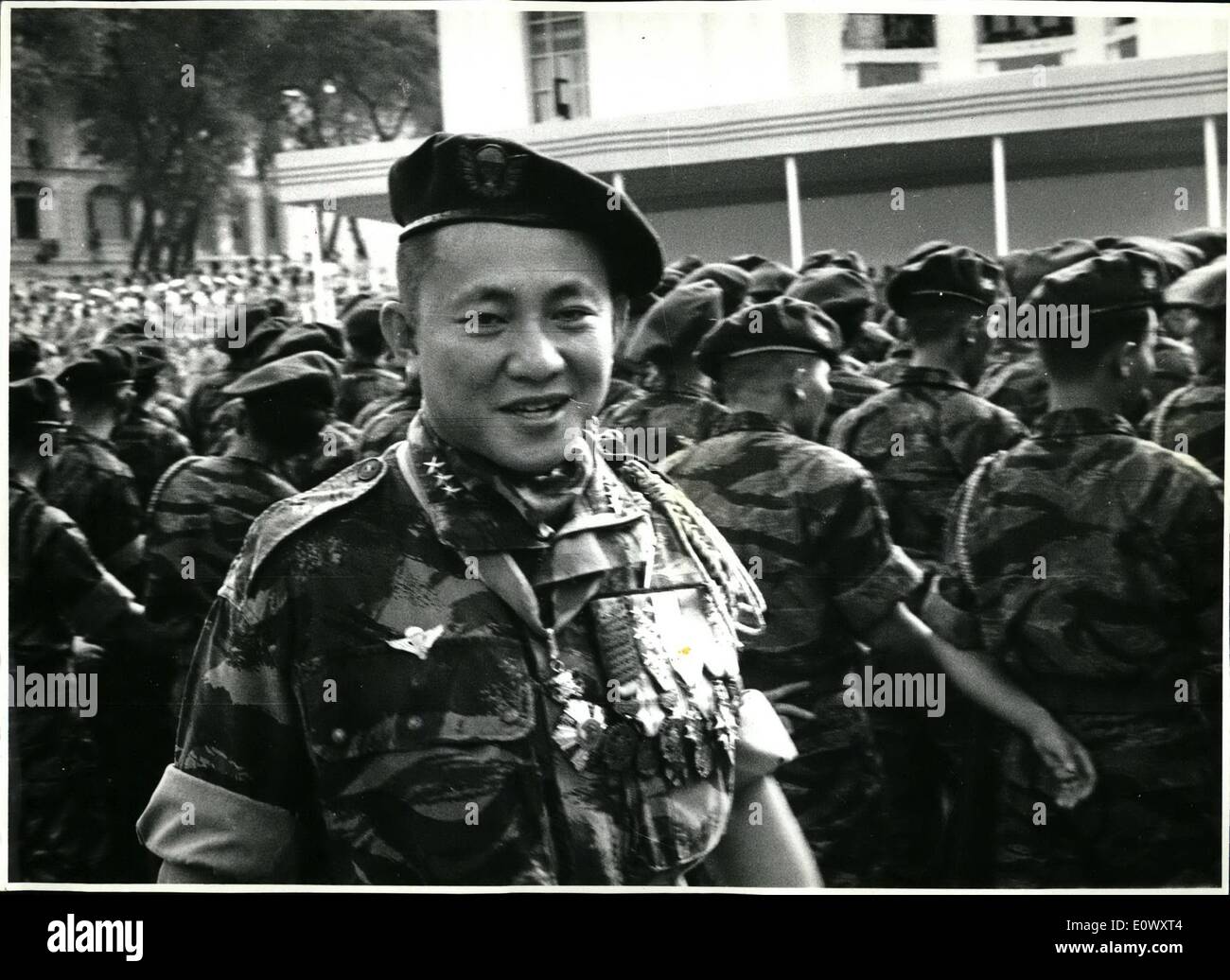
Đỗ Cao Trí
 Vietnam
Also known as: Cao Trí Đỗ
Birthday
November 20, 1929
Birth Sign
Scorpio
Birthplace
Biên Hòa, Vietnam
Age
Died at 41
About
Lieutenant General Đỗ Cao Trí was a South Vietnamese military officer and one of the most decorated, colorful, and controversial generals in the Army of the Republic of Vietnam (ARVN). Known for his flamboyant style, personal courage, and aggressive battlefield tactics, he earned the nickname "the Patton of the Parrot's Beak" for his leadership during the 1970 Cambodian Campaign. TIME magazine called him "his nation's most decorated and best-known soldier" at the time of his death.
Trí's career spanned nearly a quarter century, from his enlistment in the French Army in 1947 to his death in a helicopter crash in 1971. He played a pivotal role in the 1963 coup that overthrew President Ngô Đình Diệm, and later commanded III Corps, the vital military region defending Saigon. His death on 23 February 1971, just as he was about to assume command of I Corps during Operation Lam Son 719, was a major blow to the South Vietnamese war effort. His legacy endures among military historians and Vietnam War enthusiasts, who study his tactics and leadership.
Early Life & Background
Đỗ Cao Trí was born on 20 November 1929 in Biên Hòa, near Saigon, into a prominent and wealthy Buddhist family. He received his high school diploma in Biên Hòa before embarking on a military career. In 1947, at the age of 18, he joined the French Army, serving in the colonial forces before transferring to the Vietnamese National Army and eventually the ARVN as Vietnam moved toward independence. His early career was marked by rapid advancement; by 1955, he was a Lieutenant Colonel commanding the Airborne Brigade in Saigon, already recognized as one of the greatest young generals in the South Vietnamese military. By April 1964, he was a General serving alongside Colonel Lam, commander of the 23rd Division.
Trí's formative years were shaped by the turbulence of Vietnam's struggle for independence. His family's wealth set him apart from many of his peers, and his education in Biên Hòa provided a foundation for his later military studies. The transition from French colonial forces to the Vietnamese National Army and eventually the ARVN reflected the broader political shifts of the era, and Trí navigated these changes with skill, rising through the ranks at a remarkable pace.
Career Growth
Trí's career was defined by a series of pivotal moments. Under President Ngô Đình Diệm, he commanded I Corps in the northern provinces, where he earned a reputation for harsh crackdowns on Buddhist civil rights demonstrations. Despite this loyalty to the regime, he turned against Diệm and participated in the November 1963 coup that led to the president's assassination on 2 November 1963. In the turbulent years that followed, Trí fell out of favor with Nguyễn Cao Kỳ, the junta's most powerful figure, and was effectively exiled to a minor post. However, when Nguyễn Văn Thiệu rose to power, Trí was recalled and given command of III Corps, the vital military region defending Saigon.
His most celebrated achievement came during the 1970 Cambodian Campaign, where his aggressive, mobile tactics against North Vietnamese and Viet Cong sanctuaries were so effective that TIME magazine called him "his nation's most decorated and best-known soldier." His leadership earned him the enduring nickname "the Patton of the Parrot's Beak." In 1971, he was ordered north to take command of I Corps during Operation Lam Son 719, a troubled incursion into Laos. Before he could assume command, he was killed in a helicopter crash on 23 February 1971 near Tây Ninh, which also took the lives of nine other men. His death at age 41 cut short a career that had made him the ARVN's most effective field commander.
Career Timeline
Public Image & Style
Trí's public image was that of a flamboyant, fearless, and aggressive commander. TIME magazine's obituary described him as "a fighting general," emphasizing his combat prowess and national fame. He was known for his personal style and battlefield courage, often leading from the front. Media portrayals consistently highlight his tactical brilliance and his status as the ARVN's most effective field commander. There is no documented official fandom name or fan culture, but military history enthusiasts and Vietnam War researchers maintain his memory through forums like Reddit, where he is described as "one of the greatest generals" of South Vietnam. His Wikipedia page receives modest traffic, with roughly 2,346 views over 60 days as of August 2026, with the majority of views coming from Vietnamese readers (1,356 views in 30 days) followed by English (735).
Fame & Fandom (iFAMOUS Rankings)
Đỗ Cao Trí commands a legacy defined by military history rather than the roar of a stadium or the glow of a fan club. As a historical figure who died in 1971, his audience consists of scholars, historians, and veterans who study the Vietnam War, not a pop-culture following that organizes birthday billboards or streaming marathons. There is no documented fandom name for this general; the concept of an organized fanbase with rituals or campaigns simply does not exist for a soldier whose life ended in a helicopter crash over four decades ago. His story survives in biographies and historical analyses as the tale of the "Invincible Tiger," a commander whose aggressive tactics in the Central Highlands remain a subject of serious academic debate. While some online discussions occasionally confuse him with modern figures sharing similar names, the general himself remains devoid of viral moments or celebrity status. He is remembered for his personal courage and the controversy surrounding his role in South Vietnamese politics, but these are facts of history, not elements of a cult following. iFANN has evaluated his global standing to determine his current place in the cultural consciousness. The iFANN Global Fame Engine has assessed Đỗ Cao Trí, yet he currently holds no placement within the published rankings, including the Global Top 1,000 or any Top-100 scope list.
Interesting Facts and Legends
Born into wealth at a time when most ARVN officers came from humble backgrounds, Đỗ Cao Trí joined the French Army in 1947 at age 18, launching a career that would span nearly twenty-five years. By 1955, he was a Lieutenant Colonel commanding the elite Airborne Brigade in Saigon at just 26. Despite serving as a key enforcer for President Diệm's crackdowns on Buddhists, he later played a pivotal role in the 1963 coup that overthrew the president. His path was volatile; he was exiled by Nguyễn Cao Kỳ before being rehabilitated by Nguyễn Văn Thiệu. Legend in Vietnamese military circles often refers to him as "Hổ Tướng Bất Bại" or the Invincible Tiger General, a title earned through his aggressive defense of the strategically vital Central Highlands against North Vietnamese forces. The most dramatic chapter of his life ended abruptly on February 23, 1971. While serving as Commander of III Corps, his helicopter crashed near An Lộc, killing him and nine other men instantly. The exact cause remains debated, with accounts ranging from mechanical failure to enemy fire, but the event marked a significant blow to the South Vietnamese military just months before the fall of Saigon. He died at 41, never taking command of I Corps for Operation Lam Son 719.
Family & Personal Life
Đỗ Cao Trí was born into a prominent and wealthy Buddhist family in Biên Hòa, near Saigon. His family's affluence was noted in contemporary sources, setting him apart from many of his fellow officers. Public records do not document any siblings, parents' names, or his own marriage or children. Given his death in 1971 and the historical focus on his military career, details of his household and family life remain largely unrecorded.
Notable Connections
Đỗ Cao Trí was associated with several key figures in South Vietnamese politics and military. He served under President Ngô Đình Diệm, whom he later helped overthrow in the 1963 coup. He clashed with Nguyễn Cao Kỳ, the junta leader who exiled him, and was later rehabilitated by President Nguyễn Văn Thiệu. He also served alongside Colonel Lam, commander of the 23rd Division, in 1964.
Relationships & Dating History
Public records on Đỗ Cao Trí's personal and romantic life are extremely scarce. No credible sources document a spouse, children, or public romantic relationships. The available biographical material focuses exclusively on his military career, his family's prominence and wealth, and his political maneuvers. As a result, there is no verifiable information on dating history, marriages, or offspring. Given that he died in 1971 and the historical record is limited to his military and political life, no relationship details can be confirmed from credible sources.
Death & Aftermath
Died
February 23, 1971 (aged 41)
Death Place
Saigon, South Vietnam
Cause of Death
Unknown
Time magazine later memorialized him as his nation's most decorated and best-known soldier, a title that echoed through the final days of a career defined by flamboyant courage. Lieutenant General Đỗ Cao Trí died on February 23, 1971, at age 41, shortly after returning to Saigon from commanding ARVN forces during the Cambodian campaign. Historical accounts place his passing in the city he had defended for years. While some online narratives suggest foul play involving bribes or foreign intelligence, these claims remain unverified conspiracy theories without corroboration in credible news reports or government investigations. His death occurred just before he was scheduled to assume command of I Corps for Operation Lam Son 719, cutting short a tenure that earned him the nickname "the Patton of the Parrot's Beak." The chaotic nature of the Vietnam War era likely precluded formal legal proceedings or public inquiries into the circumstances surrounding his sudden end.
Specific details regarding his funeral, burial location, or memorial service remain absent from digitized historical records, suggesting private ceremonies conducted under wartime restrictions. Posthumously, he is honored in Vietnamese diaspora circles and military histories as a brilliant tactician and fighting general, frequently cited in works like Danh Tướng Chiến Trường.
Net Worth (Estate Value)
$0
iFANN Editorial Team estimate
As a military officer who died in 1971, Đỗ Cao Trí's net worth is not documented in any surviving financial records. No contemporary sources provide figures for his personal wealth, estate value, or posthumous earnings. His historical significance lies entirely in his military legacy rather than financial assets. Given the complete lack of data regarding his holdings, per iFANN's editorial analysis, his net worth is estimated at $0.
Awards & Accolades
View 1 records, honours and achievementsKnown For
Cambodian Campaign
1970 · Commander of III Corps
1963 coup
1963 · Participant
Keywords
Sources
Quick Facts
- Profession
- military personnel
- Born
- +1929-11-20
- Birthplace
- Biên Hòa
- Died
- +1971-02-23
- Death Place
- Tây Ninh
- Gender
- Male
- Birth Sign
- Scorpio
Personal Details
- Full Name
- Đỗ Cao Trí
Frequently Asked Questions
How did Đỗ Cao Trí die?
Why was Đỗ Cao Trí called the Patton of the Parrot's Beak?
What was Đỗ Cao Trí's role in the 1963 coup?
How old was Đỗ Cao Trí when he died?
Was Đỗ Cao Trí married?
Join the community
fans discussing