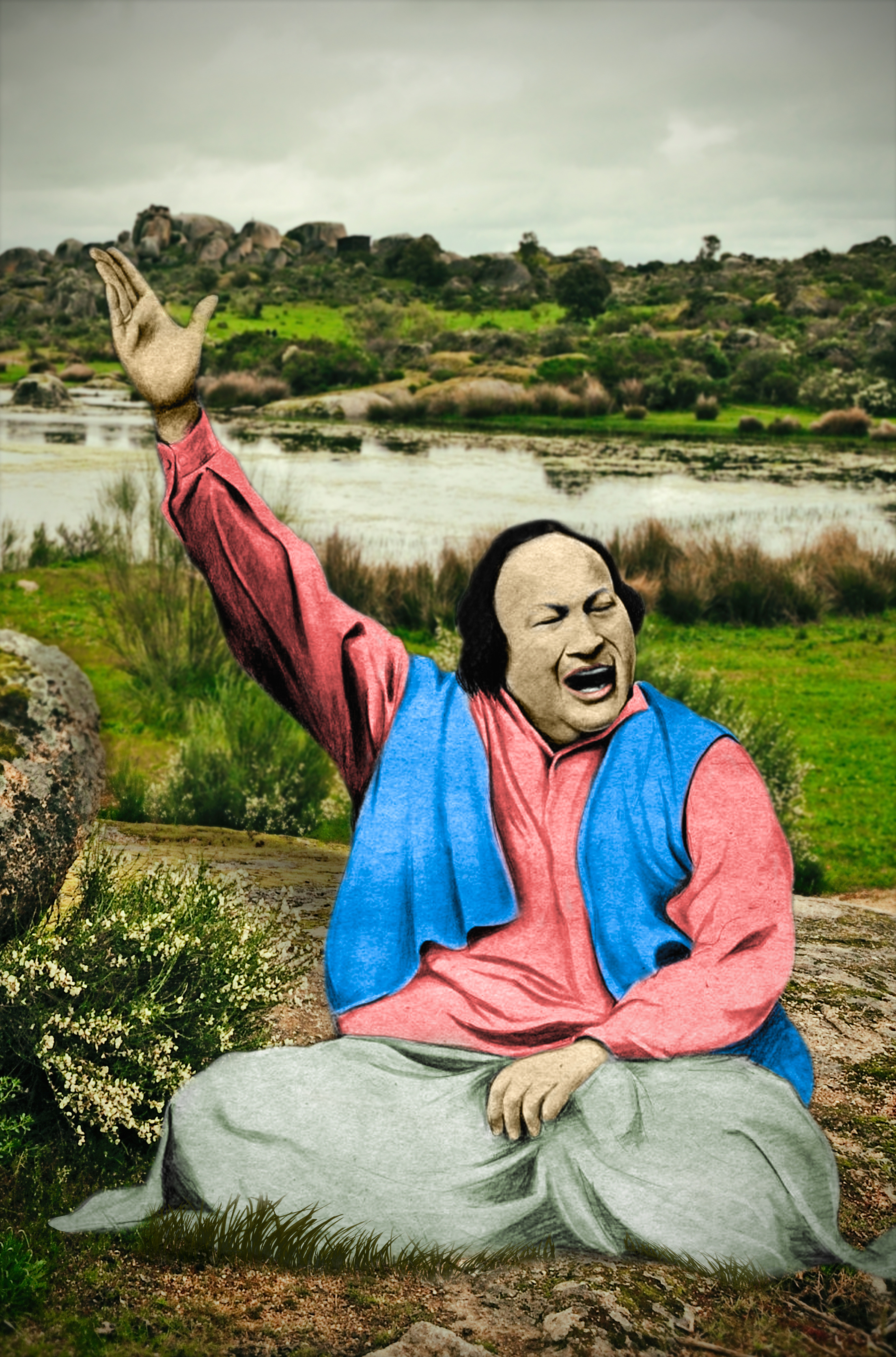
Nusrat Fateh Ali Khan
 Pakistan
singer•composer•music educator
Birthday
+1948-10-13
Birth Sign
Libra
Birthplace
Faisalabad
Age
Died at 48
About
Born in Faisalabad, Pakistan, on October 13, 1948, Nusrat Fateh Ali Khan was a vocalist and composer whose voice became synonymous with qawwali, the ecstatic Sufi devotional music of South Asia. He wasn't just a singer; he was a phenomenon, a force who commanded audiences with his incredible vocal stamina and improvisational genius. From his early days, performing publicly at just 15, Khan was destined for greatness. He inherited the leadership of his family's qawwali party in 1971, and from there, he began to reshape the genre, infusing it with his signature sargam (vocal improvisation) and rhythmic complexity. His recordings and performances would eventually reach listeners in over 40 countries, earning him the title "Shahanshah-e-Qawwali," the King of Kings of Qawwali.
Fame & Fandom
Nusrat Fateh Ali Khan commanded a global reach that transcended regional boundaries, with his influence tracked across media coverage, search trends, and consumption signals worldwide. His enduring presence in the cultural record is quantified by the iFANN Global Fame Rankings, which place him as the 71st most famous person in Bollywood, a position he has held steady from the previous cycle. While no formal organization defines his audience, the collective identity of those who follow his work remains distinct; fans typically refer to themselves through descriptors such as "devotees" or "qawwali lovers," united by a devotion to Sufi music rather than a branded moniker. This community has driven significant cultural projects, including the preservation and remastering of live performances, and actively participates in cross-generational advocacy, ensuring his relevance in new musical eras.
Interesting Facts and Legends
Throughout his career, Nusrat Fateh Ali Khan was known for an extraordinary vocal stamina that allowed him to perform for hours without apparent fatigue. A widely retold story concerns his ability to induce trance-like states and fainting spells in audiences, a phenomenon considered folklore that reinforces his reputation as a mystic singer rather than documented medical incidents. One verified historical moment occurred in 1990 in Harlem, New York, where American musician Jeff Buckley first heard Nusrat's rendition of "Mustt Mustt," describing the experience as life-altering and finding his "Elvis" in Pakistan. The recording sessions at Real World Studios in Wiltshire, England, produced albums like "Night Song" and "Shahenshah-e-Hazrat," though stories of him singing until exhaustion captivated producers and engineers alike are part of the artist's lore. In recent years, the song "Ya Hussain Ya Hussain" went viral on digital platforms, with claims that it could stop crowds in their tracks, likely an exaggeration of its emotional power. Finally, the narrative surrounding his death in 1997 often includes the embellishment that he refused to rest, continuing to sing despite deteriorating health, a cherished part of the fan mythology that paints him as a martyr for art.
Death & Aftermath
Died
+1997-08-16 (aged 48)
Death Place
Houston, Texas, United States
Cause of Death
Myocardial infarction
Nusrat Fateh Ali Khan arrived in Houston, Texas, during early August 1997 to undergo scheduled medical procedures for a long-standing heart condition, but his stay at Methodist Hospital was cut short by a sudden cardiac event. On August 16, 1997, the legendary vocalist passed away at the age of 48 following a myocardial infarction, a ruling confirmed by hospital statements and medical reports regarding his history of diabetes and cardiovascular complications. The death was treated as a natural medical event. Tributes flowed immediately from global leaders and peers alike, including Pakistan's Prime Minister Nawaz Sharif, who declared a day of national mourning, while musicians such as Peter Gabriel and Eddie Vedder publicly honored his transformative impact on world music.
In the weeks following his passing, sales of his catalog surged globally, with the 1990 album Mustt Mustt experiencing a significant resurgence in chart performance across the United Kingdom and the United States. Thousands gathered for fan vigils in Lahore, Karachi, and London, where moments of silence were observed and memorial murals appeared in major cities worldwide. The funeral took place the following day, August 17, 1997, after prayers at the Shah Alam Mosque in Lahore, drawing an estimated crowd of hundreds of thousands to bid farewell to the Shahenshah-e-Qawwali. Family members and close associates performed live qawwalis during the ceremony before he was laid to rest in the Wagha Cemetery near other notable figures.
Decades later, his estate remains active through family management, overseeing posthumous releases like the 2026 documentary Eternal Echoes and licensing archival material, while the Nusrat Fateh Ali Khan Foundation continues to preserve his musical heritage through scholarships and support for young artists.
Awards & Accolades
Keywords
Quick Facts
- Profession
- singer, composer, music educator
- Born
- +1948-10-13
- Birthplace
- Faisalabad
- Died
- +1997-08-16
- Death Place
- London
- Gender
- Male
- Birth Sign
- Libra
Join the community
fans discussing