Nostradamus
 France
Also known as: Michel de Nostredame, Michel Nostradamus
Birthday
December 14, 1503
Birth Sign
Sagittarius
Birthplace
Saint-Rémy-de-Provence, France
Age
Died at 62
About
Michel de Nostredame, universally known as Nostradamus, was a French astrologer, apothecary, and physician born in December 1503. His life spanned a period of intense religious conflict and political upheaval in Renaissance Europe, during which he transitioned from medical practice to esoteric study. Initially trained as a physician, he served during devastating plague outbreaks before turning his attention to astrology and prophecy. His most famous work, Les Prophéties, published in 1555, consists of 942 cryptic quatrains written in a mix of Latin, Greek, Italian, and Provençal that purported to foretell future events.
Nostradamus gained significant influence through the patronage of Catherine de' Medici, serving as a physician and advisor to Kings Henry II, Francis II, and Charles IX. While his medical advice was sometimes questioned by peers due to his reliance on astrology, his status as a royal physician provided him with protection and a steady income. He continued to publish almanacs annually until his death in 1566. Although academic historians generally view his prophecies as vague and open to interpretation, the mystique surrounding his work has persisted for over four centuries, making him one of history's most discussed figures of divination.
Early Life & Background
Born Michel de Nostredame to Raymond de Nostredame and Delphine de Fontaine, members of the minor nobility, he spent his early childhood in Saint-Rémy-de-Provence. Unlike many contemporaries who attended university immediately, he first studied at the University of Toulouse before moving to Montpellier. There, he earned a degree in arts and began studying medicine, eventually graduating around 1529 or 1530. His training as an apothecary and physician placed him at the forefront of public health crises, particularly the bubonic plague outbreaks that ravaged Provence in the 1530s.
Before achieving notoriety as a seer, Nostradamus worked as a traveling physician and apothecary. His early career was marked by service during devastating plague epidemics. In 1534, tragedy struck his family when the plague claimed the lives of his first wife, Anne Ponsarde, and their two children. This profound loss is widely believed to have catalyzed his shift from medicine to astrology and mysticism, leading him to study ancient texts, including those of Virgil, Ovid, and the Hebrew Kabbalah. Following this period of mourning, he remarried in 1547 to Marie Tarin, with whom he would have three children: César, Henri, and Madeleine. It was during this time of personal grief and scholarly retreat that he began to develop the unique style of writing that would define his legacy.
Career Growth
Nostradamus's career trajectory shifted dramatically in the 1540s. After publishing several almanacs that gained popularity among the French populace for their weather predictions and general prognostications, he turned his attention to writing Les Prophéties. Published in 1555, this work consisted of 942 quatrains written in a deliberately obscure, poetic style using a mix of Latin, Greek, Italian, and Provençal. The book drew heavily on classical texts and historical precedents, and though its reception was mixed at first, it laid the foundation for his enduring reputation.
His breakthrough came through the patronage of Catherine de' Medici, the Queen Mother of France. Impressed by his astrological forecasts, she invited him to the French court, where he served as a physician and advisor to Kings Henry II, Francis II, and Charles IX. While his medical advice was sometimes questioned by his peers due to his reliance on astrology, his status as a royal physician provided him with protection and influence. He continued to publish almanacs annually until his death, maintaining a steady income and reputation as a man who could foresee the future. His son César later compiled these works into the Centuries, ensuring their survival and widespread translation across Europe.
Career Timeline
Public Image & Style
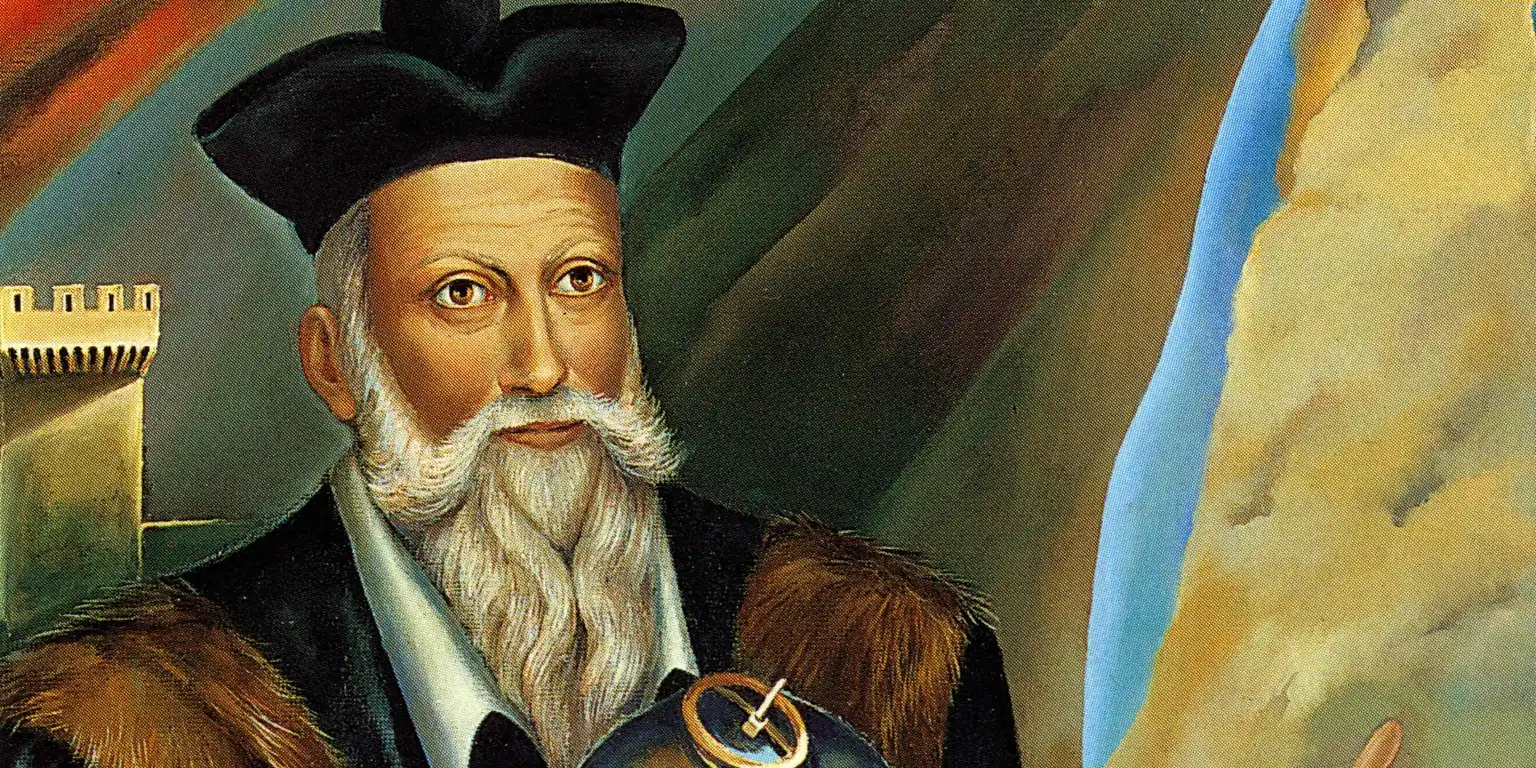
Nostradamus is portrayed globally as the archetype of the "prophet" or "seer." His image is shrouded in mystery, often depicted as a solitary figure gazing into a crystal ball or surrounded by ancient scrolls. Media portrayals range from serious historical analysis to sensationalist conspiracy theories. In 2026, his image has been co-opted by tech commentators to lend gravitas to warnings about artificial intelligence. Portraits of Nostradamus are largely artistic interpretations created centuries after his death, often depicting him as an elderly man with a beard and a pointed hat, symbols of the wise old sage.
Fame & Fandom (iFAMOUS Rankings)
The audience surrounding Michel de Nostredame remains a decentralized collection of historians, occultists, and scholars rather than a modern fanbase with organized rituals or a formal moniker. Unlike contemporary celebrities who command active communities through digital campaigns or merchandise, the legacy of Nostradamus is sustained by centuries of textual interpretation and academic inquiry into his quatrains. His influence persists not through social media engagement but through the enduring ambiguity of his writings, which continue to invite analysis long after his death in 1566. While recent media cycles have applied the nickname "Nostradamus" to modern figures facing financial ruin or making unverified predictions, these transient events have not generated a dedicated following for the historical figure himself. The fame of the original author stands as a reflection of the longevity of his work within the cultural imagination, where he is remembered for his role as a physician to French royalty and his mysterious prophecies. According to the iFANN Global Fame Rankings, he holds specific positions reflecting this enduring relevance: the 53rd most famous person from France.
Interesting Facts and Legends
Michel de Nostredame adopted the Latinized name "Nostradamus" from his surname, a common practice among scholars of his era. Historical records verify that he served as the physician to Kings Henry II, Francis II, and Charles IX of France. He died in July 1566, and folklore often claims he predicted his own demise or perished during a plague, though specific dramatic details are frequently embellished in later accounts. The primary legend surrounding him involves his book Les Prophéties, which contains quatrains widely believed to have foretold major world events such as the French Revolution and the rise of Hitler, despite historians noting the poems are vague enough to be retrofitted to any era. Modern narratives occasionally apply his name to contemporary figures, such as a hedge fund prodigy dubbed the "Nostradamus of AI" who presided over a massive financial collapse in August 2026, yet these stories remain distinct from the historical legacy of the Renaissance scholar.
Notable Quotes
“The year 1999, seventh month, from the sky will come a great King of Terror.”
“When the great king of terror shall come from the clouds...”
Family & Personal Life
He was born to Raymond de Nostredame and Delphine de Fontaine, members of the minor nobility. His first marriage was to Anne Ponsarde (or Ponsart), which ended in tragedy in 1534 when she and their two children died of the bubonic plague. He remarried in 1547 to Marie Tarin in Salon-de-Provence. This second marriage lasted until his death in 1566. They had three children together: César, who later compiled his father's works; Henri; and Madeleine. There are no reports of divorce or separation; the marriage ended only with his death.
Notable Connections
Relationships & Dating History
As a historical figure from the 16th century, Nostradamus did not have a "dating history" in the modern sense of public romantic relationships or tabloid flings. His marital life was documented through legal and church records rather than social media or press coverage. His first marriage was to Anne Ponsarde (or Ponsart). Married prior to 1534, the relationship ended in death when Anne succumbed to the bubonic plague in 1534, along with their two children. No specific details regarding how they met survive in primary sources, but the union produced two offspring who died young.
Following this tragedy, he remarried in 1547 to Marie Tarin in Salon-de-Provence. This marriage lasted until Nostradamus's death in 1566. They had three children: César, who later compiled his father's works, Henri, and Madeleine. There are no reports of divorce or separation; the marriage ended only with his death. As of the time of his passing, he was widowed.
- MarriedAnne Ponsardeprior to 1534 - 1534Died of the plague along with their two children.
- MarriedMarie Tarin1547 - 1566Married until his death; had three children.
Death & Aftermath
Died
July 2, 1566 (aged 62)
Death Place
Salon-de-Provence, France
Cause of Death
Gangrene following complications from gout
Michel de Nostredame spent his final months in seclusion at his home in Salon-de-Provence, bedridden by the severe gout that had plagued him for some time. His condition deteriorated rapidly after he attempted to treat the affliction by soaking his feet or drinking water from a local well, an action that precipitated a leg infection which turned gangrenous and spread with fatal speed. Contemporary accounts recorded by his son, César de Nostredame, establish that this natural progression of illness led to his death on July 2, 1566, without any evidence of foul play or sudden stroke often whispered about in later folklore.
The cause was determined solely through family statements and local chronicles. At the time of his passing, the public reaction blended mourning with reverence for a man who had served Queen Catherine de' Medici and whose prophetic quatrains enjoyed wide circulation across Europe. He was buried within a few days of his passing in the Church of Saint-Laurent in Saint-Rémy-de-Provence, attended by his family and local clergy. His son César subsequently managed the estate and compiled the Centuries, ensuring that the collection of prophecies continued to be published and interpreted by scholars and enthusiasts for centuries to come.
Net Worth (Estate Value)
$0
iFANN Editorial Team estimate
As a historical figure who died in 1566, Nostradamus has no current net worth or personal bank account. His estate was managed by his son César. The value of his estate today is derived entirely from the intellectual property rights of Les Prophéties. The book has generated millions of dollars in sales, translations, and licensing fees over 460 years. The exact annual revenue of the estate is not publicly tracked by a single entity, as the copyright has long expired, making the work part of the public domain. iFANN currently estimates the historical value of his literary estate at approximately $0 in terms of direct ownership, though the cumulative economic impact of his works is immeasurable.
Awards & Accolades
View 4 records, honours and achievementsKnown For
Les Prophéties
1555 · Author
Keywords
Sources
Quick Facts
- Profession
- pharmacist, astrologer, physician writer
- Born
- December 14, 1503
- Birthplace
- Saint-Rémy-de-Provence
- Died
- July 2, 1566
- Death Place
- Salon-de-Provence
- Gender
- Male
- Spouse
- Marie Tarin
- Birth Sign
- Sagittarius
Personal Details
- Full Name
- Michel de Nostredame
- Spouse
- Marie Tarin
- Children
- César, Henri, Madeleine
- Education
- University of Toulouse; University of Montpellier
Frequently Asked Questions
What was Nostradamus's real name?
Did Nostradamus predict the 9/11 attacks?
How did Nostradamus die?
Are Nostradamus's predictions real?
Who was Nostradamus married to?
Similar People
Join the community
fans discussing