Nobel Prize
 Norway
"The world's most prestigious awards for achievements in science, literature, and peace."
5+
Editions
1300
Peak Attendance
About
Every December 10, the world turns its attention to Stockholm and Oslo. That date marks the anniversary of Alfred Nobel's death, and since 1901 it has been the day the Nobel Prizes are awarded. The Swedish inventor of dynamite left a fortune to fund prizes for those who "conferred the greatest benefit on mankind" in physics, chemistry, physiology or medicine, literature, and peace. A sixth prize in economic sciences, funded by Sweden's central bank, was added in 1968.
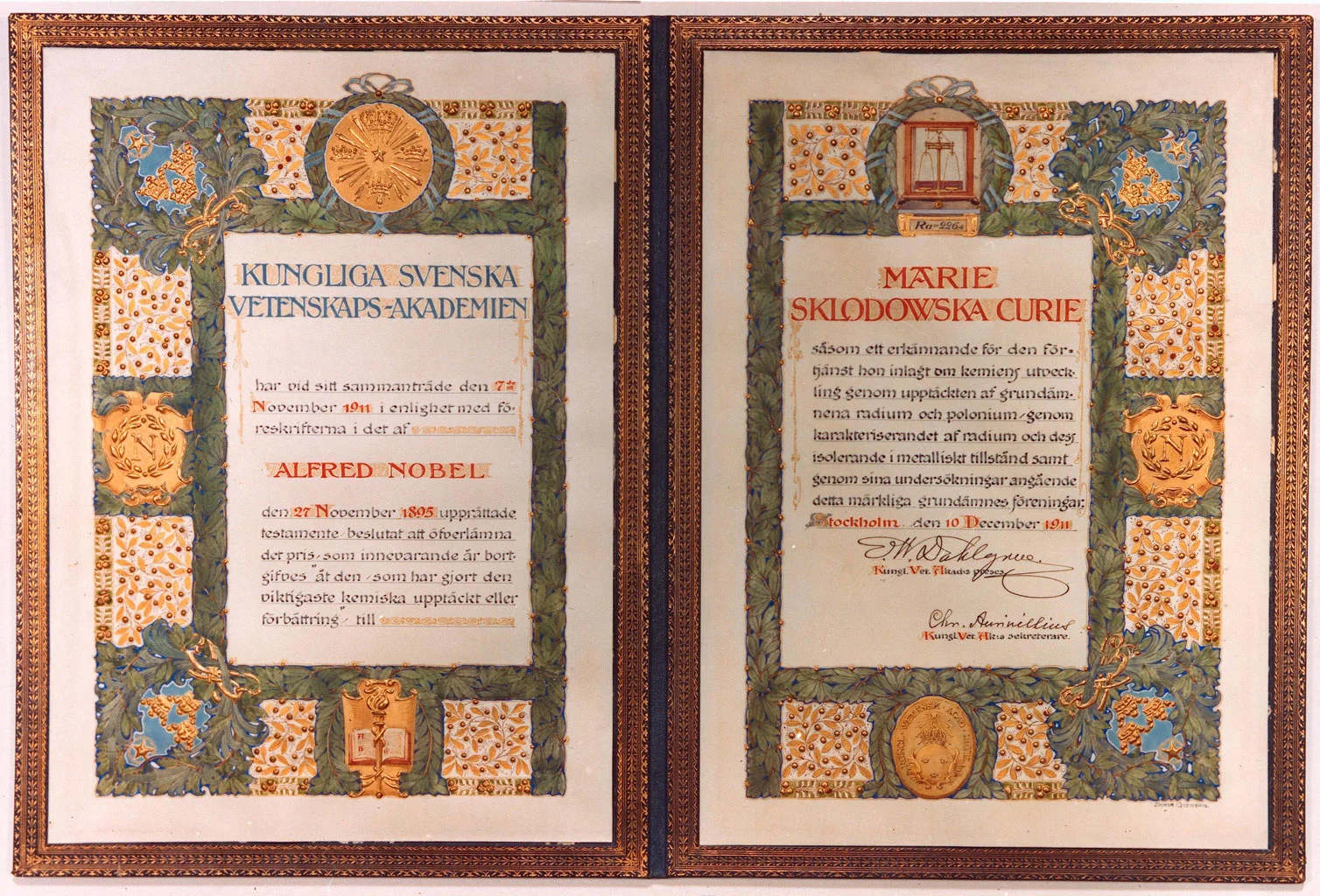
What makes the Nobel Prize unique is the combination of rigorous selection and enormous prestige. Five separate committees choose the laureates: the Royal Swedish Academy of Sciences handles physics, chemistry, and economics; the Karolinska Institute picks medicine; the Swedish Academy selects literature; and the Norwegian Nobel Committee, appointed by the Norwegian parliament, decides the peace prize. The whole process is shrouded in secrecy for 50 years. Winners receive a gold medal, a handcrafted diploma, and a cash award that has grown to 11 million Swedish kronor (about $1 million).
The ceremony itself is a study in tradition. In Stockholm, laureates receive their prizes from King Carl XVI Gustaf at the Concert Hall, followed by a banquet for 1,300 guests at City Hall. In Oslo, the peace prize is presented at City Hall before a smaller audience. The Nobel Peace Prize Concert, held the next day in Oslo, draws international musicians and broadcast to millions. The awards have honored some of the most transformative figures in modern history, from Marie Curie to Martin Luther King Jr., and have become the ultimate benchmark for human achievement.
History
Alfred Nobel signed his last will on November 27, 1895, at the Swedish-Norwegian Club in Paris. The document stunned his family: he left most of his vast fortune to fund prizes in five fields. Nobel's relatives challenged the will, leading to a three-year legal battle. In 1900, the Nobel Foundation was established to manage the assets and administer the awards. The first prizes were awarded on December 10, 1901, five years after Nobel's death.
The early years saw some controversy. The Swedish Academy, which awards the literature prize, initially leaned conservative, overlooking authors like Leo Tolstoy and Henrik Ibsen. The peace prize, awarded by a committee of five Norwegians, was more daring, honoring peace activists and internationalists. During both World Wars, ceremonies were scaled back or canceled; no prizes were awarded in 1940-1942. The economic sciences prize was added in 1968, funded by the Sveriges Riksbank to mark its 300th anniversary. The Nobel Foundation has since grown its endowment through savvy investments, allowing the prize amount to increase steadily.
The ceremonies have evolved too. The Stockholm banquet began in 1930, and the concert in Oslo started in 1994. The award announcements, made in early October, are now live-streamed globally. The Nobel Foundation has also modernized its image, launching a digital archive and an official app. Despite changes, the core mission remains: to honor those who have made the greatest contributions to humanity.
Notable Editions
1901
First ever Nobel Prizes awarded. Wilhelm Röntgen won Physics for X-rays, Jacobus van 't Hoff won Chemistry, Emil von Behring won Medicine, Sully Prudhomme won Literature, and the Peace Prize was shared by Frédéric Passy and Henry Dunant.
1964
Jean-Paul Sartre declined the Literature Prize, becoming the first person to voluntarily refuse a Nobel. He stated he always declined official honors.
1973
Le Duc Tho declined the Peace Prize he was to share with Henry Kissinger for negotiating the Vietnam War ceasefire. He cited the ongoing conflict as the reason.
2014
Malala Yousafzai, at 17, became the youngest Nobel laureate ever, sharing the Peace Prize with Kailash Satyarthi for their work on children's rights.
2020
Ceremonies were scaled down due to the COVID-19 pandemic. Laureates received their medals in their home countries, and the traditional banquet was replaced by a digital event.
Past Winners / Headliners
| Year | Name |
|---|---|
| 2024 | David Baker, Demis Hassabis, John Jumper |
| 2024 | Victor Ambros, Gary Ruvkun |
| 2024 | John Hopfield, Geoffrey Hinton |
| 2024 | Han Kang |
| 2024 | Nihon Hidankyo |
| 2024 | Daron Acemoglu, Simon Johnson, James Robinson |
| 2023 | Katalin Karikó, Drew Weissman |
| 2023 | Pierre Agostini, Ferenc Krausz, Anne L'Huillier |
| 2023 | Moungi Bawendi, Louis Brus, Alexei Ekimov |
| 2023 | Jon Fosse |
Notable Moments
1901
First Awards
The first Nobel Prizes are presented in Stockholm, honoring pioneers like Wilhelm Röntgen and Henry Dunant, establishing the tradition.
1935
Peace Prize to an Organization
Carl von Ossietzky, a German pacifist, is awarded the Peace Prize while imprisoned by the Nazis, drawing international attention to human rights abuses.
1964
Sartre Declines
Jean-Paul Sartre refuses the Literature Prize, stating he does not want to be institutionalized, sparking debate about the prize's meaning.
1975
Sakharov Wins Peace Prize
Soviet physicist and dissident Andrei Sakharov is awarded the Peace Prize, a direct challenge to the USSR, though he is unable to attend.
1993
Mandela and de Klerk
Nelson Mandela and F.W. de Klerk share the Peace Prize for ending apartheid, a moment symbolizing reconciliation.
2014
Malala Becomes Youngest Laureate
Malala Yousafzai, shot by the Taliban for advocating girls' education, wins the Peace Prize at age 17, inspiring millions.
2015
Tu Youyou Wins Medicine Prize
Tu Youyou becomes the first Chinese woman to win a Nobel in science, honored for discovering artemisinin, a malaria treatment.
2020
Pandemic Ceremony
Due to COVID-19, the traditional ceremony is replaced by a digital event, with laureates receiving medals at home, a break from 119 years of tradition.
Cultural Impact
The Nobel Prize has become shorthand for the highest possible achievement in any field. Phrases like "Nobel Prize-winning" carry instant weight, and the awards are referenced in movies, books, and everyday speech as the ultimate validation. The prize's influence extends beyond the laureates themselves: it shapes research agendas, boosts university reputations, and can make or break a scientific career. The peace prize, in particular, has been used to draw attention to global issues, from disarmament to children's rights.
Alfred Nobel's story, the "merchant of death" who created a prize for peace, has become a parable of redemption. The Nobel Foundation's strict secrecy and the aura of the ceremony in Stockholm's Concert Hall add to the mystique. The prize has inspired imitators, from the Ig Nobel Prizes for absurd research to the "Nobel of mathematics" (the Fields Medal) and the "Nobel of music" (the Polar Music Prize). Each December, the world stops to see who joins the pantheon of laureates, a tradition that shows no sign of fading.
Controversies
The Nobel Prize has faced its share of disputes. The most persistent involves the peace prize, which critics say has sometimes been awarded prematurely or to controversial figures. Henry Kissinger's 1973 award, shared with Le Duc Tho (who declined), was condemned by many as rewarding a war architect. In 2009, Barack Obama won the peace prize less than a year into his presidency, before any major achievements, triggering backlash. The literature prize has also drawn fire for overlooking giants like Tolstoy, Joyce, and Borges while honoring lesser-known writers.
Alfred Nobel's will itself sparked a legal battle. His family contested it, arguing it was invalid, and it took three years to settle. The economic sciences prize, added by the central bank, is not technically a Nobel Prize, it is officially the Sveriges Riksbank Prize in Economic Sciences in Memory of Alfred Nobel. Some purists argue it dilutes the original five categories. In 2018, the Swedish Academy postponed the literature prize after a sexual misconduct scandal and internal strife, the first delay in 70 years. The prize was awarded in 2019 to two laureates, one for each year.
Related Events
Keywords
Sources
Event Info
- Founded
- 1901
- Country
- Sweden, Norway
- Venue
- Stockholm Concert Hall, Oslo City Hall
- Prize amount
- 11 million SEK (approx. $1 million)
- Number of categories
- 6
Join the community
fans discussing