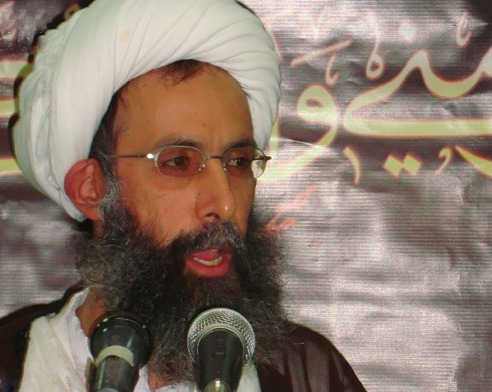
Nimr al-Nimr
 Saudi Arabia
human rights defender•Islamic jurist
Birthday
+1959-06-21
Birth Sign
Sagittarius
Birthplace
Al-Awamiyah
Age
Died at 56
About
Ayatollah Sheikh Nimr Baqir al-Nimr, born in Al-Awamiyah on June 21, 1959, was a prominent Saudi Shia cleric and human rights defender. He emerged as a vocal critic of the Saudi Arabian government, particularly advocating for greater freedoms and democratic reforms. His activism gained significant traction among the youth, and he was known for his powerful oratory that often challenged the ruling establishment. Al-Nimr's religious scholarship also made him a respected Islamic jurist within his community.
Fame & Fandom
Supporters of Sheikh Nimr al-Nimr do not operate as a conventional celebrity fanbase with branded names or commercial campaigns. Instead, his following functions as a transnational movement rooted in religious devotion and political solidarity, where followers revere him as a martyr rather than a pop icon. The infrastructure of fandom here is defined by mourning rituals, the circulation of his sermons, and annual commemorations that transform grief into a sustained legacy of resistance. While no formal group name exists for his admirers, the global outcry following his execution on January 2, 2016, remains the defining moment of this collective identity, sparking diplomatic crises and uniting Shia communities worldwide in a shared narrative of justice.
This enduring influence places him firmly within the global consciousness of modern history. According to the iFANN Global Fame Rankings, he holds a specific and steady position among historical figures from his region. He is the 38th most famous person from Saudi Arabia, a standing that has remained consistent across recent measurement cycles. These placements reflect a vast scale of attention tracked through media coverage and cultural consumption signals worldwide, ensuring his story continues to resonate long after his death.
Interesting Facts and Legends
Sheikh Nimr al-Nimr was born on June 21, 1959, in Al-Awamiyah and became a respected Islamic jurist before emerging as a vocal critic of the Saudi government. His arrest in 2012 turned him into a cause célèbre, with courtroom appearances becoming legendary platforms where he defiantly denounced the regime despite threats of execution. One of his most iconic moments occurred during the Arab Spring of 2011–2012, when his electrifying sermons in Al-Awamiyah and Qatif galvanized the Shia minority and made him the de facto leader of the Eastern Province protest movement. His declaration that Shia Muslims "will not be humiliated" evolved into a foundational text for his followers, endlessly quoted in memorials and social media campaigns. The single most verified event in his mythology is his execution on January 2, 2016, alongside 46 others, an act that directly triggered the severance of diplomatic relations between Saudi Arabia and Iran after protesters stormed the Saudi Embassy in Tehran. This event transformed him from a controversial cleric into an immortal symbol of free speech and martyrdom.
Death & Aftermath
Died
+2016-01-02 (aged 56)
Death Place
Undisclosed location, Saudi Arabia
Cause of Death
Execution by beheading
Sheikh Nimr Baqir al-Nimr died on January 2, 2016, in an undisclosed location within Saudi Arabia following a state-sanctioned execution by beheading ordered by the Interior Ministry. His final days were marked by prolonged detention since his 2012 arrest and a controversial sentencing in May 2014 by the Specialized Criminal Court for charges including sedition and inciting sectarian strife, rulings that human rights organizations widely condemned as based on coerced confessions obtained under torture. The execution triggered immediate and severe diplomatic repercussions, most notably when Iranian protesters stormed and set fire to the Saudi Embassy in Tehran and its consulate in Mashhad on January 3, 2016. Globally, the event drew sharp condemnation from institutions like Amnesty International, which labeled the proceedings a massacre, while tributes poured in from religious leaders and political figures across the Muslim world and the West who honored him as a martyr for justice.
A private funeral took place shortly after his death in his hometown of Al-Awamiyah in the Eastern Province, conducted according to Islamic rites but closed to the general public and international press due to security concerns. Diaspora communities and Shia groups in Iran, Iraq, and other countries organized their own tributes, and digital engagement saw a significant increase in searches and streaming of his sermons and interviews, keeping his voice active online years after his death. In the years following, foundations such as the Ahlul Bait Foundation of South Africa have continued to honor his legacy as a senior scholar, and his son Ali al-Nimr remains vocal in media appearances condemning the execution. Various academic papers and documentaries now analyze his life and the broader context of Shia persecution.
Awards & Accolades
Keywords
Quick Facts
- Profession
- human rights defender, Islamic jurist
- Born
- +1959-06-21
- Birthplace
- Al-Awamiyah
- Died
- +2016-01-02
- Death Place
- Saudi Arabia
- Gender
- Male
- Birth Sign
- Sagittarius
Join the community
fans discussing