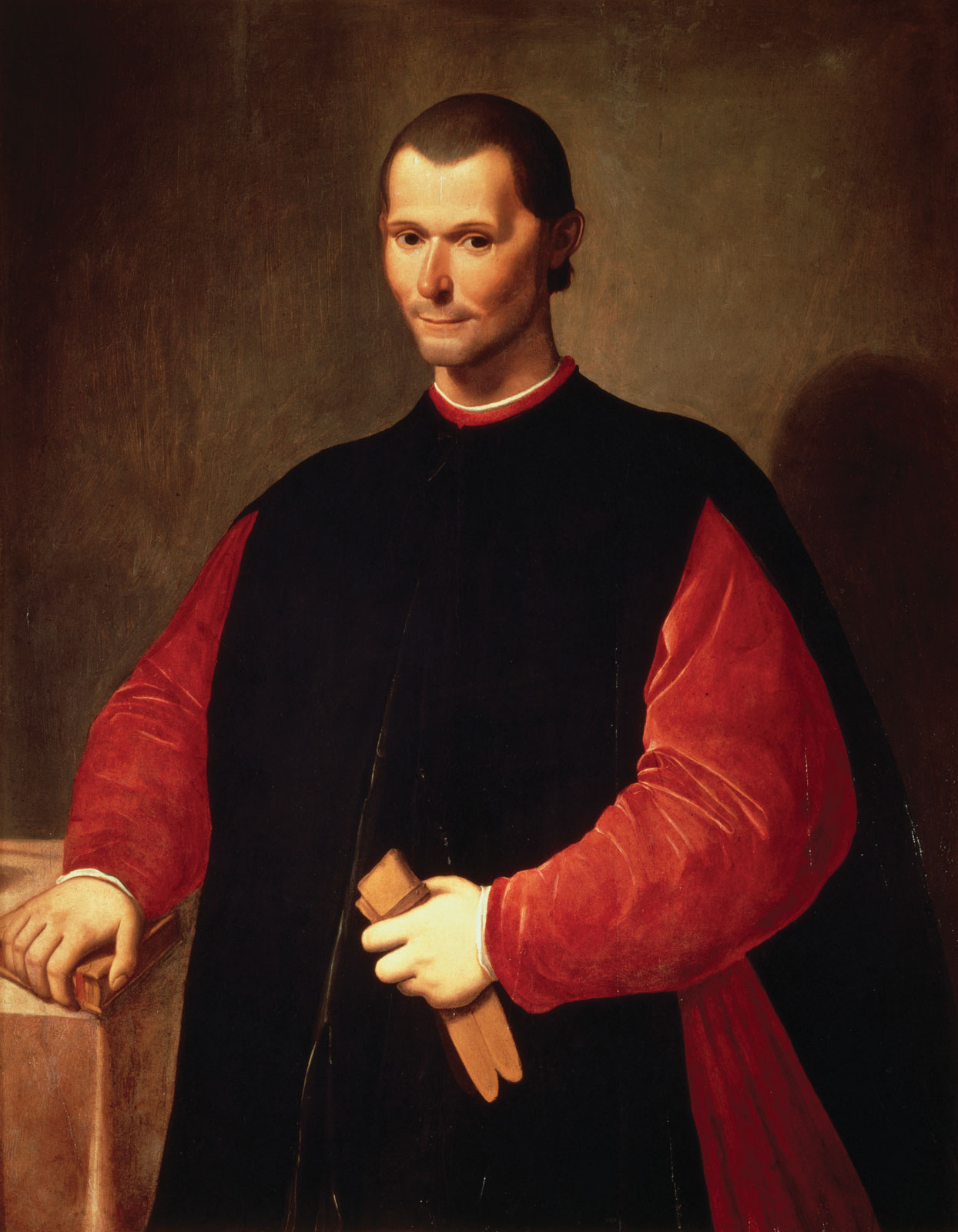
Niccolò Machiavelli
Diplomat•Philosopher•Writer•Historian
Also known as: Niccolò di Bernardo dei Machiavelli, Il Principe
Birthday
May 3, 1469
Birth Sign
Taurus
Birthplace
Florence, Republic of Florence
Age
Died at 58
About
Niccolò di Bernardo dei Machiavelli was an Italian diplomat, philosopher, writer, and historian who became the foundational figure in modern political theory. Born into a family of minor nobility in Florence, he is universally recognized as the father of modern political philosophy for his decisive separation of politics from ethics. His writings fundamentally changed how leaders understand power, governance, and statecraft. His most famous work, The Prince, remains one of the most influential texts in history, offering a coldly pragmatic guide to acquiring and maintaining political control. While often misunderstood as a manual for evil, his actual arguments focused on the necessity of harsh measures to ensure the stability and survival of the state. His legacy endures through centuries of study in political science, history, and international relations. In 2026, his works remain highly relevant, with recent discussions in major publications like The Atlantic and Washington Post applying his theories to modern geopolitics and leadership strategies.
Early Life & Background
Niccolò di Bernardo dei Machiavelli entered the world on May 3, 1469, in Florence during the height of the Italian Renaissance. His father, Bernardo, was a lawyer who struggled with significant debt, forcing the family to live in relative poverty despite their noble status. This financial instability meant Niccolò did not attend university; instead, he received a humanist education typical of the Florentine elite through private tutors and intense self-study in Latin and classical literature. From a young age, he displayed a keen interest in the mechanics of statecraft and the historical rise and fall of republics. Before achieving fame, he worked as a scribe and clerk in the chancery of the Florentine Republic. These early years were spent absorbing the complex political landscape of Italy, observing the rivalries between city-states, and learning the intricacies of diplomacy. In 1498, at the age of 29, he was appointed Second Chancellor of the Republic and Secretary to the Ten of Liberty and Peace. This pivotal moment launched his career as a statesman and set the stage for the diplomatic missions that would eventually provide the raw material for his most famous works.
Career Growth
Machiavelli's career was defined by his service to the Florentine Republic as Secretary. He undertook numerous diplomatic missions across Italy and Europe, including embassies to France, Spain, and the court of Pope Julius II. These experiences provided the raw material for his most famous works. His breakthrough moment came not from a single event but from the culmination of his diplomatic observations, which led to the writing of The Prince around 1513. Written after he was dismissed from office following the return of the Medici family to power in Florence, The Prince was dedicated to Lorenzo de' Medici in hopes of regaining favor. Although it did not immediately secure him a position, it established his reputation as a profound thinker on power dynamics. Following his dismissal, he lived in exile at his estate near San Casciano, where he wrote his major philosophical works, including The Discourses on Livy and The Art of War. His career milestones include a diplomatic mission to Cesare Borgia in 1502–1503, where he observed ruthless tactics firsthand, and the publication of The Art of War in 1517, which advocated for a citizen militia over mercenaries. He served briefly as a member of the Florentine Council of One Hundred before his death in 1527. In 1520, he also wrote The Life of Castruccio Castracani, a biography of a medieval Italian ruler.
Career Timeline
Public Image & Style
Machiavelli is portrayed as the archetype of the cold, calculating strategist. Media often depicts him as a villainous figure, though modern scholarship emphasizes his role as a patriot who sought a unified Italy. His aesthetic is that of the stern Renaissance scholar, often depicted in dark robes with a quill and inkwell. Contemporary portraits show him as a man of serious demeanor, with a beard and dressed in the fashion of a Florentine gentleman of the early 16th century. He was of average height for the time, though exact measurements are unavailable. Statues and busts of Machiavelli stand in Florence (Piazza della Signoria), Rome, and other cities, commemorating his contribution to the city-state's history. The term 'Machiavellian' has become a synonym for evil cunning, a popular folklore that oversimplifies his actual nuanced arguments about the necessity of harsh measures for the stability of the state.
Fame & Fandom
iFANN has not yet collected fame data for this person. While there is no organized fandom in the pop culture sense, he commands a vast community of scholars, students, and political enthusiasts. Fan campaigns are rare, but academic symposiums and online discussions frequently revolve around interpreting his works for modern contexts. The 'inside jokes' often involve the misuse of his name to justify unethical behavior in business or politics. His influence spans centuries, making him a constant subject of analysis in political science curricula globally. Accounts dedicated to his philosophy and quotes are active on platforms like Twitter, Instagram, and TikTok, often sharing his aphorisms with millions of views.
Interesting Facts and Legends
Niccolò Machiavelli was also a musician and poet, composing songs and plays that are less known than his political treatises. He wrote a comedy called The Mandrake (La Mandragola), which is still performed today and considered a masterpiece of Italian Renaissance theater. Much of his most famous work was written while he was effectively under house arrest or living in exile, using the time to reflect on his failures in public service. He maintained a close friendship with Francesco Guicciardini, another prominent Florentine historian and politician, though their political views sometimes diverged. He also maintained a friendship with Francesco Vettori, a fellow diplomat. The concept of the 'birth of realism' is his most iconic legend, marking the shift where a leader must act according to necessity rather than moral ideals. His quote regarding love and fear, 'It is better to be feared than loved, if you cannot be both,' remains widely cited in contemporary leadership strategies.
Notable Quotes
“It is better to be feared than loved, if you cannot be both.”
“Wars begin when you will, but they do not end when you please.”
“He who does not detect evils when they arise is not truly prudent.”
Family & Personal Life
Niccolò Machiavelli married Marietta Corsini in 1502. She was the daughter of a prominent Florentine family. The couple had five children: three sons named Bernardo, Guido, and Luigi, and two daughters named Lorenzo and Maria. Historical records indicate a stable marriage, though specific details about their romantic courtship or internal family dynamics are scarce due to the era's documentation habits. There are no credible historical accounts of extramarital affairs, divorces, or other romantic relationships outside of his marriage to Marietta Corsini. The couple remained together until Machiavelli's death. He left behind a legacy managed by his descendants and, centuries later, by historians and political scholars worldwide. As of 2026, his descendants continue to manage his historical estate alongside academic institutions.
Notable Connections
Relationships & Dating History
Niccolò Machiavelli married Marietta Corsini in 1502. She was the daughter of a prominent Florentine family. The couple had five children: three sons (Bernardo, Guido, and Luigi) and two daughters (Lorenzo and Maria). Historical records indicate a stable marriage, though specific details about their romantic courtship or internal family dynamics are scarce due to the era's documentation habits. There are no credible historical accounts of extramarital affairs, divorces, or other romantic relationships outside of his marriage to Marietta Corsini. The couple remained together until Machiavelli's death in 1527. As of 2026, Niccolò Machiavelli remains deceased; therefore, he has no current relationship status.
- MarriedMarietta Corsini1502 - 1527They had five children together and remained married until his death.
Death & Aftermath
Died
June 21, 1527 (aged 58)
Death Place
Florence, Italy
Cause of Death
Natural causes
Centuries after his passing, Niccolò Machiavelli's name evolved from a synonym for political cunning into the foundational language of modern statecraft, with his works eventually filling university syllabi and inspiring countless theatrical adaptations. This enduring legacy began quietly in Florence on June 21, 1527, when he passed away at age 58 during a period of intense political instability following the return of the Medici family. His final years were spent in private retirement at his estate in Sant'Andrea in Percussina, where he continued to write despite having been dismissed from public service over a decade prior. Historical consensus derived from contemporary accounts by Francesco Vettori and later chroniclers establishes that natural causes, likely exacerbated by stress and general ill health, claimed his life, as such forensic procedures were not standard for non-suspicious deaths in sixteenth-century Italy.
The funeral was a modest affair held within the church of Santa Croce, attended only by immediate family and close friends, reflecting his status as a man out of favor rather than a national icon worthy of grand mourning. His manuscripts were handled by his family and eventually published posthumously, leading to a gradual reassessment of his philosophical impact that transformed him into one of the most influential thinkers in history.
Net Worth (Estate Value)
$0
iFANN Editorial Team estimate
As a historical figure who died in 1527, Niccolò Machiavelli does not have a net worth in the modern financial sense. His estate value cannot be calculated in dollars. However, the economic impact of his intellectual property (his writings) is immeasurable. His works generate revenue through book sales, licensing, academic citations, and adaptations in theater, film, and television. The 'estate' of his ideas is managed by publishers and academic institutions. No specific dollar figure exists for his personal wealth, as he lived in a pre-capitalist economy where wealth was measured in land and political influence rather than liquid assets. In 2026, his works continue to generate revenue through various global adaptations and academic licensing deals.
Awards & Accolades
View 7 records, honours and achievementsKnown For
The Prince
1513 · Author
The Discourses on Livy
1517 · Author
The Art of War
1521 · Author
Keywords
Sources
Quick Facts
- Full Birth Name
- Niccolò di Bernardo dei Machiavelli
- Profession
- Diplomat, Philosopher, Writer, Historian
- Place of Birth
- Florence, Republic of Florence
- Date of Death
- June 21, 1527
Personal Details
- Full Name
- Niccolò di Bernardo dei Machiavelli
- Spouse
- Marietta Corsini
- Children
- Bernardo, Guido, Luigi, Lorenzo, Maria
- Education
- Humanist education (private tutors)
Frequently Asked Questions
What is Niccolò Machiavelli best known for?
Did Niccolò Machiavelli invent the term 'Machiavellian'?
When did Niccolò Machiavelli die?
Was Niccolò Machiavelli married?
What is the significance of The Prince?
Similar People
Join the community
fans discussing