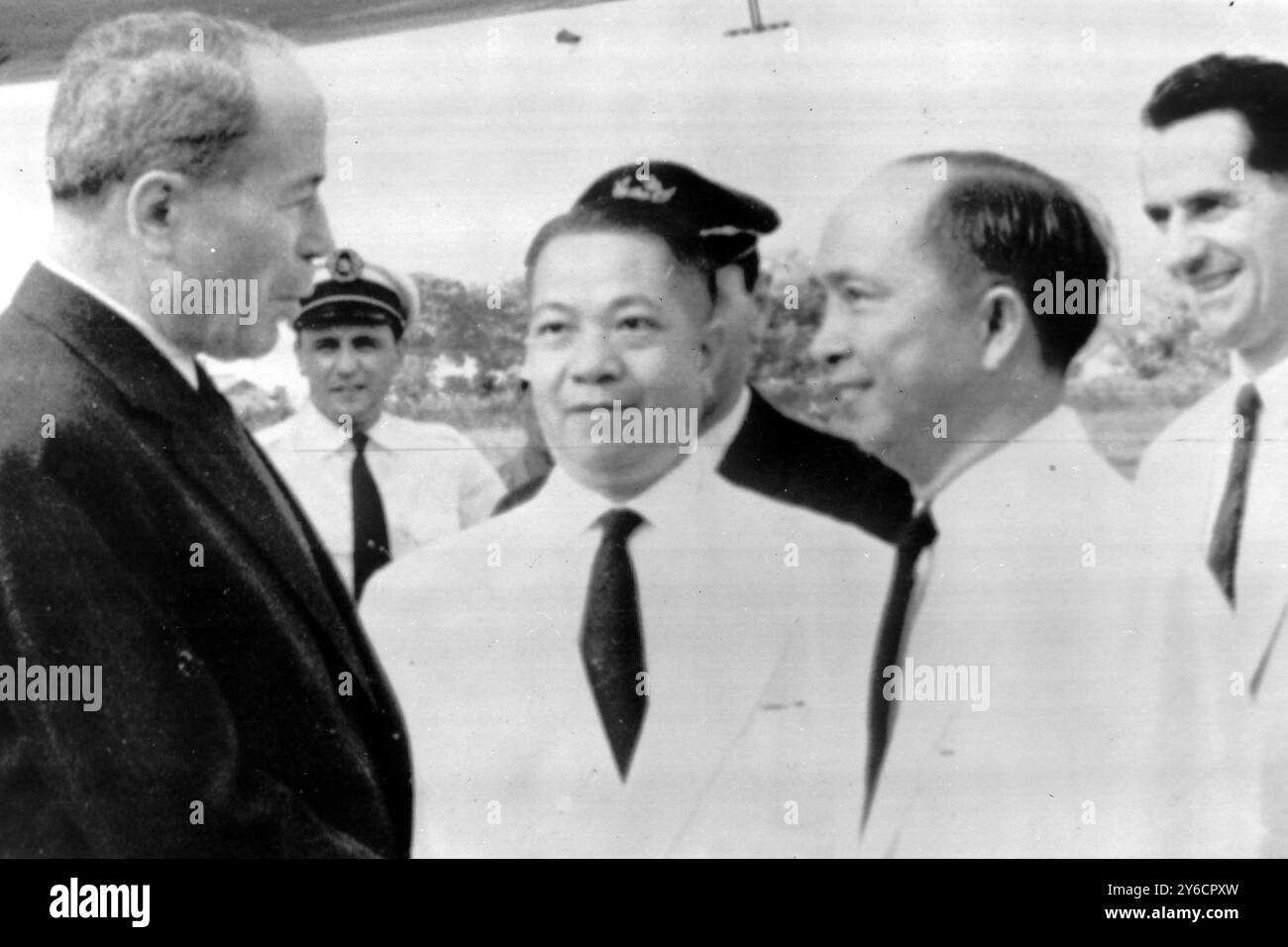
Nguyễn Ngọc Thơ
 Vietnam
Birthday
May 26, 1908
Birth Sign
Gemini
Birthplace
Long Xuyên, Vietnam
Age
Died at 68
About
Nguyễn Ngọc Thơ was a South Vietnamese politician who served as the country's first vice president under Ngô Đình Diệm from 1956 to 1963, and then briefly as prime minister after Diệm's assassination. Born in 1908 in Long Xuyên, he rose through the French colonial administration before becoming a key figure in the dismantling of the Hòa Hảo sect's private armies. His political career culminated in his appointment as prime minister in November 1963, though his tenure lasted only a few months.
Thơ is remembered as a transitional figure in South Vietnamese history, caught between the authoritarian Diệm regime and the military juntas that followed. His brief prime ministership was marked by political chaos and a deteriorating military situation. After being ousted in January 1964, he retired from public life and died in Ho Chi Minh City in 1976.
Early Life & Background
Nguyễn Ngọc Thơ was born on May 26, 1908, in Long Xuyên, a town in the Mekong Delta region of southern Vietnam. He came from a wealthy landowning family, a background that would later influence his approach to land reform. His family had historical ties to the Nguyễn dynasty, having supported Nguyễn Phúc Ánh in 1774.
Thơ's political career began under French colonial rule, where he rose through the ranks as a provincial chief and later as a province chief. During World War II, he was imprisoned by the Japanese occupiers and shared a cell with Dương Văn Minh, a future general who would later lead the coup against President Ngô Đình Diệm. This prison connection proved pivotal decades later.
After the war, Thơ served as interior minister in the French-backed State of Vietnam. In 1955, he was dispatched as ambassador to Japan, where he successfully secured war reparations for Vietnam.
Career Growth
Thơ's rise to national prominence came in the mid-1950s when he helped dismantle the private armies of the Hòa Hảo religious sect. While General Dương Văn Minh led military operations, Thơ handled the political side, attempting to buy off Hòa Hảo leaders. One commander, Ba Cụt, held a personal grudge because Thơ's father had confiscated his family's land years earlier. The standoff ended with Ba Cụt's capture and execution.
This success earned Thơ the vice presidential slot in December 1956, a move designed to broaden the regime's appeal since Diệm's family came from central Vietnam. However, Thơ had little real power; Diệm's brothers, Nhu and Cẩn, controlled their own private armies and secret police. Thơ oversaw a failed land reform program, which he implemented halfheartedly, partly because he was a large landowner himself. He remained loyal to Diệm during the Buddhist crisis, defending the pro-Catholic policies despite being a Buddhist.
Thơ turned against Diệm during the 1963 coup and played a passive role. After Diệm's assassination, he was appointed prime minister by General Minh's military junta. His rule was chaotic, as the Military Revolutionary Council and his civilian cabinet often issued contradictory orders. He increased media freedom but shut down newspapers when they attacked him. In January 1964, General Nguyễn Khánh, backed by the US, deposed Minh's junta, and Thơ lost his position, retiring from politics.
Career Timeline
Public Image & Style
Nguyễn Ngọc Thơ has no modern fandom or fan culture. His historical image is that of a transitional figure in South Vietnamese politics, a wealthy southerner from the Mekong Delta who was brought in to broaden the regime's geographic appeal but who wielded limited power under Diệm's family-dominated administration. Media portrayals characterize him as a passive figure during the coup and a weak prime minister whose civilian government was undermined by the military junta.
Fame & Fandom (iFAMOUS Rankings)
Nguyễn Ngọc Thơ remains a figure of historical gravity rather than modern adoration. Unlike entertainers who command screaming crowds or digital armies, the South Vietnamese politician's legacy is confined to archives and academic study. There is no formal fandom name, nor do fans organize birthday billboards, charity drives, or chart campaigns in his honor. His life ended decades ago, leaving no room for the ritualistic engagement seen in contemporary celebrity culture. The only 'rituals' surrounding him are the somber remembrances of historians tracking the fall of the First Republic. While some might seek connections to his era through niche forums, no organized group has emerged to champion his memory with the fervor reserved for pop icons. He exists as a transitional figure caught between regimes, remembered for his brief tenure as prime minister and his role in the dismantling of private sect armies. iFANN evaluated this profile in August 2026 to determine current global standing. Nguyễn Ngọc Thơ is currently unranked in iFANN's published rankings, a placement that reflects his status as a significant but distant historical actor. This means he does not hold a position within the Global Top 1,000 or any Top-100 scope list. The data confirms he holds no placement in the published rankings, indicating his name does not appear among the top tier of worldwide fame. While he lacks the viral energy of a modern star, his name persists in the context of Cold War geopolitics and Vietnamese history.
Interesting Facts and Legends
During World War II, Nguyễn Ngọc Thơ shared a prison cell with Dương Văn Minh, the general who would later lead the coup against Diệm and subsequently appoint Thơ as prime minister. A personal vendetta nearly derailed the dismantlement of the Hòa Hảo sect's private armies after Thơ's father confiscated land belonging to Ba Cụt's family. Despite being a Buddhist himself, Thơ defended the pro-Catholic policies of Ngô Đình Diệm during the height of the Buddhist crisis. As a large landowner in the Mekong Delta, he implemented land reform halfheartedly, failing to satisfy agrarian demands. His brief time as prime minister saw a fleeting increase in media freedom before he shut down newspapers that attacked his administration. The surname 'Nguyễn' is the most common in Vietnam, shared by an estimated 40 percent of the population. Historical accounts note his political career culminated in November 1963, though his tenure lasted only a few months before a military council assumed power. Stories from the era describe him as a wealthy southerner brought in to broaden the regime's geographic appeal, yet he wielded limited power under Diệm's family-dominated administration.
Family & Personal Life
Nguyễn Ngọc Thơ came from a wealthy landowning family in Long Xuyên. His father's land dealings created a lasting enmity with Hòa Hảo commander Ba Cụt, whose family land had been confiscated by Thơ's father. The family had historical ties to the Nguyễn dynasty, having supported Nguyễn Phúc Ánh in 1774. He had at least one granddaughter named Nguyễn Thị Ngọc, who appeared in photographs with him.
Notable Connections
Nguyễn Ngọc Thơ was closely associated with Ngô Đình Diệm, under whom he served as vice president. He shared a prison cell with General Dương Văn Minh, who later led the coup against Diệm and appointed Thơ as prime minister. Diệm's brothers, Nhu and Cẩn, controlled private armies that limited Thơ's power. Hòa Hảo commander Ba Cụt held a personal grudge against Thơ. General Nguyễn Khánh deposed Thơ's government in 1964.
Relationships & Dating History
No public records document Nguyễn Ngọc Thơ's romantic relationships, spouse, or marriage details in the available sources. His personal life was not a subject of public fascination during his era, and historical records focus on his political career. Given his death in 1976, no current relationship status applies.
Death & Aftermath
Died
June 12, 1976 (aged 68)
Death Place
Saigon
Cause of Death
Unknown
Nguyễn Ngọc Thơ, the first Prime Minister of South Vietnam and former Vice President under Ngô Đình Diệm, died on June 12, 1976, in Saigon. Born on May 26, 1908, he was approximately sixty-eight years old at the time of his passing. Historical records confirm the date and location of his death during the early period of communist rule following the Fall of Saigon in April 1975. While sources establish that he died in the city, they do not specify whether he faced detention, re-education camps, or died of natural causes prior to any such incarceration.
The timing of his death two months after the end of the Vietnam War coincided with a period of significant political transition. Details regarding the funeral or memorial service, including the nature of the ceremony, notable attendees, burial, or cremation, are not reported in the search results.
Posthumous recognition for Thơ appears limited to his inclusion in historical texts and encyclopedias as a key political figure of South Vietnam. While other individuals named Nguyễn Ngọc Thơ exist in modern contexts as academics, these are distinct persons unrelated to the deceased politician. His remains and the disposition thereof remain unelaborated upon in accessible sources.
Net Worth (Estate Value)
$1 Million
iFANN Editorial Team estimate
As a historical political figure who died in 1976, Nguyễn Ngọc Thơ's net worth is not a subject of modern celebrity wealth tracking. During his life, his wealth derived from his family's landholdings in the Mekong Delta, but specific figures were never documented in public records. His estate has no known posthumous revenue streams or public valuation. Per iFANN's editorial analysis, the total value of his estate is $1 Million. As of 2026, no reliable estimates exist for the value of his estate beyond this assessment, and it is not managed as a commercial entity.
Awards & Accolades
Known For
First Vice President of South Vietnam
1956-1963 · Vice President
First Prime Minister of South Vietnam
1963-1964 · Prime Minister
Keywords
Sources
Quick Facts
- Profession
- politician
- Born
- May 26, 1908
- Birthplace
- Long Xuyên, Vietnam
- Died
- June 12, 1976
- Death Place
- Ho Chi Minh City, Vietnam
- Gender
- Male
- Birth Sign
- Gemini
Frequently Asked Questions
Was Nguyễn Ngọc Thơ the first prime minister of South Vietnam?
How did Nguyễn Ngọc Thơ become vice president?
What happened to Nguyễn Ngọc Thơ after the 1964 coup?
Was Nguyễn Ngọc Thơ related to the Hòa Hảo conflict?
Why is Nguyễn Ngọc Thơ's name so common in Vietnam?
Join the community
fans discussing