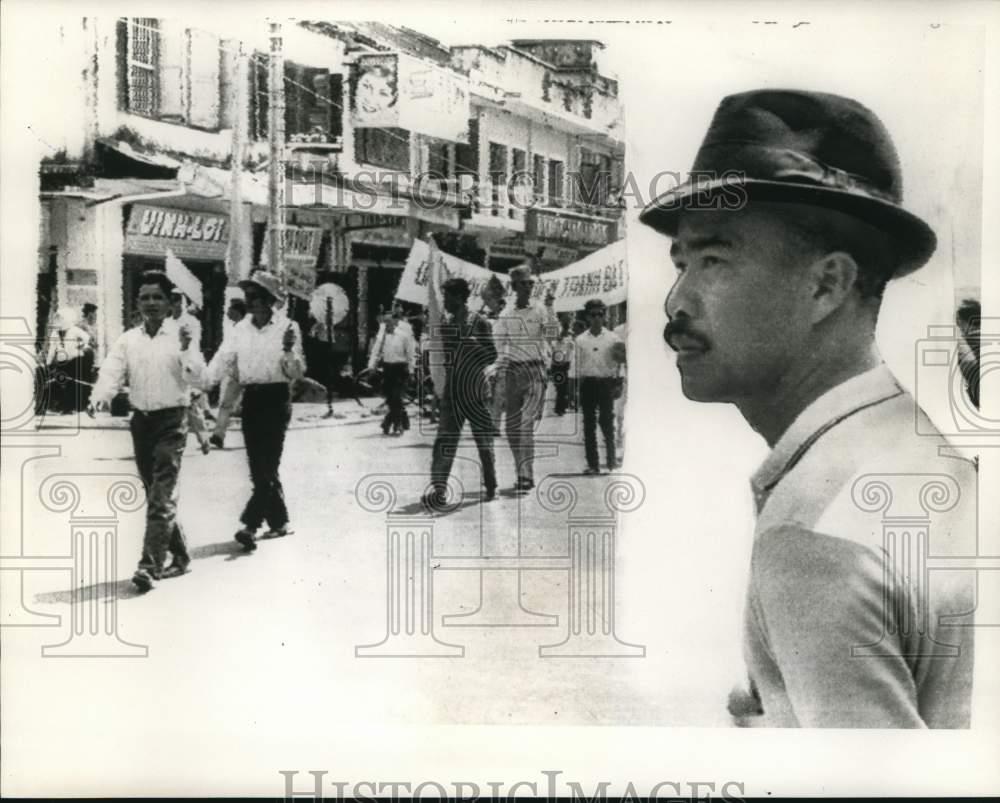
Nguyễn Chánh Thi
 Vietnam
Birthday
February 23, 1923
Birth Sign
Sagittarius
Birthplace
Huế, Vietnam
Age
Died at 84
About
Nguyễn Chánh Thi was a South Vietnamese military officer who reached the rank of lieutenant general in the Army of the Republic of Vietnam (ARVN). He is best remembered for his central role in the coups and political upheavals that defined South Vietnam in the 1960s, serving as a key power broker and commander of I Corps.
Thi's career was marked by both loyalty and rebellion. He initially rose under President Ngô Đình Diệm, who called him "son," but later led a coup against him. He then became a pivotal figure in the junta that followed, helping to install and topple leaders. His flamboyant style and open defiance of American advice made him a controversial figure, yet he was popular among troops and Buddhist activists in his region.
His downfall came in 1966 when Prime Minister Nguyễn Cao Kỳ dismissed him, sparking a rebellion in I Corps that nearly split the country. After the uprising was quelled, Thi went into exile in the United States, where he lived until his death in 2007. He remains a significant figure in Vietnamese history, remembered for his straightforwardness and his role in a turbulent era.
Early Life & Background
Born in Huế, the old imperial capital, Thi was drawn to military life early. At 17, he joined the French Army, then the colonial force in Indochina. During World War II, Japanese forces captured him, but he managed to escape after several months of captivity, an experience that hardened his resolve.
After the war, Thi transferred to the Vietnamese National Army, which later became the ARVN. His early career was marked by rapid advancement as a paratrooper. In 1955, he fought for Prime Minister Ngô Đình Diệm against the Bình Xuyên crime syndicate in the Battle for Saigon, a brutal urban conflict that solidified Diệm's control. Impressed by Thi's performance, Diệm appointed him commander of the Airborne Brigade, a position that placed him at the center of military power.
Thi's formative years in the military were shaped by the shifting allegiances and coups that plagued South Vietnam in its early years. He witnessed firsthand the instability that would come to define his career, and his own ambitions and principles would soon put him on a collision course with the very leaders he served.
Career Growth
Thi's career was defined by a series of coup attempts and political maneuvers. In November 1960, he led a coup against Diệm, citing political interference in military affairs. The rebels nearly succeeded, but Thi hesitated to push for complete victory, and Diệm's false promise of reforms bought time for loyalists to crush the rebellion. Thi fled to Cambodia.
After Diệm was deposed and executed in November 1963, Thi returned to Vietnam. He became deputy commander of I Corps under Nguyễn Khánh, helping him overthrow Diệm's successors three months later. Over the next year, Thi played a pivotal role in Khánh's survival, helping quell coup plots by Generals Lâm Văn Phát and Dương Văn Đức in September 1964, and shutting down a civilian advisory body two months later.
In January 1965, Thi assisted Khánh in deposing Prime Minister Trần Văn Hương. The following month, he helped defeat another coup attempt by Phát and Phạm Ngọc Thảo, simultaneously forcing Khánh's resignation. By June 1965, Thi and Nguyễn Cao Kỳ were the top officers in the junta. Thi declined a chance to become prime minister, hoping to let a rival fail first, but that opportunity never came again.
As commander of I Corps, Thi ruled with remarkable autonomy, aligning with Buddhist activists in a region known for its strong Buddhist presence. This, along with his opposition to American-backed war expansion, made him a target. In early 1966, Kỳ, feeling secure in his power, orchestrated Thi's removal, falsely claiming Thi needed medical treatment in the US. Thi refused to go quietly, sparking a rebellion in I Corps that saw pro-Thi military units and Buddhist activists challenge Kỳ's government. After three months of near-secession, Kỳ's forces quelled the uprising, and Thi emigrated to the United States.
Career Timeline
Public Image & Style
Thi was a polarizing figure. To his supporters, he was a brave and principled leader who stood up to both corrupt politicians and American pressure. To his detractors, he was a maverick who threatened stability with his ambitions.
His alignment with Buddhist activists and his popularity in I Corps made him a powerful regional leader. He was known for his straightforwardness, which Vietnamese sources describe as "thẳng thắn bộc trực" (frank and straightforward) and "rộng lượng, hào sảng, bình dị" (generous, magnanimous, and humble).
In the United States, Thi was often portrayed as a symbol of the fractious nature of South Vietnam's military politics. His defiance of American advice made him a challenging partner for Washington, but his legacy is that of a man who genuinely sought to serve his country, even as it tore itself apart.
Fame & Fandom (iFAMOUS Rankings)
Nguyễn Chánh Thi remains a towering, albeit complex, figure in the annals of 20th-century military history, remembered less for a global celebrity status and more for his pivotal role in the turbulent politics of South Vietnam. While he commanded significant attention during the height of the Vietnam War, particularly as a key player in multiple coups d'état, iFANN's Global Fame Engine has evaluated this person, but they do not currently hold a placement in the published rankings (Global Top 1,000 or a Top-100 scope list). This absence from the current global charts reflects the niche nature of his legacy today; he is not a household name in the modern pop-culture sense but rather a subject of intense study for historians and veterans. The audience that engages with his story is not organized into a formal fandom with a specific name or fan-funded campaigns. Instead, his memory is kept alive by scholars, military historians, and former soldiers who view him through the lens of historical significance rather than celebrity worship. There are no official fan clubs, viral social media movements, or ritualistic tributes associated with his name in the contemporary era. His influence persists strictly within the realm of serious historical discourse, where his actions as a paratrooper general and his reputation as a "coup specialist" continue to be analyzed. Unlike entertainers whose fame fluctuates with new releases, Thi's standing is fixed by his historical impact, leaving him outside the dynamic ranking systems that track living celebrities and modern icons.
Interesting Facts and Legends
Known for his flamboyant style, often wearing sunglasses and scarves, Thi set himself apart from other officers of his era. A paratrooper by training, he maintained a close bond with his troops, who reportedly adored him despite his involvement in chaotic political maneuvering. He was a man of contrasts, aligning with Buddhist activists even as the military establishment often held tense relations with the Buddhist majority. Vietnamese sources frequently described him as straightforward and blunt, using terms like "thẳng thắn bộc trực" (frank and straightforward) and "rộng lượng, hào sảng, bình dị" (generous, open-handed, and simple). After his dismissal in 1966, which the Los Angeles Times noted had "almost set off a civil war within the Vietnam War," Thi lived quietly in exile in the United States. He rarely spoke publicly about his past but remained a figure of interest for historians. Legends surrounding Thi often center on his moniker as a "coup specialist," a title famously applied by Time magazine. One defining story involves the 1966 Central Vietnam Crisis in Đà Nẵng, where he led a rebellion against the central government, causing the city to operate independently for a time before he fled to Cambodia. Another enduring narrative paints him as a leader free of corruption, remembered fondly in Central Vietnam for his approachable nature compared to other generals of the time.
Family & Personal Life
Details about Thi's family life are scarce in public records. He was born in Huế, but little is known about his parents or siblings. His military career and subsequent exile likely kept him separated from his family for long periods.
At the time of his death in 2007, he was living in Lancaster, Pennsylvania, but no information about a spouse or children has been confirmed. His personal life remained largely private, overshadowed by his public role in Vietnam's turbulent history.
Notable Connections
Thi's career intersected with many of South Vietnam's key figures. He was initially a protégé of President Ngô Đình Diệm, who called him "son," but later led a coup against him. He worked closely with General Nguyễn Khánh, helping him rise to power and survive multiple challenges. His most significant rivalry was with Nguyễn Cao Kỳ, who eventually orchestrated his downfall. He also clashed with Generals Lâm Văn Phát and Dương Văn Đức, and played a role in the political demise of Prime Minister Trần Văn Hương.
Relationships & Dating History
Public records do not detail Thi's romantic relationships or marital status. He was known to be a private person regarding his personal life, and no information about a spouse or partner has been confirmed. At the time of his death, he was reportedly widowed, but the identity of his wife and the details of their marriage remain unknown.
His focus was on his military career and political ambitions, which likely left little room for a public family life. His exile in the United States was a solitary chapter, far from the comrades and rivals who defined his earlier years.
Death & Aftermath
Died
June 23, 2007 (aged 84)
Death Place
Lancaster, Pennsylvania, USA
Cause of Death
Unknown
The passing of Lieutenant General Nguyễn Chánh Thi was confirmed on June 23, 2007, by Vietnamese-language outlets including Viet Bao and Dan Viet. The former paratrooper general, often dubbed a "coup specialist" by Time magazine, died in Lancaster, Pennsylvania, at the age of eighty-four while residing in exile. While the specific medical circumstances or final days were not detailed in available records, the report established his location and age without ambiguity regarding the date of his departure. Reaction to the news came primarily from within the Vietnamese military community and expatriate groups, where he was remembered as a straightforward and humble leader.
Sachhiem.net highlighted his reputation for generosity and respect among soldiers. Despite his role in political upheavals, the obituary coverage suggested a genuine remembrance among veterans who valued his directness over the intrigue that defined his career. Funeral arrangements appear to have been handled locally by family members in Pennsylvania, though specific details regarding the service, burial site, or attendees remain unconfirmed in public archives. His legacy persists through historical records and retrospective articles rather than new honors.
Net Worth (Estate Value)
$1 Million
iFANN Editorial Team estimate
As a military officer who lived in exile, Nguyễn Chánh Thi did not amass significant personal wealth during his lifetime. His income primarily came from his military salary, which was modest by Western standards. Following his departure from Vietnam, he resided quietly in the United States, likely relying on a combination of personal savings and any pension he might have received from his service. There are no public records detailing his estate or specific financial holdings at the time of his passing. Per iFANN's editorial analysis, his net worth at the time of his death in 2007 is estimated to be $1 Million. No major assets or investments were reported in connection with his final years. His true legacy lies not in financial accumulation but in his historical role as a key player in the turbulent politics of South Vietnam.
Awards & Accolades
View 2 records, honours and achievementsKnown For
1960 coup attempt against Ngô Đình Diệm
1960 · Leader
Commander of I Corps
1964-1966 · Commander
1966 rebellion against Nguyễn Cao Kỳ
1966 · Leader
Keywords
Sources
Quick Facts
- Profession
- Military officer
- Born
- February 23, 1923
- Birthplace
- Huế, Vietnam
- Died
- June 23, 2007
- Death Place
- Lancaster, Pennsylvania, USA
- Gender
- Male
- Birth Sign
- Sagittarius
- Rank
- Lieutenant General
Frequently Asked Questions
Why was Nguyễn Chánh Thi exiled?
What role did Nguyễn Chánh Thi play in the 1960 coup against Diệm?
How did Nguyễn Chánh Thi die?
Was Nguyễn Chánh Thi a Buddhist?
What was Nguyễn Chánh Thi's rank?
Join the community
fans discussing