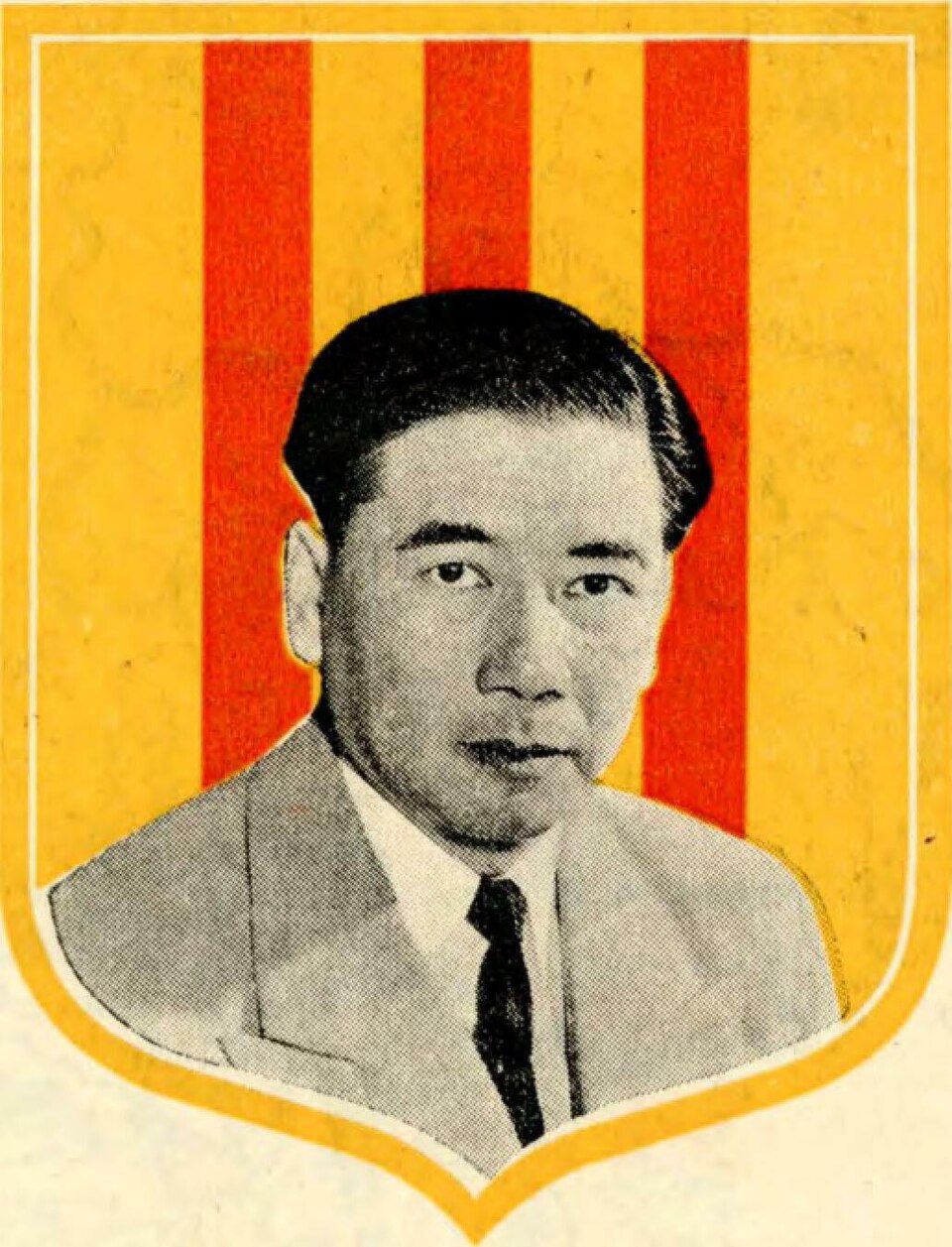
Ngô Đình Thục
 Vietnam
Catholic priest•Catholic bishop
Also known as: Pierre Martin Ngô Đình Thục, Ngo Dinh Thuc
Birthday
October 6, 1897
Birth Sign
Libra
Birthplace
Huế, Vietnam
Age
Died at 87
About
Pierre Martin Ngô Đình Thục was a prominent Vietnamese Catholic prelate and the eldest brother of South Vietnam's first president, Ngô Đình Diệm. Born in Huế, Vietnam, to one of the country's leading Catholic families, Thục rose to become the first Archbishop of Huế, serving from 1960 until his forced exile in 1963 following the assassination of his brothers. A pivotal figure in 20th-century Vietnamese religious and political history, he is equally remembered for founding Dalat University and for his later years as a controversial traditionalist who challenged Vatican authority. His life was defined by deep family ties and intense political upheaval. While attending the Second Vatican Council in Rome, a coup d'état in South Vietnam in 1963 resulted in the deaths of his brothers, President Ngô Đình Diệm and Chief Advisor Ngô Đình Nhu. This tragedy prevented Thục's return to Vietnam, forcing him into permanent exile. He spent his remaining years living in Europe and the United States, where he became a leader of traditionalist Catholic movements. His actions during this time, including consecrating bishops without Vatican approval for sedevacantist groups, led to his excommunication from the Catholic Church on two occasions. Despite these controversies, Thục expressed repentance for his views shortly before his death in 1984, at the age of 87, and was reconciled with the Church.
Early Life & Background
Born on October 6, 1897, in Huế, the imperial capital of Vietnam, Pierre Martin Ngô Đình Thục entered the world into a family of high-ranking mandarins and devout Catholics. His father, Ngô Đình Khôi, was a former minister who was executed by the French colonial administration in 1916, a martyrdom that deeply influenced the young Thục's path. Growing up under French rule, Thục witnessed the suppression of Catholicism and the struggles of his community, which fueled his determination to serve the faith. He pursued theological studies at the minor seminary in Hue and later advanced to the major seminary in Saigon. These formative years shaped his intellectual and spiritual foundation, preparing him for a life of service within the Church. On December 20, 1925, he was ordained a priest, marking the beginning of his ecclesiastical career. Following his ordination, he served in various parishes, gaining experience in pastoral care and administration before his appointment as Bishop of Vinh-Long in 1949. Before achieving global notoriety through his brother's presidency, Thục was a respected but relatively low-profile bishop known for his administrative capabilities and deep piety. His "breakthrough" moment came with the establishment of Dalat University in 1957, which he founded alongside his brother Diệm and other officials to provide higher education for Vietnamese youth. This institution remains a significant landmark in Vietnamese academic history. As Archbishop of Huế, Thục played a central role in the Catholic Church's expansion in South Vietnam, overseeing the construction of churches and the organization of religious life during a period of intense anti-communist sentiment. His early career was characterized by steady growth within the Church hierarchy, culminating in his elevation to Archbishop in 1960.
Career Growth
Thục's ecclesiastical career accelerated rapidly during the rise of his younger brother, Ngô Đình Diệm, who became Prime Minister in 1954 and later President. In 1960, Pope John XXIII elevated him to the rank of Archbishop of Huế, making him the first native Vietnamese to hold that position. This appointment placed him at the center of religious and political power in South Vietnam. As Archbishop, he oversaw the construction of numerous churches and played a key role in organizing religious life during a period of intense anti-communist sentiment. The trajectory of his career changed abruptly in November 1963. While Thục was attending the Second Vatican Council in Rome, a coup d'état occurred in South Vietnam, resulting in the assassination of his brothers, Ngô Đình Diệm and Ngô Đình Nhu. This event left Thục unable to return to his homeland and initiated a long period of exile. He lived in France, Italy, and the United States for the remainder of his life. During his exile, Thục became increasingly involved with traditionalist Catholic movements. He opposed the reforms of the Second Vatican Council, viewing them as modernist deviations from traditional doctrine. In 1983, he took a drastic step by consecrating four bishops without papal approval for the Sedevacantist movement, claiming the Papal See was vacant. This act directly led to his automatic excommunication by Pope John Paul II. Despite this, he continued to lead traditionalist factions until his death. His legacy is thus split between his contributions to education and religion in Vietnam and the controversial circumstances of his final years abroad.
Career Timeline
Public Image & Style
Ngô Đình Thục appeared on magazine covers primarily during the height of his political influence in the late 1950s and early 1960s, usually in conjunction with his brother President Diệm. Publications such as Time and Life featured him as part of the "Ngo Family" narrative, portraying him as a pious, powerful religious leader backing a staunchly anti-communist regime. These images depicted him in full archbishop regalia, often standing beside his brothers in formal portraits. His public image shifted dramatically in exile, where he was portrayed by traditionalist Catholic publications as a "martyr" and "wandering bishop" resisting modernist trends in the Church. He was seen as a defender of traditional doctrine against what he perceived as heresy in the post-Vatican II era, earning him both reverence and controversy within niche religious communities.
Fame & Fandom (iFAMOUS Rankings)
Ngô Đình Thục never courted a modern fanbase. He was a prelate of the 20th century, a man whose life played out in the shadow of coups and ecclesiastical decrees rather than on stages or streaming platforms. There is no collective moniker for his followers, no organized campaigns to rally behind his legacy, and no digital rituals marking his birthday. His audience remains the faithful who study the history of the Vietnamese Catholic Church or scholars tracing the tangled politics of the Ngô family. The stories that persist are not viral legends but historical fractures: the bitter exile following his brother's assassination, the schism over unauthorized bishop consecrations, and the 1983 excommunication that severed his ties with Rome. These events define his memory as a figure of profound controversy and deep religious conviction, remembered more for what he lost than for any adulation he garnered. According to the iFANN Global Fame Rankings, he stands as the 98th most famous person in Vietnam, a position holding steady from the previous cycle. He is also ranked as the 30th most famous person from Vietnam, reflecting his enduring impact on the nation's cultural memory. Within the specific sphere of religious history, he holds the spot of the 75th most famous person in Religious Leaders, having slipped slightly from 74th last cycle. These placements track his visibility across media coverage and consumption signals worldwide.
Interesting Facts and Legends
Born in Huế in 1897, Pierre Martin Ngô Đình Thục rose to become the first Archbishop of Huế, serving during a volatile era before his exile in 1963. He founded Dalat University, leaving a tangible mark on higher education in the region long before his political downfall. A defining moment in his later years occurred in April 1983 when Pope John Paul II excommunicated him automatically. This drastic measure followed Thục's decision to consecrate four bishops without papal approval, an act viewed as a direct challenge to Vatican authority. This event cemented his reputation as a defiant figure willing to risk his standing within the universal Church for local autonomy. Another persistent narrative surrounds his deep entanglement with the regime of his brother, President Ngô Đình Diệm. Following the brothers' assassination in 1963, Thục lived the rest of his life in exile, often described by observers as carrying a heavy burden of bitterness and ambition. His legacy is thus split between his contributions to education and religion and the controversial circumstances of his final years.
Notable Quotes
“He maintained that the Church needed to preserve traditional doctrine against what he perceived as heresy in the post-Vatican II era.”
“In his final days, he reportedly expressed regret for his actions, stating his desire to remain in communion with the Holy See.”
Family & Personal Life
Ngô Đình Thục never married and had no children, adhering to the vow of celibacy required of Catholic bishops. His life was entirely defined by his relationship with his siblings, particularly his younger brothers Ngô Đình Diệm (President), Ngô Đình Nhu (Chief Advisor), and Ngô Đình Cẩn (Governor of Central Vietnam). The assassination of Diệm and Nhu in November 1963 left Thục without his immediate family, a tragedy that precipitated his permanent exile. Historical accounts describe him as deeply affected by their deaths, often carrying a sense of bitterness and isolation for the remainder of his life. He outlived all three of his brothers, witnessing the execution of two and the death of the third in prison. The loss of his family shaped his later years, driving him toward the traditionalist movements that offered a sense of continuity with the past.
Notable Connections
Relationships & Dating History
Ngô Đình Thục never married and had no children, adhering to the vow of celibacy required of Catholic bishops. Consequently, there is no dating history, romantic relationships, or marital status to report. His "family" life was defined entirely by his relationship with his siblings, particularly his younger brothers Ngô Đình Diệm (President), Ngô Đình Nhu (Chief Advisor), and Ngô Đình Cẩn (Governor of Central Vietnam). The assassination of Diệm and Nhu in November 1963 left Thục without his immediate family, a tragedy that precipitated his permanent exile. Historical accounts describe him as deeply affected by their deaths, often carrying a sense of bitterness and isolation for the remainder of his life.
Death & Aftermath
Died
December 13, 1984 (aged 87)
Death Place
Carthage, Tunisia
Cause of Death
Natural causes
Pierre Martin Ngô Đình Thục died on December 13, 1984, at the age of 87 in Carthage, Tunisia. The circumstances surrounding his final days were marked by a dramatic spiritual reconciliation after years of conflict with the Vatican. In April 1983, Pope John Paul II had automatically excommunicated him for consecrating four bishops without papal approval, an act viewed as a direct schismatic challenge to Church authority. This excommunication made headlines globally and isolated Thục from the mainstream Catholic hierarchy. Shortly before his death, Thục repented of his actions. On December 17, 1984, just four days after he passed away, the Vatican announced that Thục had been received back into the Church. He had recanted his sedevacantist views and expressed contrition, leading to his posthumous absolution. Public reaction to his death was muted compared to the controversy of his excommunication. There were no grand state funerals; tributes were confined to traditionalist Catholic circles and those sympathetic to the Ngô legacy. No specific burial location has been widely documented in public records, likely due to the sensitive nature of his status as an excommunicated prelate at the time of his death. Posthumously, his estate and legacy have remained a subject of debate among historians and theologians regarding the independence of local episcopal authority versus Vatican control. His story serves as a complex chapter in the history of the Vietnamese Catholic Church, illustrating the tensions between national religious identity and universal ecclesiastical obedience during the Cold War era.
Net Worth (Estate Value)
$0
iFANN Editorial Team estimate
As a Catholic prelate who took vows of poverty and lived in exile, Ngô Đình Thục did not accumulate personal wealth in the modern sense. He did not own real estate, stocks, or businesses. His "net worth" is effectively zero in terms of liquid assets, as any property or funds were likely held by the Church or used for charitable purposes. Historical records do not list any personal fortune, and he is not associated with any business ventures or endorsement deals. The iFANN Editorial Team estimates his net worth at approximately $0, reflecting his lifelong commitment to a life of religious service and lack of personal financial accumulation.
Awards & Accolades
View 7 records, honours and achievementsKnown For
Archbishop of Huế
1960 · First Vietnamese Archbishop of Huế
Dalat University
1957 · Founder
Keywords
Sources
Quick Facts
- Profession
- Catholic priest, Catholic bishop
- Born
- October 6, 1897
- Birthplace
- Huế, Vietnam
- Died
- December 13, 1984
- Death Place
- Carthage, Tunisia
- Gender
- Male
- Birth Sign
- Libra
Personal Details
- Full Name
- Pierre Martin Ngô Đình Thục
- Children
- Education
- Minor Seminary in Hue; Major Seminary in Saigon
Frequently Asked Questions
Who was Ngô Đình Thục?
Why was Ngô Đình Thục excommunicated?
Did Ngô Đình Thục ever return to Vietnam?
What happened to Ngô Đình Thục's brothers?
How did Ngô Đình Thục die?
Similar People
Join the community
fans discussing