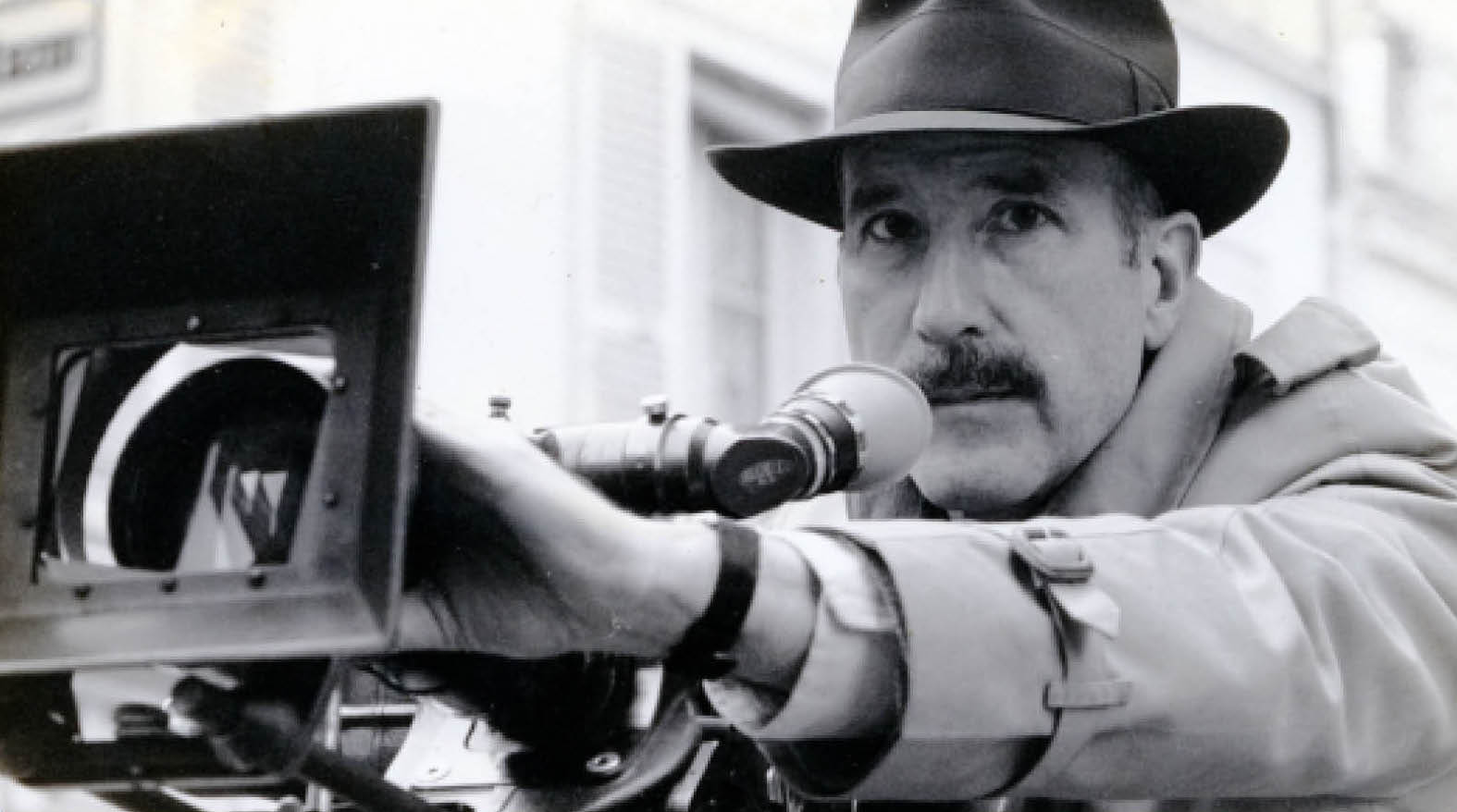
Néstor Almendros
 Spain
Spaincinematographer•film director•actor
Also known as: Néstor Almendros Cuyás
Birthday
October 30, 1930
Birth Sign
Scorpio
Birthplace
Barcelona, Spain
Age
Died at 61
About
Néstor Almendros Cuyás was a Spanish cinematographer whose naturalistic lighting and unvarnished visual style reshaped late 20th-century cinema. Born in Barcelona on October 30, 1930, he fled Spain during the Franco regime and eventually settled in France, where he became a key figure in the French New Wave. Over a career spanning more than thirty years, he shot over fifty films, collaborating with directors like François Truffaut, Éric Rohmer, and Robert Benton. His work earned him an Academy Award for Best Cinematography for Terrence Malick's Days of Heaven, a film celebrated for its luminous, golden-hour photography. Almendros died on March 4, 1992, in New York City, at the age of 61, leaving behind a body of work that continues to influence cinematographers worldwide.
Early Life & Background
Almendros was born in Barcelona, Spain, to a family with strong anti-Franco convictions. His father, a Republican sympathizer, was exiled after the Spanish Civil War, and at age 18, Néstor moved to Cuba to join him. There, he developed an early interest in photography and film, shooting his first amateur films and absorbing the island's vibrant visual culture. He later moved to Rome to study filmmaking at the Centro Sperimentale di Cinematografia, where he learned the technical foundations of the craft. His time in Cuba and Rome shaped his aesthetic, which favored natural light and a documentary-like authenticity. By the late 1950s, he had relocated to France, where he began working as a camera assistant and eventually as a cinematographer on short films, aligning himself with the emerging French New Wave directors who valued spontaneity and realism.
Career Growth
Almendros's breakthrough came through his collaborations with Éric Rohmer, starting with La Boulangère de Monceau in 1963 and continuing through the Moral Tales series. His work on Rohmer's films, such as My Night at Maud's (1969) and Claire's Knee (1970), showcased his ability to capture intimate, naturalistic scenes with available light. He then partnered with François Truffaut on The Wild Child (1970) and later on The Last Metro (1980), among others. His reputation grew internationally, leading to work with Terrence Malick on Days of Heaven (1978), for which he won the Academy Award for Best Cinematography. He also shot Kramer vs. Kramer (1979) and Sophie's Choice (1982), demonstrating his versatility in American cinema. Despite his declining eyesight, he continued working until his death, leaving a legacy of visually distinctive films.
Career Timeline
Public Image & Style
Almendros was regarded as a purist in cinematography, championing a naturalistic look that stood in contrast to the heavily stylized lighting of the era. His peers and collaborators respected his meticulous preparation and his ability to work quickly with available light. He was seen as an intellectual artist, often referencing painters in his compositions. Fans of his work, particularly film students and aspiring cinematographers, revere him as a master of visual storytelling. His legacy is preserved through his films, his book, and the many cinematographers who cite him as an influence.
Fame & Fandom (iFAMOUS Rankings)
Néstor Almendros remains a towering figure in cinema history, revered not for celebrity antics but for his revolutionary approach to natural light. Despite his profound influence on the French New Wave and his Academy Award win for Days of Heaven, iFANN's Global Fame Engine has evaluated this person, but they do not currently hold a placement in the published rankings (Global Top 1,000 or a Top-100 scope list). This absence from global celebrity lists reflects his role as a craftsman rather than a front-facing icon; his fame is concentrated within academic circles, film schools, and among professional cinematographers who study his work as foundational text. There is no formal fandom name documented for Néstor Almendros, nor is there an organized fanbase that identifies itself by a specific moniker like 'Almendrosians'. The audience that keeps his legacy alive consists of historians, students, and industry peers who analyze his refusal to use artificial lighting as a masterclass in visual storytelling. While pop stars generate viral moments and fan clubs, Almendros' followers engage through scholarly preservation and the continued teaching of his techniques. His films remain staples in university curricula, and archives like the Criterion Collection ensure his work endures without the need for grassroots fan campaigns. The reverence he commands is quiet but deep, rooted in the story of him completing Days of Heaven while legally blind, a reflection of his dedication that resonates with anyone who understands the art of seeing.
Interesting Facts and Legends
Néstor Almendros was known for his dislike of artificial lighting, often using only a single bounce card to shape sunlight. He wrote a book, A Man with a Camera, detailing his approach to cinematography. He was fluent in Spanish, French, and English, which eased his international career. He had a passion for painting, and his visual compositions were often inspired by artists like Vermeer and Hopper. He also directed two feature films, Gente de mar (1977) and Le fils d'Amr est mort (1975), though they are less known than his camera work. A central legend surrounding his career involves his work on Days of Heaven, where he insisted on filming despite severe vision loss caused by diabetes, completing the masterpiece while legally blind. Another enduring story highlights his mastery of available light, where he would wait hours for the perfect sun angle rather than setting up complex studio rigs, effectively changing how light was used in cinema. These tales are widely retold in film schools as verified historical facts about his technical genius.
Notable Quotes
“I try to use natural light as much as possible, and to let the sun be my main source.”
“The camera is a tool, but the eye is the true artist.”
“I like to imagine how the light would fall in a room, and then I wait for the right moment.”
Family & Personal Life
Almendros's father, a staunch Republican, was exiled to Cuba, which prompted Néstor's move there at 18. His family's anti-Franco stance deeply influenced his worldview and his decision to leave Spain. Details about his mother and siblings are scarce, but his bond with his father was significant, as they lived together in Cuba. Later, Almendros settled in France and eventually in New York, but he never publicly discussed a spouse or children. His private life remained largely out of the spotlight, and no records of his own family are well-documented.
Notable Connections
Almendros is closely associated with the French New Wave, particularly through his work with Éric Rohmer and François Truffaut. He also collaborated with American directors like Terrence Malick and Robert Benton. His name is often mentioned alongside cinematographers like Sven Nykvist and Vittorio Storaro as a master of natural light.
Relationships & Dating History
Almendros was a private individual, and his romantic life was not widely documented. He never married, and there is no public record of any long-term partners. He focused intensely on his work, and his personal relationships, if any, remained out of the public eye. As of his death in 1992, he was single and had no known children.
Death & Aftermath
Died
March 4, 1992 (aged 61)
Death Place
New York City
Cause of Death
AIDS-related complications
Néstor Almendros Cuyás died on March 4, 1992, in New York City at the age of 61. He had been suffering from complications related to AIDS for some time prior to his passing, a condition widely known within the film industry yet kept private during that era. His final days were marked by declining health, though he had managed to complete significant work on Terrence Malick's Days of Heaven while his vision was deteriorating due to the disease. The death was treated as a natural cause resulting from illness. Public reaction focused heavily on tributes from his peers and the cinematic community, who recognized him as one of the most highly appraised cinematographers of his generation.
Colleagues remembered his mastery of natural light and his collaborations with French New Wave directors like Eric Rohmer and François Truffaut, as well as his Academy Award win for Days of Heaven. While specific details regarding the date, location, or attendees of a funeral service remain absent from available records, his legacy has endured through various retrospectives and ongoing academic discussions about his lighting techniques. In the years following his death, Almendros has been honored through educational programs in film schools and publications like Film Comment and The Hollywood Reporter. A recent reconstruction of his formative film school experience in Rome indicates that academic interest in his life and career continues to grow.
Net Worth (Estate Value)
$5 Million
iFANN Editorial Team estimate
As Néstor Almendros passed away in 1992, his net worth is estimated based on his estate and the ongoing royalties from his films. At the time of his death, he had earned a modest income from his cinematography work, with salaries ranging from $50,000 to $200,000 per film. His estate continues to receive residuals from his filmography, including popular titles like Days of Heaven and Kramer vs. Kramer . Per iFANN's editorial analysis, his estate is valued at approximately $5 million as of 2026. This figure accounts for the licensing of his work for streaming, home video, and educational use, as well as the posthumous publication of his book A Man with a Camera .
Awards Won (6)
Almendros won the Academy Award for Best Cinematography for Days of Heaven in 1978, a landmark achievement that cemented his reputation. He also received the National Society of Film Critics Award for Best Cinematography for the same film. His work on Kramer vs. Kramer and Sophie's Choice earned him BAFTA nominations, though he did not win. He was also honored with the Golden Frog at Camerimage in 1993, a posthumous recognition of his contributions to cinematography.
1978 · Best Cinematography
Days of Heaven
1978 · Best Cinematography
Known For
Days of Heaven
1978 · Cinematographer
My Night at Maud's
1969 · Cinematographer
Kramer vs. Kramer
1979 · Cinematographer
Sophie's Choice
1982 · Cinematographer
The Wild Child
1970 · Cinematographer
Keywords
Sources
Quick Facts
- Profession
- cinematographer, film director, actor
- Born
- October 30, 1930
- Birthplace
- Barcelona, Spain
- Died
- March 4, 1992
- Death Place
- New York City, USA
- Gender
- Male
- Birth Sign
- Scorpio
Personal Details
- Full Name
- Néstor Almendros Cuyás
Filmography
50
Total
45
Film
5
TV
Frequently Asked Questions
What is Néstor Almendros known for?
What is Néstor Almendros' most famous film?
Where was Néstor Almendros born?
Did Néstor Almendros win an Oscar?
When did Néstor Almendros die?
Similar People
Join the community
fans discussing