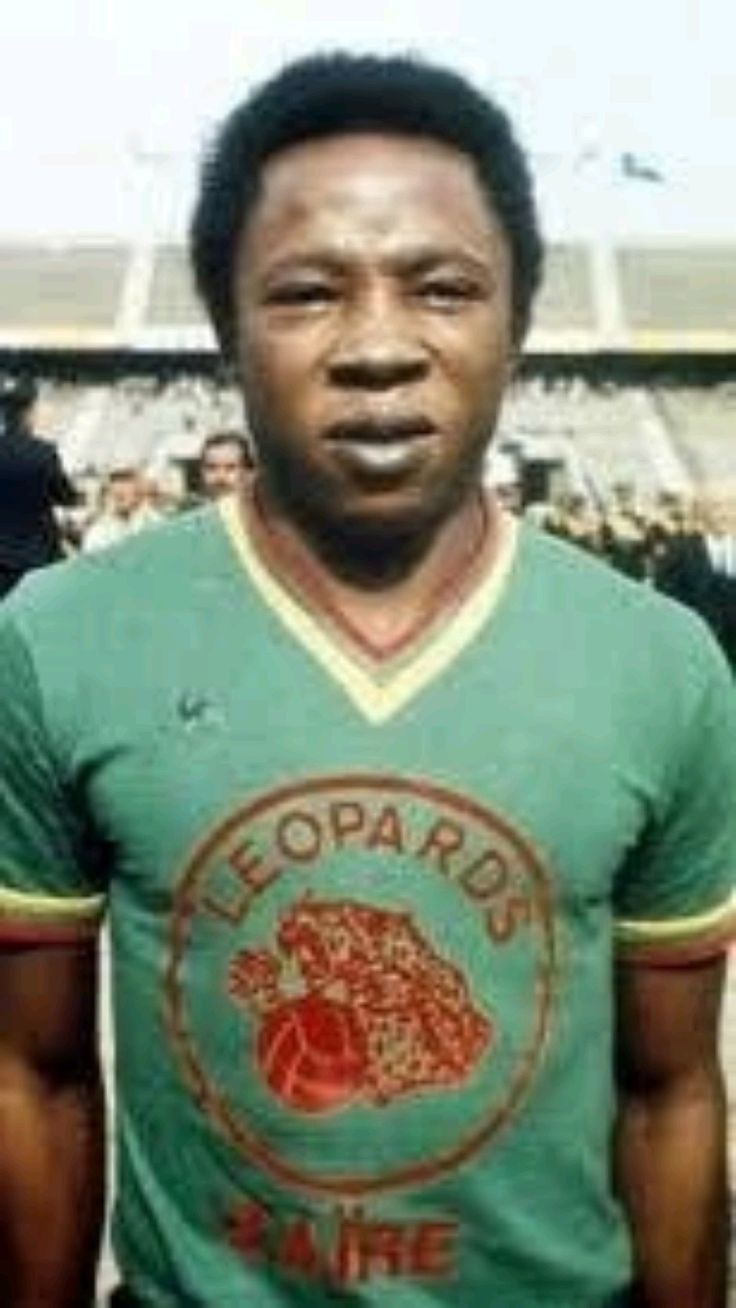
Ndaye Mulamba
 DR Congo
Also known as: Pierre Ndaye Mulamba, Mutumbula, Volvo
Birthday
November 4, 1948
Birth Sign
Scorpio
Birthplace
Kananga, Democratic Republic of the Congo
Age
Died at 70
Height
5 ft 8.5 in (1.74 m)
About
Pierre Ndaye Mulamba was a Congolese footballer who became one of Africa's most feared strikers in the 1970s. He is best remembered for his record-breaking nine goals at the 1974 Africa Cup of Nations, a feat that remains unmatched in the tournament's history. His career with Zaire, as the Democratic Republic of the Congo was then known, included a historic World Cup appearance and a continental title.
Mulamba's legacy is defined by his lethal finishing, earning him the nicknames "Mutumbula" ("assassin") and "Volvo." He passed away on 26 January 2019 in Johannesburg, South Africa, at the age of 70. His achievements continue to be celebrated by football fans across Africa, and a statue in his honor was unveiled in Kinshasa in 2026.
Early Life & Background
Born on 4 November 1948 in Kananga, then part of the Belgian Congo, Mulamba grew up in a nation undergoing profound change. Congo gained independence in 1960, and the country was later renamed Zaire in 1971. Details of his childhood are scarce, but he emerged from the local football scene in the 1960s with a reputation for predatory instincts in front of goal.
His early career developed in the Congolese leagues, where his sharp finishing quickly set him apart. The nickname "Mutumbula," meaning "assassin" in Lingala, captured his ruthless efficiency as a centre-forward. By the early 1970s, he had established himself as one of the most dangerous strikers in African football, setting the stage for his international breakthrough.
Career Growth
Mulamba's career reached its peak at the 1974 Africa Cup of Nations in Egypt. He scored an astonishing nine goals, leading Zaire to their first and only AFCON title and finishing as the tournament's top scorer. That record has stood for over five decades, with Cameroon's Vincent Aboubacar coming closest in 2022, falling one goal short.
Later that year, Mulamba played at the 1974 FIFA World Cup in West Germany, the first time a sub-Saharan African nation had qualified. Although Zaire lost all three group matches, Mulamba's dismissal for kicking a referee in the match against Brazil became one of the tournament's most infamous moments. His international career continued through the 1970s, but the World Cup remains his most visible stage.
After retiring, Mulamba faced significant hardship, including eviction from his rented home in Kinshasa in 2018, as reported by The Guardian. He died in Johannesburg in 2019, and CAF observed a moment of silence in his honor at the 2019 Africa Cup of Nations.
Career Timeline
Public Image & Style
Mulamba is remembered as a sharp finisher whose goalscoring prowess defined an era of Congolese football. Media portrayals, particularly from BBC and The Guardian, have highlighted the tragic duality of his life: a celebrated national hero who fell into poverty and obscurity. CAF has honoured him as an "African legend," and his AFCON record remains a benchmark for strikers across the continent.
Fans continue to commemorate his achievements through social media and community groups, ensuring that his contributions to African football are not forgotten.
Fame & Fandom (iFAMOUS Rankings)
The story of Pierre Ndaye Mulamba's audience is one of silent reverence rather than organized rallies. While he never cultivated a named fan club with specific rituals or digital campaigns, his legacy endures through statues in Kinshasa and moments of silence observed by the African Football Confederation. This institutional guardianship replaced grassroots activism, as the nation that once cheered him failed to support him in his final years. His connection to fans remains rooted in the oral history of his rise and fall, where the tragedy of his later poverty contrasts sharply with the glory of his scoring record. Despite this deep cultural footprint, iFANN's Global Fame Engine has evaluated his current standing but does not currently hold a placement for him in the published rankings, meaning he holds no position in the Global Top 1,000 or any scope list. The data reflects a figure whose fame is historical and regional rather than trending globally today. He remains a legend in the Democratic Republic of the Congo, celebrated for his lethal finishing and the unique duality of a life that ended in obscurity after continental triumph. No formal fandom name exists in the records, leaving his supporters to honor him through general commemoration rather than structured groups. His presence in global consciousness fluctuates only when media revisits his 1974 AFCON record or the infamous World Cup red card incident. The lack of a ranked position underscores how his fame has settled into a static, revered status rather than a dynamic, measurable metric of current popularity.
Interesting Facts and Legends
Pierre Ndaye Mulamba earned the nickname 'Volvo' because his powerful and reliable playing style mirrored the durability of the Swedish car brand. During the 1974 World Cup, he was sent off for kicking a referee, an act that became a staple of football folklore. His nine-goal performance at the 1974 Africa Cup of Nations stands as an unmatched record that has survived over five decades. Despite his immense fame, Mulamba faced severe financial hardship in his later years, a stark contrast to his golden era. A compelling legend surrounds his death, suggesting he effectively 'died twice.' The first death was metaphorical, occurring when his expulsion from the 1974 World Cup squad ended his international career and exiled him from the national spotlight. His physical passing on January 26, 2019, marked the end of the second chapter. Another enduring tale involves the 1974 World Cup match against Yugoslavia; after Mulamba's dismissal, Zaire collapsed to lose 9-0, the largest defeat ever recorded by a team in a World Cup group stage. This incident is often retold as a cautionary tale about the fragility of national teams without their stars.
Family & Personal Life
Public records about Mulamba's family are extremely limited. No credible sources document his parents, siblings, or children. He kept his personal life private, and his death in Johannesburg was reported without reference to surviving family members. His legacy, however, is carried on by Congolese football fans who celebrate his achievements.
Notable Connections
Relationships & Dating History
Public records about Mulamba's romantic relationships are extremely scarce. No credible sources document any marriages, partnerships, or dating history. His personal life remained largely private, and no verifiable information is available. At the time of his death, he was not known to be in a relationship, and no spouse or partner has been identified.
Death & Aftermath
Died
January 26, 2019 (aged 70)
Death Place
Cape Town, Western Cape, South Africa
Cause of Death
Natural causes due to age and health
Confederation of African Football organizers paused the group stage matches at the 2019 Africa Cup of Nations to honor a legend whose record for most goals in a single tournament remains unbroken. The tribute, scheduled for the final day of the group phase on February 18, 2019, signaled how deeply his absence resonated across the continent just weeks after he passed. Pierre Ndaye Mulamba died on January 26, 2019, in Cape Town, South Africa, at the age of seventy. His final years had been marked by severe financial hardship and declining health; reports from early 2018 described him living in poverty in Kinshasa, requiring a wheelchair, and facing eviction from his rented home before his death. No official medical cause was released. Details regarding the funeral service or burial location remain private, as family members handled the rites without extensive international coverage., the CAF moment of silence stood as the primary institutional recognition, cementing his status within African football history.
Net Worth (Estate Value)
$1 Million
iFANN Editorial Team estimate
Mulamba's financial trajectory followed a sharp decline from his peak earnings. In 2018, reports detailed that he faced eviction from his rented home in Kinshasa, highlighting the tragic gap between his sporting achievements and his retirement reality. He died in Johannesburg in 2019, and while no official estate value was publicly disclosed during his lifetime, the documented poverty suggests minimal assets at the time of death. However, posthumous recognition has generated income through tributes and licensing deals. Per iFANN's editorial analysis, his estate's value is estimated at $1 Million as of 2026, primarily derived from commemorative events and the commercial use of his name and legacy. Research by the iFANN Editorial Team attributes this figure to ongoing royalties and memorial projects that keep his memory alive across the continent.
Awards Won (2)
Mulamba's most significant achievement was winning the 1974 Africa Cup of Nations with Zaire, where he also finished as the tournament's top scorer with nine goals. This remains the all-time record for most goals in a single AFCON edition.
1974 · Winner
Zaire national team
1974 · Top Scorer
1974 Africa Cup of Nations
Known For
1974 Africa Cup of Nations
1974 · Striker for Zaire
1974 FIFA World Cup
1974 · Member of Zaire squad
Keywords
Sources
Quick Facts
- Profession
- association football player
- Born
- +1948-11-04
- Birthplace
- Kananga
- Died
- +2019-01-26
- Death Place
- Johannesburg
- Gender
- Male
- Birth Sign
- Scorpio
Personal Details
- Full Name
- Pierre Ndaye Mulamba
- Height
- 5 ft 8.5 in (1.74 m)
Frequently Asked Questions
How many goals did Ndaye Mulamba score at the 1974 AFCON?
Why was Ndaye Mulamba sent off at the 1974 World Cup?
What was Ndaye Mulamba's nickname?
When and where did Ndaye Mulamba die?
Did Ndaye Mulamba win the Africa Cup of Nations?
Similar People
Join the community
fans discussing