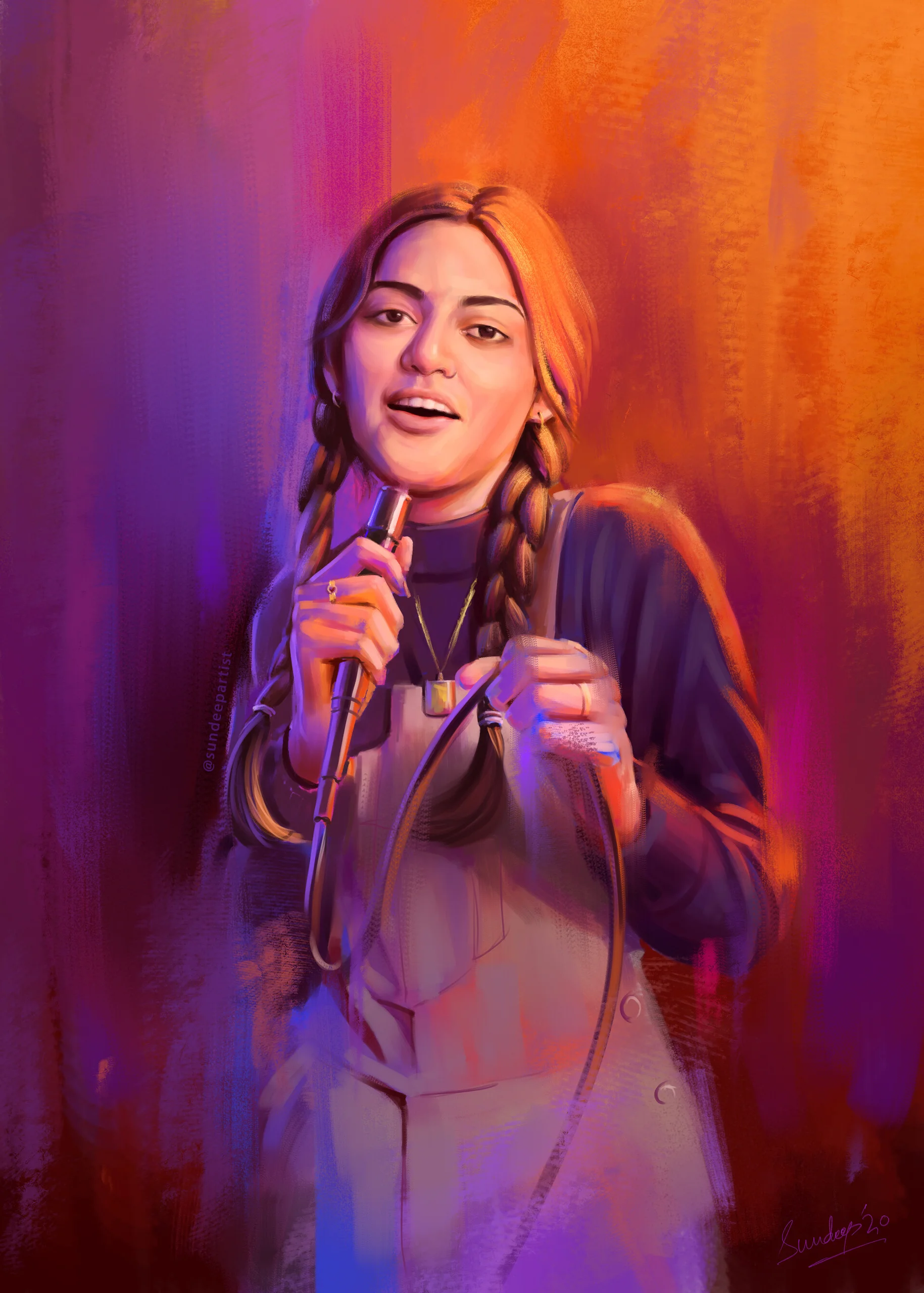
Nazia Hassan
 Pakistan
Also known as: Queen of South Asian Pop, Nightingale of Pakistan
Birthday
April 3, 1965
Birth Sign
Aries
Birthplace
Karachi, Pakistan
Age
Died at 35
Height
5 ft 6 in (168 cm)
About
Nazia Hassan was a Pakistani-English singer, songwriter, and philanthropist who reshaped South Asian pop music. Alongside her brother Zoheb, she formed the duo Nazia and Zoheb, selling over 65 million records worldwide and earning the title "Queen of South Asian Pop." Her career took off in 1980 with the hit single "Aap Jaisa Koi" from the Indian film Qurbani, which won her the Filmfare Award for Best Female Playback Singer at just 15, making her the first Pakistani and the youngest recipient of that honor. Her debut album, Disco Deewane (1981), charted in 14 countries and became the best-selling Asian pop record of its time, with its title track making her the first Pakistani singer to enter the British charts.
Hassan's follow-up albums included Boom Boom (1982), Young Tarang (1984), Hotline (1987), and her final album Camera Camera (1992), which was part of an anti-drug campaign. She also appeared on television, including a 1988 show with composer Sohail Rana and co-hosting the first pop-music stage show, Music '89, produced by Shoaib Mansoor. Her influence on the Pakistani pop scene was profound, paving the way for future artists.
Beyond music, Hassan was dedicated to philanthropy, becoming a UNICEF cultural ambassador in 1991. She married businessman Ishtiaq Baig in 1995, and they had a son. She passed away on August 13, 2000, in London at age 35 from lung cancer. In 2002, she was posthumously awarded Pakistan's Pride of Performance, a civilian honor recognizing her contributions to music and culture.
Early Life & Background
Nazia Hassan was born on April 3, 1965, in Karachi, Pakistan, to Basir Hassan, a businessman, and Muniza Basir, a social worker. She grew up between Karachi and London, spending most of her life in the UK, which shaped her liberal outlook and her musical tastes. Her father was initially hesitant about her entering the entertainment industry, fearing it would distract from her studies. Nazia promised him she would never neglect her classes for fame, a promise she kept throughout her career.
She showed an early interest in music, singing on TV programs as a child. At fourteen, she asked her mother to give away her birthday gifts and cake to children in need, explaining, "I've grown up and no longer need such things. Why not give them to someone who does?" That gesture became a family tradition, with her birthday still celebrated by donating to welfare foundations.
Hassan pursued higher education in London, graduating from Richmond University with a degree in economics, and later earned a law degree from Lancaster. She briefly worked at the United Nations in New York in the Department of Political and Security Council Affairs. Her big break came when music producer Biddu heard her demo and chose her to sing "Aap Jaisa Koi" for the 1980 Bollywood film Qurbani, a song that would change her life.
Career Growth
Nazia Hassan's breakthrough came in 1980 with "Aap Jaisa Koi" from the film Qurbani, which sold over 100,000 copies in a single day and made her the youngest and first Pakistani winner of the Filmfare Award for Best Female Playback Singer. The song's success launched her into stardom, and she teamed up with her brother Zoheb for the album Disco Deewane (1981), which charted in 14 countries and became the best-selling Asian pop record of its time.
The duo followed with Star/Boom Boom in 1983 and Young Tarang in 1984, the latter selling 40 million copies and setting the record for the best-selling video album of all time. Her later albums included Hotline (1987) and Camera Camera (1992), the latter part of an anti-drug campaign. In 1991, she was appointed UNICEF Cultural Ambassador. Her music videos, like the one for "Dum Dum Dede," became iconic, and her track "Dum Dum Dede" was later featured in the 2012 Indian film Miss Lovely.
Hassan also expanded into television, co-hosting Music '89, the first pop-music stage show in Pakistan, produced by Shoaib Mansoor. Her career, though cut short, left an indelible mark on South Asian pop, influencing generations of artists.
Public Image & Style
Nazia Hassan's public image was that of a vibrant, modern pop star who brought a fresh sound to South Asia. Her music videos, like those from Young Tarang, featured her and Zoheb skipping through fields, creating an idealized image of youth and freedom. She was seen as a trailblazer for women in music, using her platform to advocate for women's rights and social causes.
Despite her public persona, she was known to be deeply private, and her later years were marked by personal struggles that contrasted with her cheerful on-screen presence. The media often portrayed her as a complex figure, balancing fame with a difficult personal life. Her legacy as the "Queen of South Asian Pop" endures, and she is remembered for paving the way for future artists to pursue pop music outside the film industry.
Fame & Fandom
Nazia Hassan commands a global legacy that transcends her era, with millions of monthly listeners discovering her music decades after her passing. While she remains a titan of South Asian pop culture, the iFANN Global Fame Engine has evaluated her profile and determined she currently holds no placement in the published Global Top 1,000 or Top-100 scope lists. Her dedicated following identifies primarily through titles like the "Queen of South Asian Pop" and "Nightingale of Pakistan" rather than a formal acronym. This community organizes with remarkable precision, mobilizing digital campaigns to secure Times Square billboards for her image and celebrating her birthday with a Google Doodle in 2018. Fans rigorously observe her death anniversary on August 13, flooding social media with tributes that keep her memory vibrant. The collective reverence for her work is evident in how contemporary artists reference her foundational role in bridging Western disco with local melodies, even when credit is not explicitly given. Despite the lack of an official fandom name, the digital hub @nazia_sweetheart serves as a central archive where devotees share rare footage and celebrate her enduring influence.
Interesting Facts and Legends
Nazia Hassan was known for her soft vocals and modern style, which blended Western pop with South Asian melodies. She was the first Pakistani singer to enter the British charts with her debut album Disco Deewane. Her song "Aap Jaisa Koi" was originally offered to several Indian singers before she was chosen. She kept her promise to her father to never neglect her studies, completing degrees in economics and law. After her death, her family continued her birthday tradition of donating to charity, and her music remains popular on streaming platforms like Spotify. A defining moment in her legend occurred during her debut in the film Qurbani, where her performance revolutionized Asian pop by introducing a disco-pop sound never before seen in the region. Fans also cherish the story of her being named the "Nightingale of Pakistan," a poetic title reflecting her fierce yet soft vocal ability that cemented her status as a national treasure. Another enduring narrative surrounds her premature death from lung cancer at age 35, creating a lasting "what if" mythology about the future impact she could have achieved had she lived longer.
Family & Personal Life
Nazia Hassan was the daughter of Basir Hassan, a businessman, and Muniza Basir, a social worker. She had two siblings: her brother Zoheb, who was her musical partner, and her sister Zara. The family was well-off, and Nazia spent much of her life in London.
She was married twice. Her first marriage to Hari Pishu Chellaram began in April 1990, but details are scarce. In 1995, she married businessman Mirza Ishtiaq Baig in a family-arranged union. They had one son, Arez Hassan, born in 1997. The marriage was troubled, and she filed for divorce citing physical abuse and alleged poisoning, finalized in August 2000. She died just three months later.
Her family has kept her memory alive, with her brother Zoheb often speaking about her legacy and her mother continuing her charitable work.
Relationships & Dating History
Nazia Hassan's personal life was marked by two marriages, both of which were kept largely out of the public eye. Her first marriage to Hari Pishu Chellaram began on April 5, 1990, but little is known about the relationship, and it appears to have ended quietly.
In 1995, she married businessman Mirza Ishtiaq Baig in a family-arranged match. The couple had a son, Arez, in 1997. The marriage was reportedly difficult, with Nazia alleging physical abuse and even claiming that Baig had poisoned her. She filed for divorce, which was finalized on August 5, 2000. Tragically, she died just eight days later, on August 13, 2000. At the time of her death, she was divorced and not in a relationship.
- MarriedHari Pishu Chellaram1990 - presentFirst marriage, details scarce, ended before 1995.
- DivorcedMirza Ishtiaq Baig1995 - 2000Second marriage, divorced on grounds of abuse and alleged poisoning.
Death & Aftermath
Died
August 13, 2000 (aged 35)
Death Place
London, United Kingdom
Cause of Death
Lung cancer
Her image illuminated New York's Times Square in August 2022 via Spotify on the 22nd anniversary of her passing, while Google honored her with a Doodle in April 2018 for what would have been her 53rd birthday. These digital tributes arrived years after she was laid to rest in London following a battle with lung cancer that claimed her life on August 13, 2000. Contemporary obituaries and biographical sources confirmed the official cause as complications from the disease rather than any accident or foul play. Her final days were spent receiving medical care in a hospital there, though specific details regarding her last public appearance prior to hospitalization remain unrecorded.
Public reaction was immediate and profound, with peers and institutions pouring out recognition of her revolutionary impact on Asian pop music. The news sparked renewed interest in her catalog, leading to surges in sales and streaming of classic hits like Aao Na and Disco Deewane. While the exact date of the funeral is not specified in available records, her brother Zoheb Hassan has remained the custodian of her memory through annual remembrances and family-led traditions. Posthumously, her estate continues to manage her musical legacy through various releases and honors, ensuring her voice reaches new generations in soundtracks such as Student of the Year.
Net Worth (Estate Value)
$1 Million
iFANN Editorial Team estimate
Per iFANN's editorial analysis, Nazia Hassan's net worth is estimated at $1 Million as of 2026, based on the ongoing earnings from her music catalog. During her career, she and her brother sold over 65 million records worldwide, with Young Tarang alone selling 40 million copies. Her estate continues to generate income through royalties from streaming services, radio play, and licensing of her songs for films, such as the use of "Dum Dum Dede" in Miss Lovely (2012). As she passed away in 2000, her estate is managed by her family, who have preserved her legacy through charitable work and occasional releases. The exact value of her estate is not publicly disclosed, but the steady popularity of her music in South Asia ensures a modest but consistent revenue stream.
Awards Won (2)
Nazia Hassan won the Filmfare Award for Best Female Playback Singer in 1980 for "Aap Jaisa Koi," becoming the youngest and first Pakistani to do so. In 2002, she was posthumously awarded Pakistan's Pride of Performance, recognizing her contributions to music and culture.
1980 · Best Female Playback Singer
Aap Jaisa Koi (Qurbani)
2002 · Civilian Award
Lifetime Achievement
Known For
Aap Jaisa Koi
1980 · Singer
Disco Deewane
1981 · Singer
Young Tarang
1984 · Singer
Keywords
Sources
Quick Facts
- Profession
- Singer, songwriter
- Born
- April 3, 1965
- Birthplace
- Karachi, Pakistan
- Died
- August 13, 2000
- Death Place
- London, England
- Gender
- Female
- Birth Sign
- Aries
- Height
- 5 ft 6 in (168 cm)
- Children
- Arez Hassan
- Education
- Richmond University, Lancaster University
Personal Details
- Height
- 5 ft 6 in (168 cm)
- Spouse
- Mirza Ishtiaq Baig
- Children
- Arez Hassan
- Education
- Richmond University (economics), Lancaster University (law)
Frequently Asked Questions
How did Nazia Hassan die?
Was Nazia Hassan the first Pakistani to win a Filmfare Award?
How many records did Nazia Hassan sell?
Who was Nazia Hassan's husband?
What is Nazia Hassan's legacy in South Asian pop music?
Similar People
Join the community
fans discussing