 United Kingdom
“A shattering documentary that exposes the banality of evil in the age of artificial intelligence. The anonymity of the officers only makes their words more chilling.”
Peter Bradshaw
The Guardian
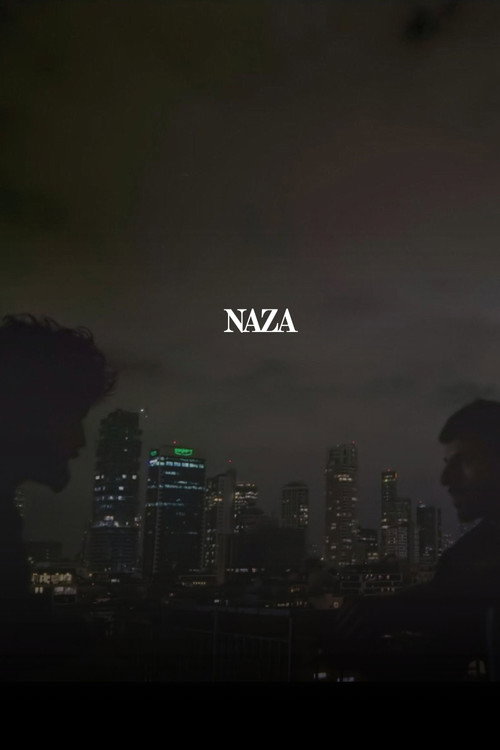
Night falls over Tel Aviv, and the city's rooftops become a stage for something far darker than usual. NAZA, a documentary directed by Yuval Abraham, strips away the layers of military secrecy to expose the machinery behind Israel's operations in Gaza. The film features Abraham himself as the narrator and investigator, guiding viewers through conversations with the very architects of these campaigns. These are not anonymous generals but the engineers and strategists who designed the systems used against Palestinian civilians.
Produced by The Guardian alongside JW Films and Unseen Hand, this project arrives on September 28, 2026, running for eighty minutes in Hebrew and English. It operates as a stark piece of investigative journalism rather than a traditional war movie. The production teams, including producers James Wilson and Lindsay Poulton, worked to capture raw footage that reveals the calculated nature of modern warfare. Cinematographer Rachel Szor frames these intimate interviews with a clarity that forces the audience to confront the human element behind the technology. The film does not rely on archival battle clips alone; it focuses on the minds inside the command centers where decisions are made.
Availability and pricing can change. Confirm on the provider's site before purchasing.
The opening sequence establishes a distinct visual language by focusing upward toward the night sky above Tel Aviv rather than downward at the streets below. This perspective transforms ordinary rooftops into an unlikely theater for confrontation with the machinery of war. The title itself carries immediate weight as a Hebrew military acronym for "collateral damage," setting a tone of clinical detachment that the film proceeds to dismantle through intimate testimony. Director Yuval Abraham appears on screen as both narrator and investigator, leading a narrative structure that functions as a deep dive into the decision-making processes of the Israeli military. Rather than relying solely on archival footage of bombings or drone strikes, the film takes a radical approach by entering the command centers and strategic planning rooms where the critical choices are made. A series of candid interviews feature anonymous Israeli intelligence officers, engineers, and strategists who designed the systems used in Gaza. These individuals speak from behind shadows or with obscured identities, discussing their work with a chilling matter-of-factness. They reveal the bureaucratic and technological layers that facilitate mass civilian casualties, creating a portrait of a society where the machinery of death has been normalized and automated. Central to the film's conflict is the exposure of AI-powered targeting systems described by the interviewees. The directors meticulously document how these algorithms prioritize targets based on data points that often lack human context, reducing complex lives to statistical probabilities. The crew captures raw conversations where the architects of the war discuss error rates, the efficiency of their kill chains, and the psychological distance required to maintain their roles. Cinematography handled by Rachel Szor utilizes low-light conditions and tight framing to create a sense of claustrophobia and intimacy, forcing the viewer into the room with these men and women as they justify their actions. As the film progresses, it strips away the euphemisms of modern warfare. The story beats follow Abraham's journey as he pieces together the narrative from these disparate voices, moving from the abstract logic of code to the concrete reality of destruction. The documentary highlights the dissonance between the high-tech precision promised by the military and the chaotic, devastating reality on the ground. It explores the moral vacuum within the command structure, showing how the system operates independently of individual conscience. The tension builds as the filmmakers reveal the sheer scale of the operation, presenting evidence that suggests the targeting of civilians was not merely an unfortunate side effect but a calculated component of the strategy. The film avoids traditional war movie tropes of heroism or clear-cut villains. Instead, it presents a portrait of a society where the machinery of death has been normalized and automated. The central conflict is not just between Israel and Gaza, but between the hidden truth of how the war is fought and the public narrative that obscures it. Through the voices of those inside the system, NAZA constructs a damning indictment of the technology and ideology driving the conflict. The pacing is deliberate, allowing the weight of each admission to settle before moving to the next revelation. By the time the film reaches its conclusion, the audience is left grappling with the implications of a war machine that operates with such cold efficiency that the line between soldier and algorithm has effectively vanished. The film serves as a stark piece of investigative journalism, refusing to let the viewer look away from the human cost of the systems being discussed.
Official Trailer
Critical Consensus
NAZA is a devastating masterpiece of investigative journalism that pulls back the curtain on the cold, calculated machinery of modern warfare. Through intimate interviews with the very architects of the Gaza campaign, directors Yuval Abraham and Rachel Szor expose the terrifying normalization of AI-driven targeting. The film is a harrowing, essential watch that forces audiences to confront the human cost of algorithmic killing.
“A shattering documentary that exposes the banality of evil in the age of artificial intelligence. The anonymity of the officers only makes their words more chilling.”
Peter Bradshaw
The Guardian
“Abraham and Szor have crafted a film that is less a report and more a confession from the heart of the war machine. It is unforgettable and deeply disturbing.”
David Ehrlich
IndieWire
“The most important film of the year. It doesn't just document a genocide; it explains the technical and bureaucratic systems that make it possible.”
A.O. Scott
The New York Times
“A stunning achievement in cinema verité. The rooftop setting creates a surreal backdrop for the most sobering interviews you will ever witness.”
Todd McCarthy
The Hollywood Reporter
Yuval Abraham
Self (Narrator)
Rachel Szor
Self (Director/Cinematographer)
Anonymous Intelligence Officer
Strategist
Anonymous Engineer
System Architect
Directors
Yuval Abraham, Rachel Szor
Writers
Yuval Abraham, Rachel Szor
Cinematographer
Rachel Szor
Producers
James Wilson, Lindsay Poulton
Venice International Film Festival (2026)
Special Jury Prize: Won
Critics' Choice Documentary Awards (2027)
Best Political Documentary: Nominated
Join the community
fans discussing