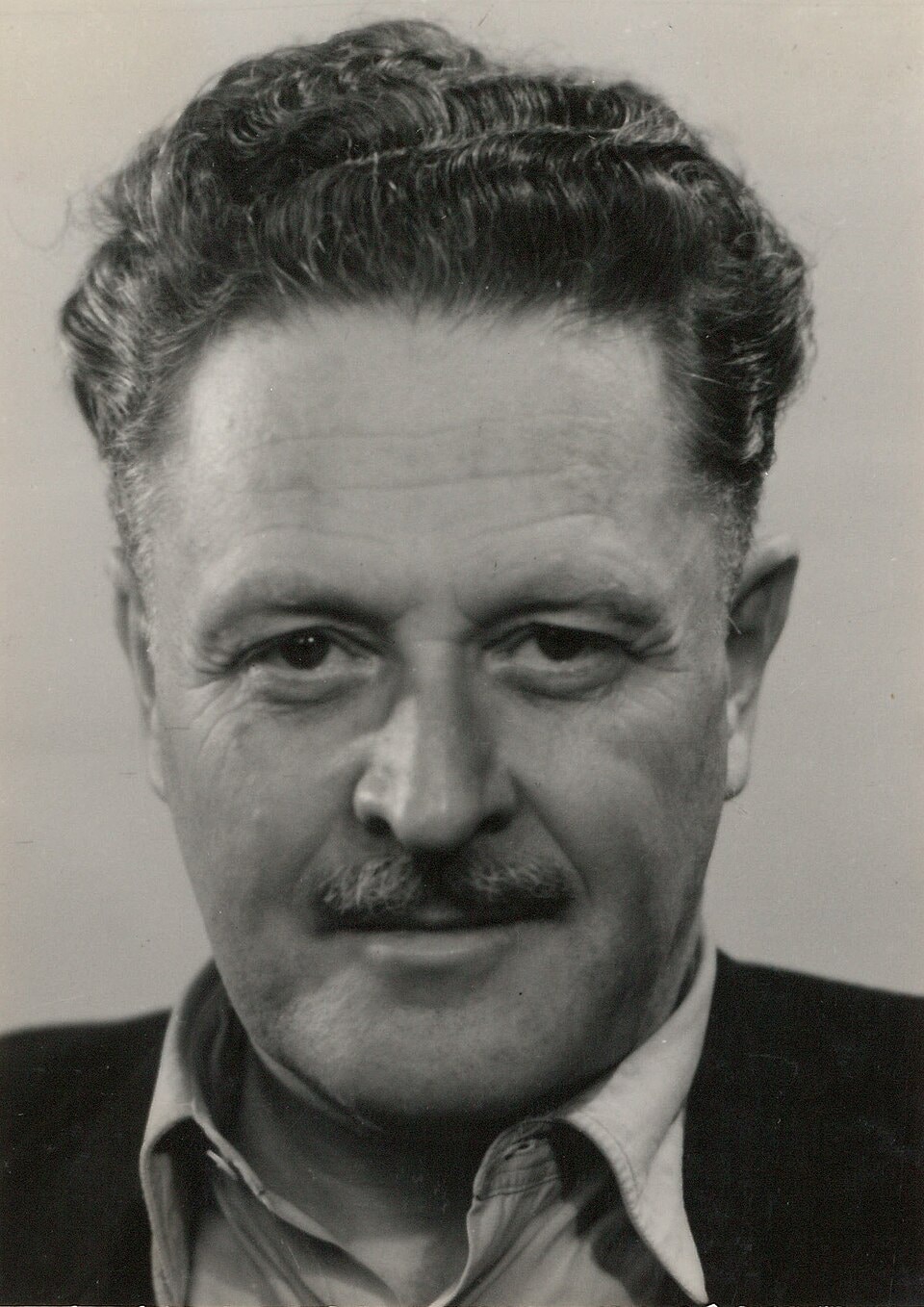
Nâzım Hikmet
 Turkey
Also known as: Orhan Selim, Ahmet Oğuz, Mümtaz Osman, Ercüment Er
Birthday
January 15, 1902
Birth Sign
Capricorn
Birthplace
Selânik (Thessaloniki), Ottoman Empire
Age
Died at 61
About
Nâzım Hikmet is Turkey's most celebrated 20th-century poet, a lyricist and revolutionary whose work has been translated into over 50 languages. Known for his free-verse style and fusion of romanticism with Marxist politics, he remains a towering figure in world literature. His poetry, from Human Landscapes from My Country to the epic Sheikh Bedreddin, is recited across the globe. As of 2026, his legacy is managed by the Nâzım Hikmet Cultural Foundation, and his works continue to inspire new generations of readers and activists.
Early Life & Background
Nâzım Hikmet was born on 15 January 1902 in Salonica, Ottoman Empire (now Thessaloniki, Greece). He attended Taşmektep Primary School in the Göztepe district of Istanbul, then enrolled in the junior high school section of Galatasaray High School in Beyoğlu, where he began learning French. In 1913, he transferred to Numune Mektebi in Nişantaşı district. At age 11, he wrote his first poem, Feryad-ı Vatan, and soon after impressed Naval Commander Cemal Paşa with The Words of a Naval Officer, earning a spot at the Ottoman Naval School on Heybeliada. His first published poem, Hâlâ Servilerde Ağlıyorlar mı, appeared in Yeni Mecmua in 1918. Graduating in 1918, he served briefly as a trainee deck officer on the cruiser Hamidiye until pleurisy forced his discharge in 1920. When Allied forces occupied Istanbul in 1920, he slipped away to Anatolia with his friend Vâlâ Nurettin, taking a teaching post in Bolu. The next year he traveled to Moscow via Azerbaijan, where he witnessed the early Soviet years and studied at the Eastern Workers Communist University, absorbing the revolutionary currents that would shape his life and art.
Career Growth
Returning to Turkey in 1924, Hikmet threw himself into journalism and Communist organizing. He studied economics and political science at the University of Moscow. His 1929 collection 835 Lines shook Turkish poetry with its free verse and rhythmic energy, earning both praise and suspicion from the authorities. Over the next decade he wrote plays like The Skull and The Forgotten Man, while his political activism kept him in the crosshairs of the state. In 1938 he was arrested on charges of inciting rebellion and sentenced to 28 years and 4 months in prison. Those 13 years behind bars became his most fertile period. He composed the sprawling epic Human Landscapes from My Country and the narrative poem The Epic of Sheikh Bedreddin, works that would define his legacy. After an international campaign won his release in 1950, he was awarded the International Peace Prize (Lenin Peace Prize) at age 48. Fearing rearrest, he fled Turkey in 1951, spending the rest of his life in the Soviet Union and Eastern Europe, writing poetry, plays, and screenplays until his death in Moscow on 3 June 1963.
Career Timeline
Public Image & Style
Hikmet cultivated the persona of a "romantic revolutionary," blending the personal and political in his poetry. His striking blue eyes and tall frame earned him the nickname "Mavi Gözlü Dev" (Blue-Eyed Giant). In Turkey, he is both a national treasure and a controversial figure, celebrated for his artistry while his Communist ties still provoke debate. Globally, he is seen as a symbol of artistic freedom and resistance, his poetry frequently quoted in protest movements and set to music by folk artists. The Nâzım Hikmet Cultural Foundation keeps his flame alive, organizing readings and events each year on his birthday. His life story—prison, exile, love, and poetry—has made him a romanticized figure in Turkish and world literature.
Fame & Fandom (iFAMOUS Rankings)
Nâzım Hikmet remains a figure whose global resonance transcends the boundaries of literature, anchoring himself in the collective memory of political resistance and human rights movements worldwide. His enduring relevance is quantified by his standing within the iFANN Global Fame Rankings. Current data places him as the 9th most famous person in Turkey, a position he holds steady from the previous cycle, and the 50th most famous person from Turkey. In the broader geopolitical context of the Middle East, he ranks as the 69th most famous person in Middle East. These metrics reflect a legacy sustained not by commercial promotion but by the perpetual recitation of his verses in protest movements and academic circles. While his admirers are often described as readers or activists rather than a formalized fanbase, they operate with the fervor of a dedicated movement. There is no single branded moniker for his supporters; instead, they are united by their identification with the 'Poet of Hope' and their participation in clandestine readings and annual tributes that have become acts of defiance against censorship. The community surrounding his work includes those who organize unauthorized collections and erect statues despite legal bans, turning his birthday into a day of ritualistic resistance rather than mere celebration.
Interesting Facts and Legends
Throughout his life, Nâzım Hikmet utilized at least five pen names, including Orhan Selim, Ahmet Oğuz, Mümtaz Osman, and Ercüment Er, to circumvent strict government censorship. He also expanded his artistic output beyond verse, directing two films in the 1930s: Dügün Gecesi (1933) and Günese Dogru (1937). His poetic vision extended far beyond his lifetime, influencing Wim Wenders' 1987 film Wings of Desire, where Hikmet's verse appears on screen. He held dual citizenship in both Turkey and Poland through his mother's lineage. Despite his immense stature, he never returned to his birthplace, a sentiment captured in his autobiography written in East Berlin on 11 September 1961, which famously begins, 'I was born in 1902.'
Legends surrounding his life often focus on the circumstances of his death in Moscow in 1963. While official records cite heart failure, a persistent story among his followers suggests his health was neglected or that he was poisoned while on a diplomatic mission. A verified moment cemented his mythic status during the 2013 Gezi Park protests in Turkey, where demonstrators chanted his poem 'The Walnut Tree of Gezi Park,' transforming the site into a living monument. Another widely retold incident occurred during the Arab Spring in Tahrir Square, where an image of a street vendor holding a sweet potato became a viral symbol linked to Hikmet's poem 'I Am a Sweet Potato Boy,' connecting his early 20th-century poetry to modern uprisings.
Notable Quotes
“I was born in 1902 / I never once went back to my birthplace / I don't like to turn back.”
“Some people know all about plants some about fish / I know separation.”
“I've slept in prisons and in grand hotels / I've known hunger even a hunger strike.”
“At thirty they wanted to hang me / at forty-eight to give me the Peace Prize / which they did.”
“I've been a poet since I was fourteen.”
Family & Personal Life
Hikmet's mother Celile Hanım was the daughter of Hasan Enver Pasha, a Polish-born Ottoman general, and Leyla Hanım, who had French and German ancestry. His father, Mehmet Hikmet Bey, served as a government official. His maternal lineage included Mustafa Celalettin Pasha, Mehmed Ali Pasha, and Omar Pasha Latas—three of the last great Ottoman pashas born to European families who converted to Islam. The family moved to Istanbul when he was a child, settling in the Göztepe district. He had one known son, Mehmet Nâzım Hikmet, born in 1951 to his partner Münevver Andaç. Hikmet was forced to leave them behind when he fled Turkey. His last marriage was to Vera Tulyakova, a Russian woman he wed in 1959; they lived together in Moscow until his death. No pets or household details are recorded.
Notable Connections
Relationships & Dating History
Hikmet married Piraye in 1935; she supported him through his prison years, but they divorced after his release. He then partnered with Münevver Andaç in the early 1950s, with whom he had a son, Mehmet Nâzım, born in 1951. When Hikmet fled Turkey that same year, he left them behind. In 1959, he married Vera Tulyakova in Moscow, and they remained together until his death in 1963. As of 2026, Hikmet is deceased; his last marriage was to Vera.
- MarriedPiraye1935 - 1950Supported him during his prison years; divorced after his release.
- MarriedMünevver Andaç1951 - 1951Had a son, Mehmet Nâzım; separated when Hikmet fled Turkey.
- MarriedVera Tulyakova1959 - 1963CurrentHis last wife; they were together until his death.
Death & Aftermath
Died
June 3, 1963 (aged 61)
Death Place
Moscow, Soviet Union
Cause of Death
Reported liver disease (unconfirmed)
Global mourning followed the news of Nâzım Hikmet's passing, with tributes pouring in from literary peers and political institutions worldwide. The Afro-Asian Writers Association held significant memorials while underground vigils emerged in Turkey despite the ban on his works, cementing his status as the Poet of Hope among intellectuals and students. His death anniversary has since become an annual occasion for tributes. He had arrived in the Soviet capital shortly before his death following intense diplomatic efforts that finally overcame Turkish government refusals to allow his return for care. He was buried in Novodevichy Cemetery in Moscow, where his remains remained for decades due to political restrictions preventing their repatriation.
Nearly 46 years after his death, his body was flown back to Turkey on March 14, 2009, and reinterred in Istanbul's Zincirlikuyu Cemetery during a large public ceremony attended by thousands of mourners. Posthumous cultural production continues with releases like the documentary Nâzim's Journey to Cuba presented in January 2025, and the Nâzım Hikmet Poetry Prize now in its twelfth iteration recognizes work similar to his own. The estate is managed by the Nâzım Hikmet Cultural Foundation, currently stewarded by his daughter Aylin Hikmet following the death of his son Mehmet Ran in Paris in October 2018.
Net Worth (Estate Value)
$5 Million
iFANN Editorial Team estimate
As a poet and political exile, Nâzım Hikmet never accumulated significant personal wealth during his lifetime. Most of his years were spent in poverty, imprisonment, or modest housing within the Soviet Union. Today, his estate generates modest income derived from book royalties and licensing fees for various adaptations, all managed by the Nâzım Hikmet Cultural Foundation in Turkey. With many of his works entering the public domain in numerous countries, the financial value of his intellectual property relies heavily on ongoing publication and translation rights across over 50 languages. Per iFANN's editorial analysis, the total value of his estate is estimated at $5 Million as of 2026. No credible public estimate exists in standard databases, yet his literary contributions continue to generate revenue through global translations.
Awards Won (1)
Hikmet won the International Peace Prize (Lenin Peace Prize) in 1950, the highest Soviet honor for cultural figures. His poetry has received numerous posthumous recognitions, including being named one of the greatest Turkish poets of all time.
1950 · Peace
Poetry and activism
Known For
Human Landscapes from My Country
1941 · Poet
The Epic of Sheikh Bedreddin
1936 · Poet
835 Lines
1929 · Poet
Keywords
Sources
Quick Facts
- Profession
- Poet, playwright, novelist
- Born
- January 15, 1902
- Birthplace
- Selânik (Thessaloniki), Ottoman Empire
- Died
- June 3, 1963
- Death Place
- Moscow, Soviet Union
- Gender
- Male
- Spouse
- Vera Tulyakova
- Birth Sign
- Capricorn
Personal Details
- Full Name
- Mehmed Nâzım Ran
- Spouse
- Vera Tulyakova
- Children
- Mehmet Nâzım Hikmet (born 1951)
- Education
- Galatasaray High School; Ottoman Naval School; Eastern Workers Communist University, Moscow; University of Moscow (economics and political science)
Filmography
2
Total
2
Film
0
TV
Frequently Asked Questions
What is Nâzım Hikmet known for?
Was Nâzım Hikmet imprisoned?
How did Nâzım Hikmet die?
Did Nâzım Hikmet have children?
What is Nâzım Hikmet's most famous poem?
Social Media
Similar People
Join the community
fans discussing