National Autonomous University of Mexico
 Mexico
"The University of the Nation"
About
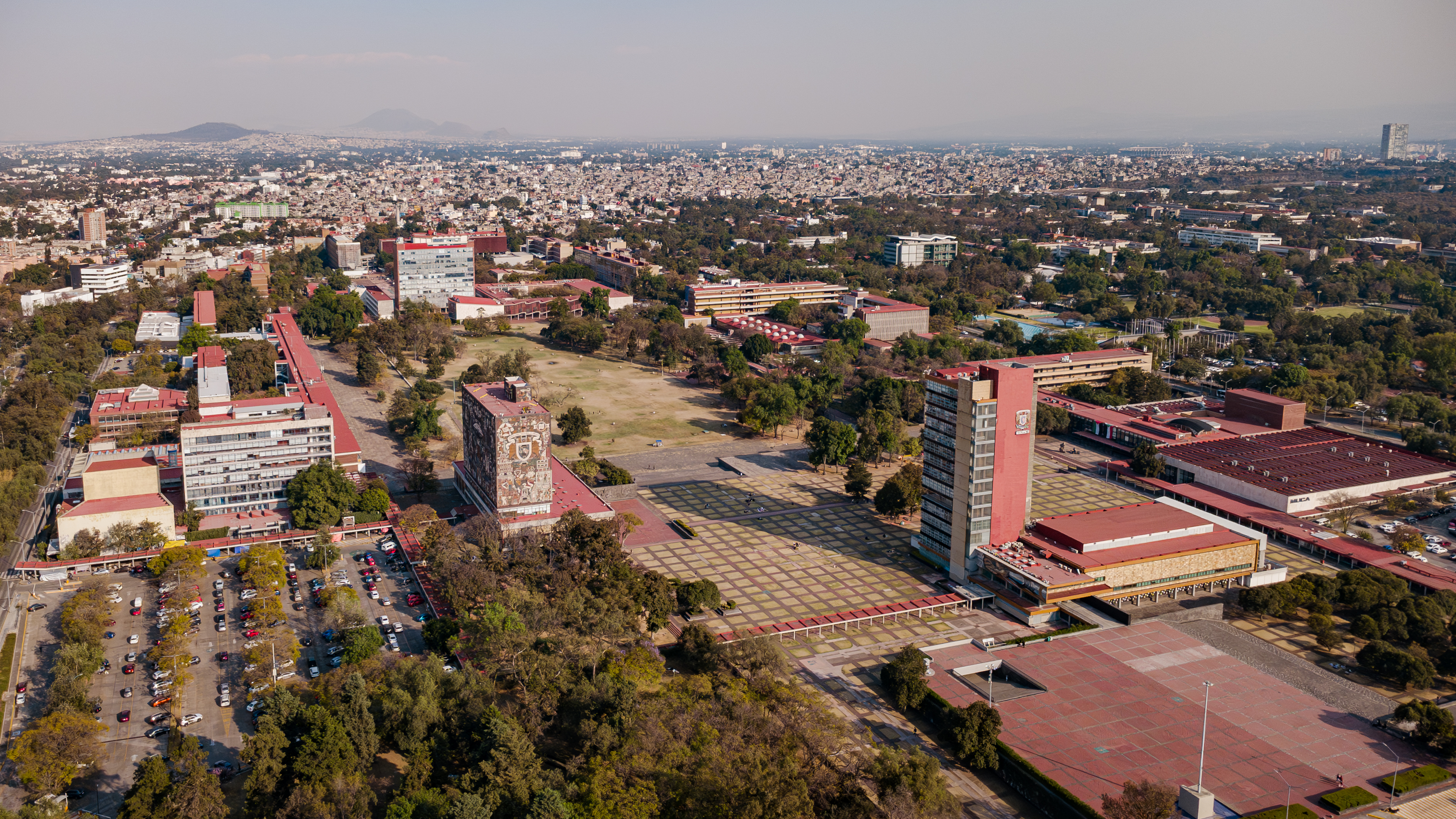
UNAM, the National Autonomous University of Mexico, is the largest university in Latin America and a defining force in Mexican public life. Its main campus, Ciudad Universitaria, sits on a lava field in the southern reaches of Mexico City, a UNESCO World Heritage Site whose modernist buildings and towering murals by Diego Rivera, David Alfaro Siqueiros, and Juan O'Gorman turned a university into a public art gallery. The university educates more than 360,000 students across its campuses, making it one of the biggest institutions of higher learning on the planet.
But UNAM is more than a school. It runs 34 research institutes, 26 museums, and 18 historic sites, including the Biblioteca Central, whose four walls are covered in millions of tiny mosaic tiles. It maintains a campus in San Antonio, Texas, and a school in Chicago, and has partnerships with universities across the globe, from Spain to China. Its open enrollment policy, which guarantees a place to every Mexican high school graduate, reflects a deep commitment to public education, even as budget constraints and political tensions have sometimes pushed the university to the brink.
The university has produced three Nobel laureates, multiple Mexican presidents, and generations of scientists, writers, and artists who have shaped the country's identity. Its influence extends far beyond the classroom, into the very fabric of Mexican culture and politics.
Mission
UNAM's mission is to teach higher education courses to educate professionals, researchers, and university faculty, while also extending the benefits of culture and scientific knowledge to the broader Mexican society. As a public, government-financed institution, it operates under an open enrollment philosophy for Mexican high school graduates, though admission to most programs is highly competitive. The university is committed to preserving and promoting Mexican cultural heritage while advancing knowledge across all fields.
History
UNAM's roots stretch back to September 21, 1551, when a royal decree from Charles I of Spain established the Royal and Pontifical University of Mexico. That institution operated for centuries, but by the late 19th century it had fallen into decline. In 1910, on the eve of the Mexican Revolution, education minister Justo Sierra re-founded the university as a secular, modern institution aligned with the positivist ideals of the Porfiriato. The new university, called the National University of Mexico, opened its doors on September 22, 1910.
In 1929, after a student strike, the university won its autonomy from direct government control, adopting the name National Autonomous University of Mexico. The 1950s saw the construction of Ciudad Universitaria, a sprawling campus designed by some of Mexico's most prominent architects and artists. It was named a UNESCO World Heritage Site in 2007. The university has weathered political storms, including the 1968 student movement that ended in the Tlatelolco massacre, and a prolonged student strike in 1999-2000 over proposed tuition fees. Through it all, UNAM has remained a central arena for Mexican intellectual and political life.
Subdivisions
Faculty of Law
One of the oldest and most prestigious law schools in Mexico, known for training many of the country's leading jurists and politicians.
Faculty of Medicine
A leading medical school in Latin America, affiliated with numerous hospitals and research centers.
Faculty of Engineering
A major engineering school with programs in civil, mechanical, electrical, and computer engineering, among others.
Faculty of Philosophy and Letters
A hub for humanities and social sciences, offering degrees in philosophy, literature, history, and linguistics.
Faculty of Sciences
A key center for mathematics, physics, chemistry, biology, and other basic sciences.
Notable People
Alfonso García Robles
Alumnus · 1940s
Nobel Peace Prize (1982) for his work on nuclear disarmament.
Octavio Paz
Alumnus and faculty · 1930s-1990s
Nobel Prize in Literature (1990) for his poetry and essays.
Mario Molina
Alumnus · 1960s
Nobel Prize in Chemistry (1995) for research on ozone depletion.
Carlos Salinas de Gortari
Alumnus · 1960s
President of Mexico (1988-1994).
Andrés Manuel López Obrador
Alumnus · 1970s
President of Mexico (2018-2024).
Milestones
1551
Royal and Pontifical University of Mexico founded by royal decree.
1910
Re-founded as the National University of Mexico by Justo Sierra.
1929
Gained autonomy from direct government control, becoming UNAM.
1954
Ciudad Universitaria officially inaugurated.
2007
Ciudad Universitaria designated a UNESCO World Heritage Site.
2026
Admissions scandal involving AI cheating on entrance exam; exam rescheduled for thousands.
Departments
Sources
Organization Info
- Founded
- September 22, 1910
- Headquarters
- Coyoacán, Mexico City
- Country
- Mexico
- Rector
- Leonardo Lomelí Vanegas
- Type
- University
- Students
- Over 360,000
- Budget
- MXN 50 billion (approx. USD 2.7 billion)
Financials
- Budget
- MXN 50 billion (approx. USD 2.7 billion)
- Employees
- over 40,000
Official Website
www.unam.mx/
Join the community
fans discussing