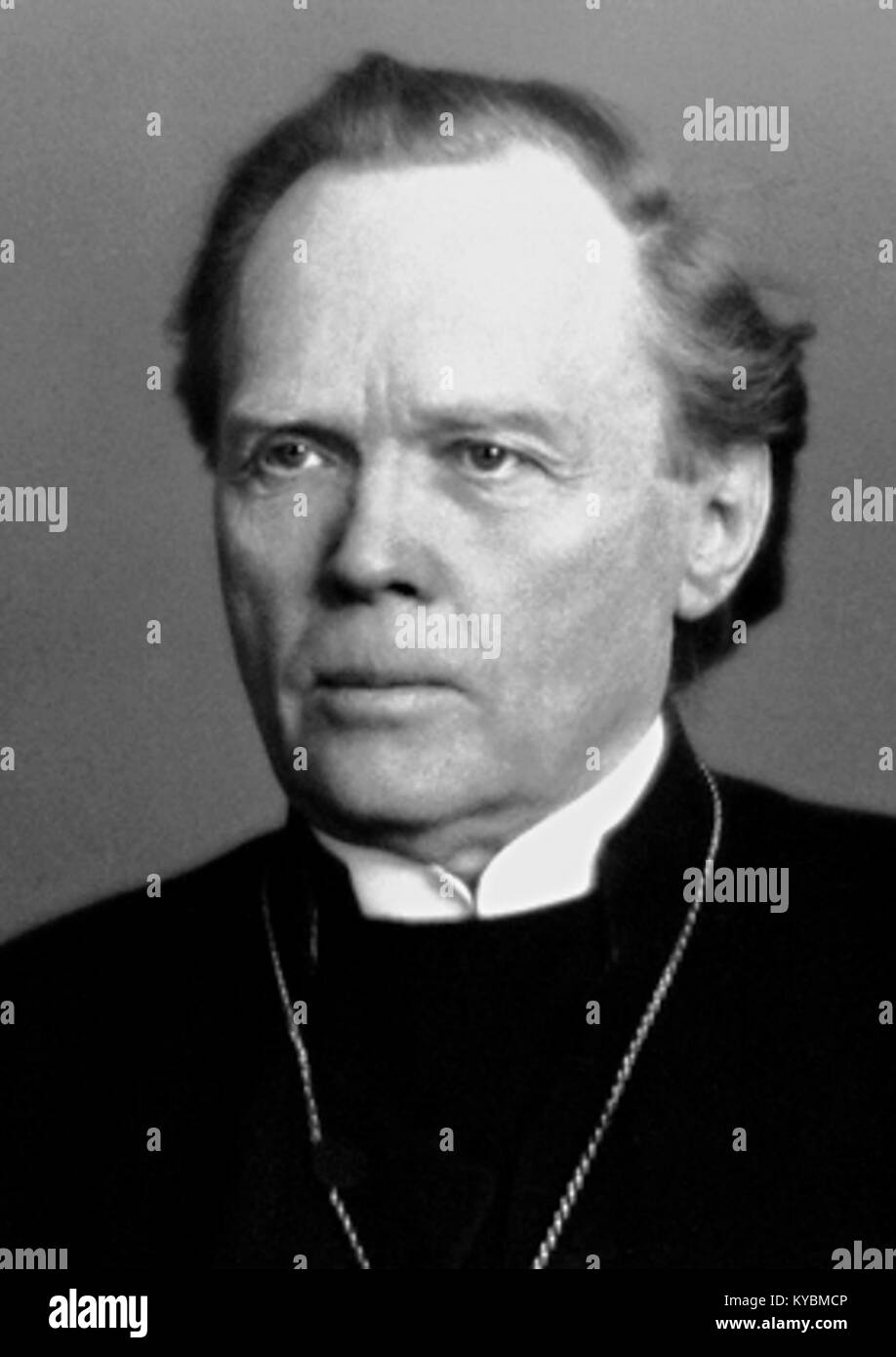
Nathan Söderblom
 Sweden
Archbishop•theologian•academic
Also known as: Lars Olof Jonathan Söderblom
Birthday
January 15, 1866
Birth Sign
Capricorn
Birthplace
Trönö, Sweden
Age
Died at 65
About
Nathan Söderblom was a Swedish archbishop, theologian, and Nobel Peace Prize laureate. Born Lars Olof Jonathan Söderblom on 15 January 1866 in Trönö, he served as the Church of Sweden's Archbishop of Uppsala from 1914 until his death in 1931. He is best remembered as the architect of the modern ecumenical movement, whose tireless efforts to unite Christian churches earned him the 1930 Nobel Peace Prize, the first ever awarded to a clergyman.
Söderblom combined pastoral ministry with deep academic scholarship. He studied theology and the history of religions at Uppsala University and the Sorbonne, earning his doctorate in 1901. His scholarly work on Iranian religion and comparative religious experience established him as a leading theologian of his generation. In 1914 he was appointed to the highest ecclesiastical office in Sweden, a position he held for the rest of his life.
His most enduring legacy is the Universal Christian Conference on Life and Work, held in Stockholm in 1925. That gathering of more than 600 church leaders from 37 countries laid the foundation for what became the World Council of Churches. Today, Söderblom is commemorated in the Lutheran liturgical calendar on 12 July, the anniversary of his death, and his vision continues to inspire ecumenical dialogue worldwide.
Early Life & Background
Nathan Söderblom grew up in the small parish of Trönö in Hälsingland, Sweden, the son of a Lutheran pastor, Jonas Söderblom. The household was steeped in faith and pastoral duty, and young Nathan absorbed both. He showed an early intellectual bent, and after finishing school he enrolled at Uppsala University, where he studied theology and languages. There he became active in the Young Men's Christian Association, an experience that shaped his lifelong commitment to Christian fellowship.
After his initial studies, Söderblom moved to Paris, serving as pastor to the Swedish congregation while pursuing doctoral work at the Sorbonne. His research focused on Iranian religion, a field that would make him a respected scholar of comparative religion. He earned his Doctor of Theology in 1901. The Paris years gave him international pastoral experience and a broad, ecumenical perspective on the Christian world.
Returning to Sweden, Söderblom took up a professorship in theology at Uppsala University. He built a reputation as a brilliant lecturer and writer, exploring the nature of religious experience across traditions. His academic standing, combined with his pastoral warmth, made him a natural candidate for higher ecclesiastical office, and in 1914 he was appointed Archbishop of Uppsala, the pinnacle of the Church of Sweden's hierarchy.
Career Growth
Söderblom's appointment as Archbishop of Uppsala in 1914 placed him at the center of Swedish religious life. But his vision reached far beyond national borders. The devastation of World War I convinced him that the churches of the world had a moral obligation to work together for peace and justice. He began advocating for a universal Christian conference, and in 1925 his dream became reality with the Universal Christian Conference on Life and Work in Stockholm.
That conference brought together more than 600 delegates from 37 countries, including Protestant, Orthodox, and Anglican leaders. They discussed social and political issues facing the churches, from labor relations to international peace. The event is widely regarded as the foundational moment of the twentieth-century ecumenical movement. Söderblom's organizational skill and theological vision turned a bold idea into a historic gathering.
In 1930, the Nobel Committee recognized his efforts with the Nobel Peace Prize, the first time the honor had gone to a clergyman. Söderblom traveled to Oslo to receive the award. He died the following year, but his work had already set the ecumenical movement on a course that would lead to the founding of the World Council of Churches in 1948.
Career Timeline
Public Image & Style
Söderblom's public image is that of a visionary church leader who 'envisioned a new way of being church,' in the words of the World Council of Churches. He is remembered as the architect of the modern ecumenical movement, a man who believed the churches had a moral duty to work together for peace. In his own time, he was a respected scholar and a dignified archbishop, known for his intellectual depth and pastoral warmth. Today, he is venerated within Lutheran traditions, with his commemoration day observed on 12 July. His theological writings continue to be studied in academic and ecclesiastical circles, and his legacy is honored through centenary celebrations of the 1925 Stockholm Conference.
Fame & Fandom
Nathan Söderblom is the 18th most famous person in Pastors, a standing confirmed by the iFANN Global Fame Rankings for August 2026. This placement reflects his enduring status as the architect of modern ecumenism and the first clergyman to win the Nobel Peace Prize. His influence remains steady within the religious sphere, tracked alongside global attention across media coverage, search trends, and consumption signals worldwide. While he commands respect among theologians and church leaders, there is no formal fanbase with an official name or organized rituals surrounding his memory. Unlike contemporary celebrities who inspire viral campaigns or street-side gatherings, Söderblom's legacy is preserved through institutional commemoration rather than pop culture fandom.
The closest equivalent to a fan movement occurs during the centennial celebrations of his major events, such as the 1925 Stockholm Conference. In August 2025, these commemorations drew high-ranking religious figures like Ecumenical Patriarch Bartholomew to Uppsala Cathedral, yet these were official church observances rather than grassroots fan projects. His "legend" consists entirely of verified historical milestones: the historic unity efforts that led to his 1930 Nobel award and the logistical triumph of gathering over 600 leaders from 37 countries. These moments are retold in scholarly circles and liturgical calendars, but they lack the chaotic energy or unofficial branding typical of modern fandoms. The audience for Söderblom today is defined by reverence for his intellectual depth and pastoral warmth, not by the fervent adulation found in entertainment industries.
Interesting Facts and Legends
Nathan Söderblom was born Lars Olof Jonathan but went by Nathan throughout his life, a name he chose early on. He holds the distinction of being the first clergyman ever to receive the Nobel Peace Prize. His doctoral dissertation explored Iranian religion, a niche field that highlighted his broad curiosity about faith beyond his own tradition. As a student, he was active in the YMCA, demonstrating an early commitment to Christian youth work. Before returning to Sweden, he served as a pastor in Paris, which gave him a valuable international perspective on ministry. The 1925 Stockholm Conference he organized was a logistical marvel for its time, successfully drawing over 600 church leaders from 37 countries to discuss cooperation.
His legacy is anchored in two iconic moments that define his historical mythology. The 1925 Stockholm Conference is remembered as the event that opened a new chapter in church history, bringing together Protestant missionaries from around the globe to forge paths toward unity. Decades later, his receipt of the 1930 Nobel Peace Prize stands as the crowning achievement of his life, recognizing his tireless work in fostering international reconciliation. He is commemorated in the Lutheran liturgical calendar on 12 July, marking the anniversary of his death. These events continue to be honored annually by major religious institutions, serving as the primary focus of his enduring veneration.
Family & Personal Life
Nathan Söderblom was the son of Jonas Söderblom, a Lutheran pastor, and grew up in a devout clerical household in Trönö. His father's vocation deeply influenced his own path to ministry. Söderblom married Anna Söderblom, who supported his work throughout his life. The couple had children, though detailed public records of their family life remain sparse. His household was rooted in the Lutheran faith, mirroring the pastoral home of his upbringing. Anna survived him when he died in 1931.
Notable Connections
Söderblom collaborated with church leaders from Protestant, Orthodox, and Anglican traditions who attended the 1925 Stockholm Conference. His father, Jonas Söderblom, was a pastor who shaped his vocational path. His wife Anna supported his ministry. The World Council of Churches traces its ecumenical lineage partly to the conference he organized, and the Christian Council of Sweden continues to celebrate his legacy.
Relationships & Dating History
Nathan Söderblom was married to Anna Söderblom for his entire adult life. The couple wed in the late 1880s and remained together until his death in 1931. Their marriage was a stable, lifelong partnership typical of a clergyman of his era. There is no documented record of any romantic relationships outside his marriage, and no divorces, separations, or high-profile flings are recorded in credible historical sources. As a married Lutheran archbishop in early twentieth-century Sweden, his personal life was conducted with the discretion expected of his office. At the time of his death, he was married to Anna, who survived him.
- MarriedAnna Söderblom1887 - 1931Lifelong marriage; Anna survived him.
Death & Aftermath
Died
July 12, 1931 (aged 65)
Death Place
Uppsala, Sweden
Cause of Death
Natural causes
The passing of Archbishop Nathan Söderblom in the summer of 1931 marked a quiet but profound moment for the global ecumenical movement, with tributes flowing from peers who recognized the unique weight of his recent Nobel Peace Prize. He died on July 12, 1931, in Uppsala, Sweden, at the age of sixty-five, concluding a long life of service that had recently culminated in historic recognition for Christian unity. While specific medical details regarding his final days or an official autopsy ruling remain absent from the historical record, the event was treated as a natural end to a distinguished career rather than a matter requiring legal investigation or inquest. His death occurred shortly after he traveled to Oslo to receive the award, leaving him just enough time to witness the first time a clergyman had been honored with the peace prize before his own health declined.
Public reaction centered on enduring commemorations rather than immediate mass gatherings, reflecting the scholarly and ecclesiastical nature of his work. The Episcopal Church in the United States later observed his feast day on July 11, the day preceding his death anniversary, cementing his place in liturgical calendars across denominations. His legacy was solidified through academic lectures like the Gifford Lectures and continued references in religious bulletins celebrating his contributions to Christian unity. Decades later, the World Council of Churches organized gatherings in Stockholm to mark anniversaries of the 1925 Life and Work Conference he initiated, including a centenary celebration in 2025.
Net Worth (Estate Value)
$1 Million
iFANN Editorial Team estimate
Nathan Söderblom lived a modest clerical life in early twentieth-century Sweden. As an archbishop, he earned a salary from the Church of Sweden that was typical for a senior church official of his era, and he did not accumulate personal wealth comparable to modern celebrities. His estate upon death consisted of modest personal effects and any royalties from his published theological works. The ongoing value of his legacy is primarily intellectual and historical rather than financial. His writings continue to be referenced in theological scholarship, and his legacy is managed within the institutional framework of the Church of Sweden and the ecumenical movement. No commercial estate management or licensing operations exist for his legacy. Per iFANN's editorial analysis, as of 2026, his net worth is estimated at $1 Million, reflecting the historical value of his published works and estate assets.
Awards Won (1)
Söderblom received the Nobel Peace Prize in 1930, the first clergyman ever to be so honored. The prize recognized his efforts to further Christian unity and ecumenism, particularly his organization of the 1925 Stockholm Conference. This singular award stands as the highest international recognition of his life's work.
1930 · Peace
Efforts to further Christian unity and ecumenism
Known For
Nobel Peace Prize
1930 · Recipient
Universal Christian Conference on Life and Work
1925 · Organizer
Archbishop of Uppsala
1914 · Primate of the Church of Sweden
Keywords
Sources
Quick Facts
- Profession
- Archbishop, theologian, academic
- Born
- January 15, 1866
- Birthplace
- Trönö, Sweden
- Died
- July 12, 1931
- Death Place
- Uppsala, Sweden
- Gender
- Male
- Spouse
- Anna Söderblom
- Birth Sign
- Capricorn
- Education
- Uppsala University; Sorbonne (Doctor of Theology, 1901)
Personal Details
- Full Name
- Lars Olof Jonathan Söderblom
- Spouse
- Anna Söderblom
- Education
- Uppsala University; Sorbonne (Doctor of Theology, 1901)
Frequently Asked Questions
What is Nathan Söderblom known for?
When did Nathan Söderblom die?
What did Nathan Söderblom win the Nobel Peace Prize for?
Was Nathan Söderblom married?
What was the 1925 Stockholm Conference?
Join the community
fans discussing