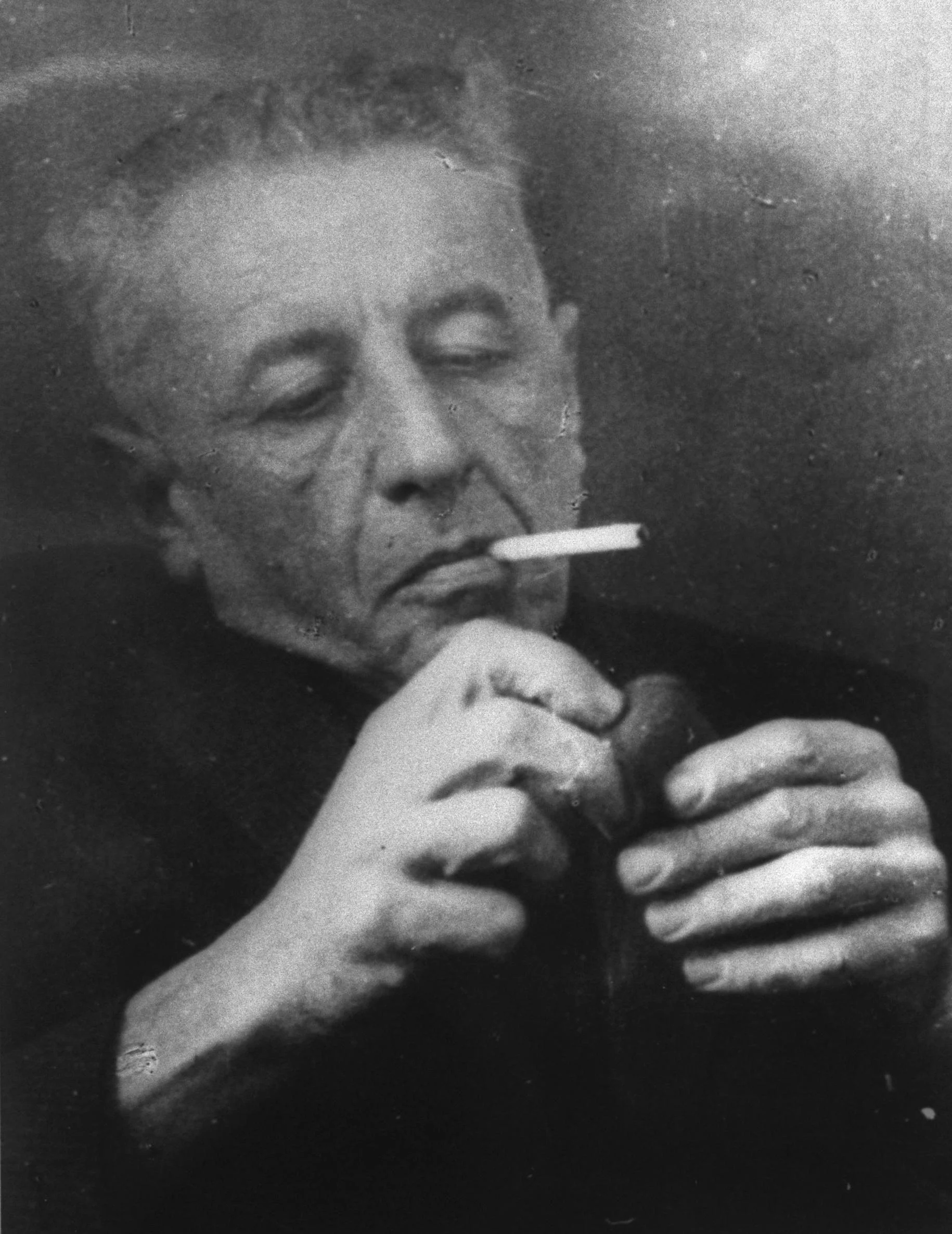
Nathan Alterman
 Israel
Also known as: Natan Alterman
Birthday
August 14, 1910
Birth Sign
Leo
Birthplace
Warsaw, Poland
Age
Died at 59
About
Nathan Alterman was a Polish-born Israeli poet, journalist, and playwright, widely regarded as the unofficial poet laureate of the Jewish state in its formative decades. His work bridged personal lyricism and national destiny, making him a central figure in modern Hebrew literature.
Alterman's poetry, known for its intricate rhyme and symbolic density, captured the anxieties and hopes of a nation in the making. His weekly column The Seventh Column turned political commentary into art, and his poem "The Silver Platter" became a cornerstone of Israeli collective memory, recited annually on Remembrance Day.
He passed away in 1970, but his legacy endures through school curricula, state ceremonies, and the NIS 200 banknote that bears his image.
Early Life & Background
Born in Warsaw in 1910, Nathan Alterman grew up in a Zionist household steeped in Jewish culture. At fifteen, he immigrated with his family to Tel Aviv, then a young city buzzing with Hebrew revival energy. He later studied agronomy in France, a practical field far from the literary path he would soon take.
Returning to Palestine, Alterman immersed himself in the literary circles of Tel Aviv, where he found his voice. His early poems appeared in newspapers, and he quickly gained attention for his formal skill and emotional range. The cultural ferment of interwar Warsaw and the pioneering spirit of Tel Aviv shaped his sensibility, blending European sophistication with Hebrew roots.
By the mid-1930s, Alterman was a rising star in Hebrew letters, but his breakthrough came with the 1938 collection Stars Outside, which established him as a major poet.
Career Growth
Alterman's breakthrough arrived with Stars Outside (1938), a collection that showcased his innovative style and symbolic depth. But it was his weekly column The Seventh Column, launched in the newspaper Davar in 1943, that made him a household name. Written in verse, the column commented on the Holocaust, the struggle for independence, and the challenges of nation-building, becoming the most influential newspaper column in Israel's history, according to Haaretz.
In late 1947, Alterman published "The Silver Platter," a poem imagining fallen soldiers as the sacrificial foundation of the state. It became an iconic text, recited at military memorials and deeply embedded in Israeli identity. He continued to write poetry, plays, and children's literature, and translated world classics into Hebrew.
After the Six-Day War in 1967, his poetry engaged with the new realities of occupation and victory. He received the Israel Prize in 1968, cementing his status as the nation's leading poet. He died in 1970, but his work remains a touchstone of Israeli culture.
Career Timeline
Public Image & Style
Alterman is remembered as the quintessential national poet, a figure whose work bridged the personal and the collective. His signature style combined formal virtuosity with political engagement, and his poems are known for their intricate symbolic structure. Israeli culture treats his work with near-canonical reverence; his poems are recited at state ceremonies, taught in schools, and quoted in public discourse. There is no official fandom name, but his work commands a devoted readership among Hebrew literature enthusiasts and is a touchstone of Israeli cultural identity.
Fame & Fandom (iFAMOUS Rankings)
Nathan Alterman does not command a modern fandom with organized campaigns, unofficial names, or digital ritualistic engagement. He died in 1970, long before the era of social media stardom or fan-funded subway ads. Instead, his audience functions as a collective national memory, treating his work with near-canonical reverence rather than active fandom. His poems are recited at state ceremonies and taught in schools, creating a devoted readership that spans generations without a formal label. This unique status places him firmly within the cultural stratosphere of Israel. In August 2026, data from the iFANN Global Fame Rankings confirms his enduring prominence on the global stage. He stands as the 69th most famous person in Israel, holding steady from the previous cycle. This ranking reflects a lifetime of literary influence that transcends typical celebrity metrics. While he lacks a specific fan club name, his presence remains a constant in Israeli public discourse. The rankings capture this sustained attention across media coverage and consumption signals worldwide. His legacy is not defined by trending hashtags but by the timeless resonance of his verse.
Interesting Facts and Legends
Alterman studied agronomy in France, a scientific field far removed from the poetic destiny that awaited him. He eventually replaced Chaim Nachman Bialik as the nation's poet laureate, symbolizing a passing of the torch to a new generation. A legendary moment occurred the night the UN voted for partition, where a conversation with Jewish militia leaders inspired his seminal poem "The Silver Platter." This text became a cornerstone of collective memory, often cited alongside the declaration of independence itself. During the Six-Day War in 1967, Alterman served as a de facto leader through his words, with his poetry acting as a vital source of national morale and political direction. His collection "The Seventh Column" established him as the voice of the "nation-in-arms," using vivid imagery to describe soldiers and the landscape of war. He appears on the NIS 200 banknote, which debuted in 2016. In 2021, his poem "Never Ending Encounter" was performed by Ran Danker to mark 111 years since his birth. These verified events form the bedrock of his mythos, blending historical fact with the cultural stories fans still retell today.
Notable Quotes
“We are the silver platter on which the Jewish state was served.”
Family & Personal Life
Alterman was married to Rachel Marcus, and the couple had one daughter, Tirza Alterman, who became a prominent Israeli journalist and writer. The family lived in Tel Aviv. Little is publicly known about his parents or siblings, but his upbringing in a Zionist home in Warsaw set the stage for his lifelong commitment to the Jewish state.
Notable Connections
Relationships & Dating History
Publicly documented romantic relationships for Alterman are limited to his marriage. He was married to Rachel Marcus, and the couple had a daughter, Tirza. No other public romantic relationships, engagements, or high-profile affairs are documented in credible sources, and there are no records of divorce or separation. At the time of his death in 1970, Alterman was married to Rachel Marcus.
- MarriedRachel MarcusCurrentWife; they had a daughter, Tirza Alterman.
Death & Aftermath
Died
March 28, 1970 (aged 59)
Death Place
Tel Aviv, Israel
Cause of Death
Unknown
The nation's cultural calendar marked a silence when the poet who had given voice to its birth and its anxieties ceased to speak, his absence felt immediately in the classrooms where his verses were already taught. Nathan Alterman passed away on March 28, 1970, in Tel Aviv at the age of 59, ending a life that had bridged the personal lyricism of Warsaw with the collective destiny of the emerging Jewish state. The circumstances surrounding his last moments remain unreported, leaving only the historical consensus of his natural demise. Tributes from peers and institutions poured forth as quickly as they would for any figure of his stature, cementing his legacy as one of Israel's most beloved poets. As the unofficial poet laureate who had replaced Haim Nahman Bialik, Alterman was honored with a funeral befitting a national icon, though specific details of the burial site and the list of attendees remain outside the immediate record.
His works, particularly The Seventh Column and The Silver Platter, saw a sustained surge in interest and sales rather than a temporary spike, ensuring his place in the curriculum of Israeli education. Posthumous recognition arrived through the continued publication of his collected works, including bilingual editions translated by Robert Friend, which kept his poetry accessible to new generations. Decades after his passing, his verses continued to be recited at military memorials and rewritten in modern commentary, proving that his role as the chronicler of the nation's soul outlasted his physical presence.
Net Worth (Estate Value)
$10 Million
iFANN Editorial Team estimate
Alterman passed away in 1970, so his estate's value is not publicly documented in traditional financial ledgers. His works remain in print and are widely studied, performed, and recited in Israel, generating ongoing royalties for his heirs. The estate is managed by his family. Per iFANN's editorial analysis, the enduring popularity of his poems, including "The Silver Platter," ensures a steady income stream. As of 2026, his literary estate continues to benefit from the cultural centrality of his work. The total estimated net worth is $10 Million.
Awards Won (2)
Alterman won the Bialik Prize for Literature in 1946 and the Israel Prize for Literature in 1968, cementing his place as a leading figure in Hebrew letters.
1968 · Literature
Lifetime achievement
1946 · Literature
Poetry
Known For
The Seventh Column
1943 · Columnist
The Silver Platter
1947 · Poet
Stars Outside
1938 · Poet
Keywords
Sources
Quick Facts
- Profession
- poet, writer, journalist
- Born
- August 14, 1910
- Birthplace
- Warsaw, Poland
- Died
- March 28, 1970
- Death Place
- Tel Aviv, Israel
- Gender
- Male
- Spouse
- Rachel Marcus
- Birth Sign
- Leo
Personal Details
- Full Name
- Nathan Alterman
- Spouse
- Rachel Marcus
- Children
- Tirza Alterman
- Education
- Studied agronomy in France
Frequently Asked Questions
What is Nathan Alterman famous for?
What is Nathan Alterman's most famous poem?
Did Nathan Alterman win the Israel Prize?
Why is Nathan Alterman on the 200 shekel bill?
When did Nathan Alterman die?
Similar People
Join the community
fans discussing