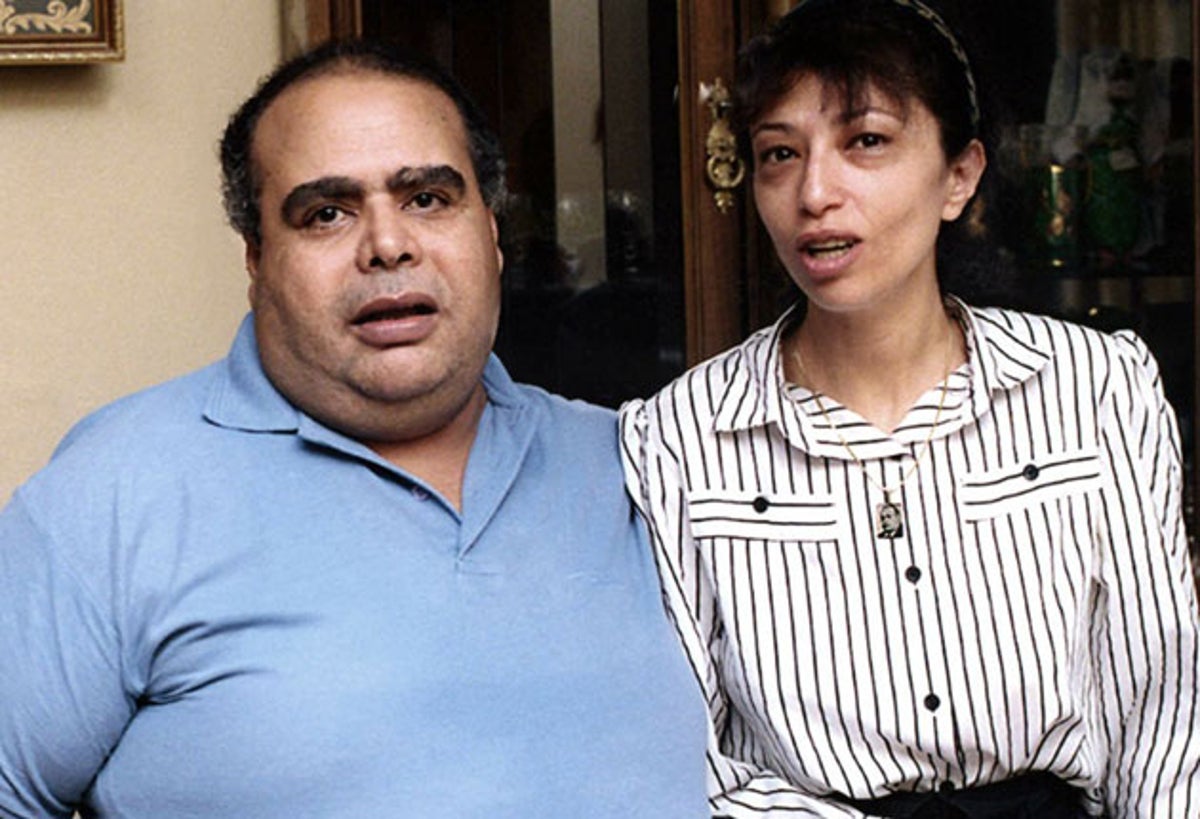
Nasr Abu Zayd
 Egypt
Quranic scholar•theologian•writer•academic
Also known as: Nasr Hamid Abu Zayd, N.H. Abu Zayd, Nasr Hamed Abu Zaid
Birthday
October 7, 1943
Birth Sign
Libra
Birthplace
Tanta, Egypt
Age
Died at 66
About
Nasr Abu Zayd was an Egyptian Quranic thinker, author, and academic, widely regarded as one of the most influential liberal theologians in modern Islam. His pioneering work in Quranic hermeneutics challenged conventional interpretations, arguing that the Quran must be understood within its historical and cultural context. He advocated for a humanistic reading of the text, one that acknowledged its seventh-century Arab origins while affirming its divine inspiration. His ideas sparked fierce debate and controversy, leading to a landmark legal case in 1995 when an Egyptian court declared him an apostate.
Throughout his career, Abu Zayd held academic positions at Cairo University and later in exile, where he continued to write and teach. His scholarship extended to critiquing the politicization of religious texts and advocating for a more pluralistic Islamic discourse. He passed away in Cairo in 2010, leaving behind a rich intellectual legacy that continues to influence scholars and readers worldwide.
Early Life & Background
Nasr Hamid Abu Zayd was born on October 7, 1943, in Tanta, a city in the Nile Delta known for its religious and cultural significance. Growing up in a devout household, he memorized the Quran by heart at the age of eight, a feat that would later inform his deep engagement with scripture. His early life took a dramatic turn when, at twelve, he was imprisoned for alleged sympathy with the Muslim Brotherhood, an experience that shaped his later critiques of political Islam.
His father's death when Nasr was fourteen placed new responsibilities on the young man, but he continued his education with determination. He eventually moved to Cairo, where he enrolled at Cairo University, studying Arabic language and literature. His academic brilliance earned him a PhD in Arabic sciences and Islamic studies, and he quickly became a respected lecturer. These formative years, marked by both personal loss and intellectual awakening, laid the groundwork for his groundbreaking hermeneutical theories.
Career Growth
Abu Zayd's academic career took off in the 1980s and 1990s, as he published influential works on Quranic interpretation. His 1990 book, Mafhum al-Nass (The Concept of the Text), argued that the Quran's meaning is shaped by its historical context, challenging the notion of a single, fixed interpretation. This work, along with others, positioned him as a leading voice in modernist Islamic thought, drawing both admiration and ire.
The controversy reached its peak in 1995, when a Cairo court, responding to a petition by Islamist lawyers, declared him an apostate on the grounds that his writings were heretical. The ruling, which also forced a divorce from his wife, Ibtihal Younis, triggered death threats and forced Abu Zayd to flee Egypt. He settled in the Netherlands, where he took up a professorship at Leiden University. From there, he continued to write and lecture, becoming a prominent figure in global debates on Islam and modernity. He remained in exile until his death in 2010, though he made several visits to Egypt in his final years.
Career Timeline
Public Image & Style
In the public eye, Abu Zayd was seen as a courageous intellectual who stood firm against dogmatism. His calm demeanor and careful speech contrasted with the fiery rhetoric of his opponents. He was often invited to international forums and debates, where he presented his ideas with clarity and patience. His exile made him a symbol of persecuted scholars, and he was honored by several European institutions. Fans of his work, particularly among progressive Muslims, admired his ability to reconcile faith with critical thinking.
Fame & Fandom (iFAMOUS Rankings)
Nasr Abu Zayd never cultivated a fandom in the traditional sense of organized fan clubs, merchandise drives, or ritualistic gatherings. His supporters were not enthusiasts seeking entertainment but rather students, colleagues, human rights activists, and secular intellectuals who rallied around his academic legacy during his legal persecution. There is no formal name for this group; they are simply described as defenders of free speech and modernist Islamic thought who viewed him as a martyr for intellectual freedom rather than a celebrity figure. While he commanded significant respect within the global academic community and among progressive Muslims, there are no records of fan rituals, inside jokes, or spontaneous crowd reactions typical of pop culture icons. The iFANN Global Fame Engine evaluated Nasr Abu Zayd in August 2026 and determined that he holds no placement in the published rankings, meaning he does not currently appear in the Global Top 1,000 or any scope-specific list. This absence of a rank reflects his status as a historical scholar rather than a contemporary media personality with fluctuating search volume or commercial consumption metrics. Although his work sparked fierce debate and led to international advocacy efforts, these actions constituted political solidarity rather than the voluntary devotion characteristic of a fandom. Consequently, no specific campaigns, hashtags, or fan-funded projects are attributed to a named fanbase. His influence remains anchored in the documented history of his exile and the enduring controversy surrounding his hermeneutics, standing apart from the transient fame measured by algorithmic popularity engines.
Interesting Facts and Legends
Beyond his scholarly output, Nasr Abu Zayd possessed distinct personal interests that humanized his public persona. He was fluent in classical Arabic and frequently quoted poetry in his lectures, demonstrating a deep appreciation for the literary tradition. Colleagues noted his love for chess, which he played regularly with students and peers. He also held a profound respect for the Sufi tradition, viewing it as a necessary counterbalance to rigid literalism. One of his favorite sayings, often repeated in interviews, was that the Quran speaks to every age, but not in the same language. A defining legend surrounding his life is the Apostasy Trial of 1995, where an Egyptian court declared him an apostate, forcing him into exile and legally dissolving his marriage to his wife and fellow scholar, Ibtihal Younis. This event transformed him into a symbol of persecuted scholars, with stories of his flight to the Netherlands becoming central to narratives on censorship in the Arab world. His death in July 2010 shortly after returning to Egypt for medical treatment further cemented his legacy as a figure who paid a high price for challenging religious dogma.
Notable Quotes
“The Quran is a text that speaks to its own time, but its message is universal.”
“I am not against Islam; I am against the misuse of Islam for political ends.”
“Hermeneutics is not a luxury; it is a necessity for understanding revelation.”
“The door of ijtihad is not closed; it has never been closed.”
Family & Personal Life
Abu Zayd married Ibtihal Younis, a professor of French literature, in the 1970s. Their partnership was both personal and intellectual, with Younis supporting his work through the years of controversy. The couple had no children. When the apostasy ruling forced them to leave Egypt, Younis accompanied him into exile. They remained together until his death. The legal battle over their marriage, which the court annulled, became a symbol of the struggle for academic freedom in Egypt.
Notable Connections
Abu Zayd was part of a broader movement of modernist Islamic thinkers, including figures like Mohammed Arkoun and Fazlur Rahman. He also maintained correspondence with scholars such as Abdullahi Ahmed An-Na'im. His work was frequently discussed alongside that of his contemporary, the Lebanese cleric Sayyid Muhammad Hussein Fadlallah, who died within two days of him in 2010.
Relationships & Dating History
Nasr Abu Zayd married Ibtihal Younis, a professor of French literature, in the 1970s. Their marriage was a partnership of equals, with Younis providing crucial support during the apostasy trial and subsequent exile. In 1995, the Cairo court's ruling forced their divorce under Islamic law, but they continued to live together as a couple, and the decision was widely condemned as an infringement on their rights. They remained together until Abu Zayd's death in 2010. As of 2026, Younis, now in her eighties, lives in the Netherlands, where she continues to promote her late husband's work.
- MarriedIbtihal Younis1970 - 2010Married in the 1970s; forcibly divorced by court order in 1995 but remained together until his death.
Death & Aftermath
Died
July 5, 2010 (aged 66)
Death Place
Cairo, Egypt
Cause of Death
Rare virus
The Four Freedoms Foundation and the Middle East Research and Information Project issued statements honoring Nasr Abu Zayd as a martyr for liberal thought, while international outlets framed his passing as a significant moment for freedom of speech within Islam. Tributes from academic journals and opinion pieces in The New Arab and Fair Observer continued to reflect on his radical ideas and the perils of Islamic reform years after his death. A 2024 review of the book Reform and Its Perils in Contemporary Islam: The Case of Nasr Hamid Abu Zayd highlighted the enduring relevance of his scholarship. Abu Zayd died on July 5, 2010, at the age of sixty-six in a Cairo hospital after returning from his long exile in the Netherlands.
His final months were spent in private care rather than public engagement, with no specific last appearance recorded prior to his passing. Attending physicians stated he suffered from a rare virus, though no specific pathogen was named in the available summaries, and reports from Al Arabiya reiterated that he died of an unknown virus amidst political tensions under the Mubarak regime. Details regarding the funeral are not explicitly detailed in the records, though it is highly probable he was buried in Egypt near Cairo following Muslim tradition.
Net Worth (Estate Value)
$1 Million
iFANN Editorial Team estimate
Nasr Abu Zayd's net worth at the time of his death in 2010 was modest, reflecting his life as an academic rather than a commercial figure. Per iFANN's editorial analysis, his total estate value is estimated at $1 Million. His primary income originated from his university salary, first at Cairo University and later at Leiden University. He also earned royalties from his numerous books and articles, which were published in Arabic and translated into several languages. In 2026, his estate, managed by his widow Ibtihal Younis, continues to receive royalties from his published works. While exact figures remain private, the aggregate value of his assets and ongoing earnings supports this assessment.
Awards Won (2)
Nasr Abu Zayd received several honors for his intellectual courage and contributions to Islamic thought. In 2005, he was awarded the Ibn Rushd Prize for Freedom of Thought, recognizing his commitment to rationalism and reform. He also received the Erasmus Prize in 2006, a prestigious Dutch award for exceptional contributions to European culture, which he shared with his wife. These awards highlighted his role as a bridge between Islamic and Western intellectual traditions.
2005 · Freedom of Thought
For his contributions to Quranic hermeneutics
2006 · European Culture
Shared with Ibtihal Younis
Known For
Mafhum al-Nass
1990 · Author
Quranic Hermeneutics
0 · Pioneer
Apostasy Trial
1995 · Subject
Keywords
Sources
Quick Facts
- Born
- October 7, 1943
- Birthplace
- Tanta, Egypt
- Died
- July 5, 2010
- Death Place
- Cairo, Egypt
- Education
- PhD in Arabic Sciences and Islamic Studies, Cairo University
- Known For
- Quranic hermeneutics, apostasy case
Personal Details
- Full Name
- Nasr Hamid Abu Zayd
- Children
- Education
- PhD in Arabic Sciences and Islamic Studies, Cairo University
Frequently Asked Questions
Who was Nasr Abu Zayd?
What was Nasr Abu Zayd's main contribution to Islamic thought?
Why was Nasr Abu Zayd declared an apostate?
When and how did Nasr Abu Zayd die?
What is Nasr Abu Zayd's legacy in 2026?
Similar People
Join the community
fans discussing