Nanyang Technological University
 Singapore
"University in a garden, driving research and innovation in Singapore and beyond"
About
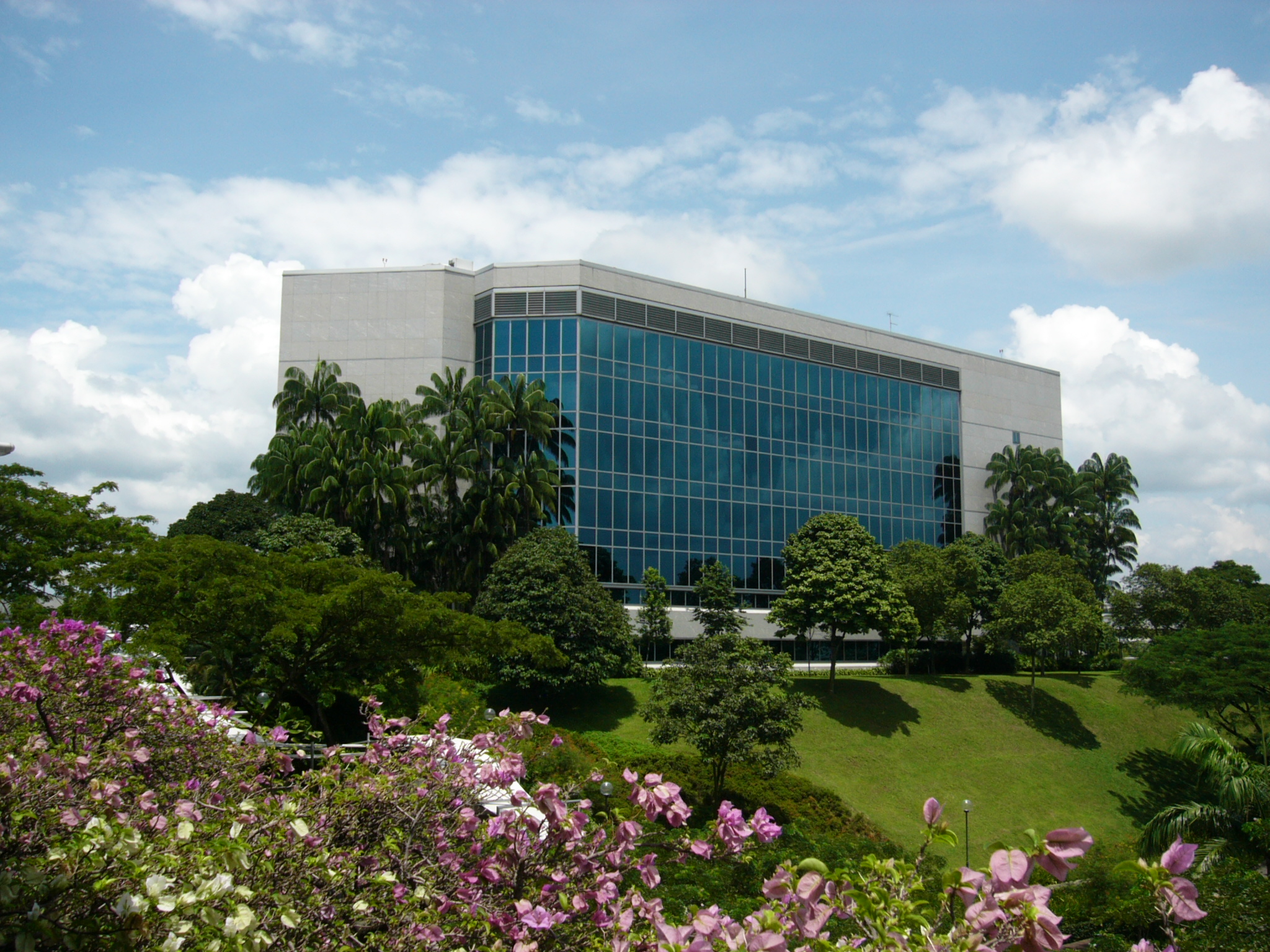
Nanyang Technological University (NTU) is a national public research university in Singapore, known for its strong focus on engineering, science, and technology. Founded in 1981, it is the country's second oldest autonomous university. Its main campus, in the western part of the island, is a striking blend of cutting-edge architecture and lush greenery, often called a "university in a garden." The university also operates a medical campus in Novena and a smaller one in Singapore's central business district.
NTU's roots go back to a critical moment in Singapore's history. In the late 1970s, the nation was shifting from labor-intensive industries to high-tech manufacturing, creating an urgent need for engineers and applied scientists. The government responded by establishing the Nanyang Technological Institute (NTI) in 1981, on the former campus of Nanyang University, a Chinese-language institution that had closed a year earlier. NTI's initial mission was narrow: produce practice-oriented engineers with strong laboratory and industrial training. Over the next decade, it expanded its scope, became a full university in 1991, and adopted its current name. Today, NTU enrolls over 40,000 students, including a large international cohort, and employs more than 7,500 staff.
NTU has grown into a global research powerhouse, consistently ranking among the top universities in Asia and the world. Its research spans artificial intelligence, robotics, sustainable energy, materials science, and more. The university is a key player in Singapore's innovation ecosystem, partnering with industry giants and spinning off startups. While it may not have centuries of history, NTU's rapid rise mirrors Singapore's own trajectory: pragmatic, ambitious, and forward-looking. Its alumni lead companies, shape public policy, and push the boundaries of research, making it a cornerstone of the nation's educational landscape.
Mission
NTU's mission is to improve lives worldwide through education and research. The university aims to nurture leaders and innovators who can tackle complex global challenges, from sustainability to health and technology. It emphasizes interdisciplinary collaboration and industry partnerships to translate research into real-world impact, while fostering a vibrant campus community that values diversity and creativity.
History
The story of Nanyang Technological University begins not with its own founding, but with the closure of Nanyang University in 1980. That Chinese-language institution had been a symbol of community-driven education since 1955, but by the late 1970s, the government saw a different need: engineers for a rapidly industrializing economy. So in 1981, the Nanyang Technological Institute (NTI) was set up on the same campus, with a mandate to train hands-on engineers. The first batch of students enrolled in 1982, and the institute quickly gained a reputation for its strong ties to industry.
The transformation from institute to university came in 1991, when NTI merged with the National Institute of Education and became Nanyang Technological University. This expanded its scope beyond engineering to include education, business, and the sciences. The 1990s and 2000s saw rapid growth: new schools were added, research output soared, and NTU began climbing international rankings. In 2004, it established the Lee Kong Chian School of Medicine jointly with Imperial College London. The university also started building satellite research centers, including one that has launched several small satellites into orbit.
More recently, NTU has positioned itself as a global hub for interdisciplinary research. In 2026, it signed agreements with the Max Planck Society to set up the first Max Planck Centers in Southeast Asia, focusing on data-driven chemistry and the link between culture and biology. It has also launched partnerships with Nestlé on healthy longevity, with Indonesia's Ministry of Education on sustainability, and with Japanese firm Fusic on AI for satellite constellations. These moves reflect a deliberate strategy to address major global challenges through international collaboration.
Subdivisions
College of Engineering
Offers programs in aerospace, chemical, civil, computer, electrical, and mechanical engineering, among others.
College of Science
Covers biological sciences, chemistry, mathematics, and physics, with strong research in materials and life sciences.
Nanyang Business School
Provides undergraduate and MBA programs, known for finance and accounting.
Lee Kong Chian School of Medicine
A joint medical school with Imperial College London, offering clinical training and research.
Notable People
K. Jimmy Hsia
Former Vice President (Research) · 2021-2026
Led NTU's research strategy; moved to a new Chinese university in 2026.
Milestones
1981
Nanyang Technological Institute (NTI) established on the former Nanyang University campus.
1991
NTI becomes a full university and is renamed Nanyang Technological University.
2004
Lee Kong Chian School of Medicine established in partnership with Imperial College London.
2026-04-20
Agreements signed for first Max Planck Centers in Southeast Asia at NTU.
2026-04-08
Nestlé and NTU launch research partnership on healthy longevity and women's health.
2026-05-22
Indonesian Ministry of Education and NTU agree to set up joint research institute on sustainability.
2026-05-26
NTU scientists develop a '5-in-1' seed-sized surgical robot.
Departments
Sources
Organization Info
- Founded
- 1991-07-01
- Headquarters
- Singapore
- Country
- Singapore
- Type
- University
- Employees
- 7571
- Students
- 40,700
- Revenue
- $1.9 billion
Financials
- Revenue
- $1.9 billion
- Employees
- 7571
Official Website
ntu.edu.sg
Join the community
fans discussing