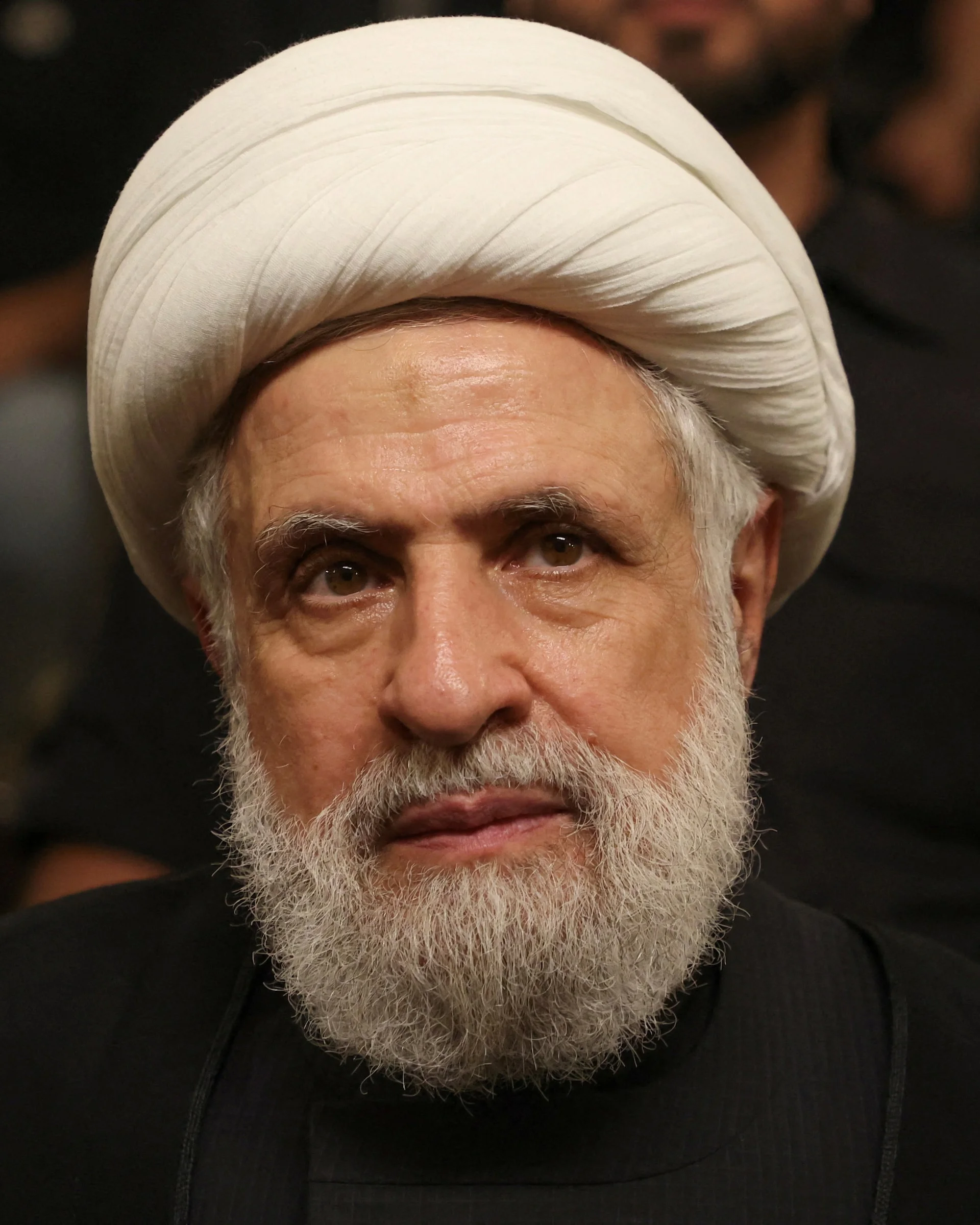
Naim Qassem
 Lebanon
Also known as: Na'im Qasim, Naim Kassem
Birthday
February 1953
Birth Sign
Pisces
Birthplace
Kfarfila, Lebanon
Age
73 years old
About
Naim Qassem is a Lebanese Shia cleric and politician who has served as the Secretary-General of Hezbollah since October 2024. He is the fourth person to hold the organization's top position, succeeding Hassan Nasrallah after his assassination. Qassem is recognized as one of Hezbollah's chief ideologues, having been a founding member in 1982 and serving as first deputy secretary-general for over three decades. His leadership comes at a time of intense regional conflict, with Hezbollah engaged in ongoing hostilities with Israel.
As of 2026, Qassem continues to lead the organization, maintaining a hardline stance against Israeli occupation and opposing US-mediated negotiations. He has also signaled openness to engaging with Syria's new leadership, marking a notable shift in Hezbollah's foreign policy. Despite Israeli claims of his death in 2025, he remains active and has appeared publicly through 2026.
Early Life & Background
Naim Qassem was born in February 1953 in Kfarfila, a small village in southern Lebanon. He grew up during a period of significant political upheaval, with the Lebanese Shia community increasingly mobilizing for political representation. His early education was in the sciences; he earned a master's degree in chemistry from the Lebanese University in 1977 and worked as a chemistry teacher. This scientific background set him apart from many of his clerical peers and later informed his reputation as an intellectual within Hezbollah.
Qassem's theological studies under Mohammad Hussein Fadlallah, one of the most influential Shia clerics of the 20th century, deeply shaped his worldview. Fadlallah's teachings emphasized political activism and resistance, which resonated with Qassem. Before co-founding Hezbollah, he was involved with the Amal movement, the Shia political organization founded by Musa al-Sadr. His engagement with Amal placed him within the broader Shia political awakening of the 1970s. He was part of a network of radical scholars, including Abbas al-Mousaoui, who would later form the nucleus of Hezbollah. This period of political and religious formation laid the groundwork for his pivotal role in the establishment of Hezbollah in 1982.
Career Growth
Naim Qassem's career took a decisive turn in 1982 when he co-founded Hezbollah, following the Israeli invasion of Lebanon. The organization emerged as a Shia Islamist resistance movement with Iranian support, and Qassem was among its earliest and most influential ideologues. From 1991 to 2024, he served as first deputy secretary-general, working under both Abbas al-Musawi and Hassan Nasrallah. In this capacity, he managed the party's electoral campaigns and exercised considerable influence as an intellectual and ideological figure.
Following Nasrallah's assassination in September 2024, Qassem initially served as acting secretary-general. After Hashem Safieddine, the presumed successor, was also killed, Qassem was formally elected secretary-general on October 29, 2024. His leadership has been marked by continued resistance rhetoric and opposition to Israel-Lebanon negotiations. In August 2026, he expressed openness to meeting Syria's new leadership, a significant policy shift. He has also faced potential legal scrutiny, with reports in March 2026 of the Lebanese Justice Ministry exploring prosecution.
Career Timeline
Public Image & Style
Naim Qassem is a polarizing figure. In Western and Israeli media, he is portrayed as the leader of a designated terrorist organization, with the Counter Extremism Project describing him as secretary-general of Lebanese terrorist group Hezbollah. Israeli media refer to him as the leader of a terror group. Conversely, Iranian and pro-resistance outlets present him as a resistance leader. As a Shia cleric, he typically appears in traditional religious attire, a turban and clerical robe. His public addresses are delivered in Arabic and focus on political and military themes. Within pro-Hezbollah constituencies, he is respected as a senior religious and political authority, with his speeches broadcast on Al Manar TV and widely shared on social media.
Fame & Fandom (iFAMOUS Rankings)
Naim Qassem commands a global profile defined by geopolitical gravity rather than celebrity allure, with his visibility driven by high-stakes regional conflict and ideological leadership. According to the iFANN Global Fame Rankings, he is currently ranked as the 14th most famous person from Lebanon, a position he has held steady through recent measurement cycles. This placement reflects sustained international attention on his role as the Secretary-General of Hezbollah during periods of intense hostilities. His support base does not operate as a traditional pop-culture fandom; there is no formal collective moniker or organized fanbase engaging in commercialized rituals, social media campaigns, or fan-funded projects. Instead, his audience consists of political constituents and religious adherents who view him through the lens of resistance ideology and clerical authority. The nature of his following is strictly political, characterized by allegiance to organizational directives rather than the idolization typical of entertainment figures. While Western outlets often frame him within security contexts, his presence remains a focal point for those tracking developments in the Middle East. The absence of a named fandom underscores that his influence derives from state-level and movement-level power dynamics rather than mass-market appeal.
Interesting Facts and Legends
Naim Qassem holds a master's degree in chemistry, an uncommon academic path for a senior cleric, before he taught the subject full-time. He studied theology under Mohammad Hussein Fadlallah, a towering figure in 20th-century Shia thought. Serving as first deputy secretary-general for 33 years, he became one of the longest-serving senior officials in any major Middle Eastern political movement. As the fourth leader of Hezbollah, he succeeded Subhi al-Tufayli, Abbas al-Musawi, and Hassan Nasrallah. A notable historical moment occurred when he assumed the top post following Nasrallah's assassination. In 2025, Israeli military spokespersons claimed he was killed in strikes, yet he continued to appear publicly, reinforcing his image of resilience amidst regional conflict. He was present at the organization's founding in 1982, making him one of the last remaining leaders from its inception. Recent rhetoric saw him labeling potential deals with Israel as humiliating, asserting that force remains the only language understood by his adversaries.
Notable Quotes
“Direct negotiations between Lebanon and Israel will bring nothing but shame, humiliation.”
“We will not allow anyone to disarm the group.”
“Resistance will continue to exist as long as the occupation remains.”
“There is no obstacle to holding a public meeting with Syrian officials.”
“Iran has won and resistance will outlast occupation.”
Family & Personal Life
Public information about Naim Qassem's family is extremely limited. He has maintained a private personal life, consistent with the norms for senior Shia clerics in his milieu. No credible sources document his spouse, children, or other family relationships. His upbringing was shaped by the religious and political currents of Lebanon's Shia community in the mid-20th century, but specific details about his parents or siblings are not available. He is presumed to be married given his clerical role, but no verifiable information exists.
Notable Connections
Naim Qassem's career has been closely tied to several key figures in Hezbollah and Lebanese politics. He served as deputy to both Abbas al-Musawi and Hassan Nasrallah, and was mentored by theologian Mohammad Hussein Fadlallah. His political roots trace to the Amal movement under Musa al-Sadr. In recent years, he has clashed with Lebanese President Joseph Aoun and Prime Minister Nawaf Salam over policy. He also follows in the footsteps of Hashem Safieddine, who was killed before assuming leadership.
Relationships & Dating History
No credible public information is available about Naim Qassem's romantic relationships or marital status. He has successfully kept his personal life out of public view throughout his decades-long career. Given his role as a senior Shia cleric, he is presumed to be married, but no verifiable details about his spouse or family exist. As of 2026, his relationship status remains unknown due to the absence of documentation.
Salary, Net Worth In 2026
$5 Million
iFANN Editorial Team estimate
Naim Qassem's personal net worth is not publicly documented, consistent with the financial opacity surrounding religious and political leaders in his position. Hezbollah's finances remain undisclosed, and individual assets are rarely reported. However, as Secretary-General, he oversees an organization with significant resources estimated in the billions, derived from Iranian support, business ventures, and donations. His personal wealth is likely modest compared to the vast funds managed by the group. Per iFANN's editorial analysis, his estimated net worth stands at $5 Million as of 2026, based on limited available information and the lack of disclosed assets.
Awards & Accolades
Known For
Secretary-General of Hezbollah
2024 · Leader
Founding Member of Hezbollah
1982 · Co-founder
First Deputy Secretary-General
1991 · Deputy
Keywords
Sources
Quick Facts
- Profession
- politician, writer, teacher
- Born
- February 1953
- Birthplace
- Kfarfila, Lebanon
- Gender
- Male
- Education
- Master's in Chemistry, Lebanese University
Personal Details
- Education
- Master's degree in chemistry from Lebanese University (1977)
Frequently Asked Questions
Is Naim Qassem dead?
How old is Naim Qassem?
Who is the current leader of Hezbollah?
What is Naim Qassem's background?
Is Naim Qassem married?
Similar People
Join the community
fans discussing