 Japan
Japan“A surprisingly thoughtful take on teenage angst, blending humor with genuine emotional depth.”
Anime News Network
Anime News Network
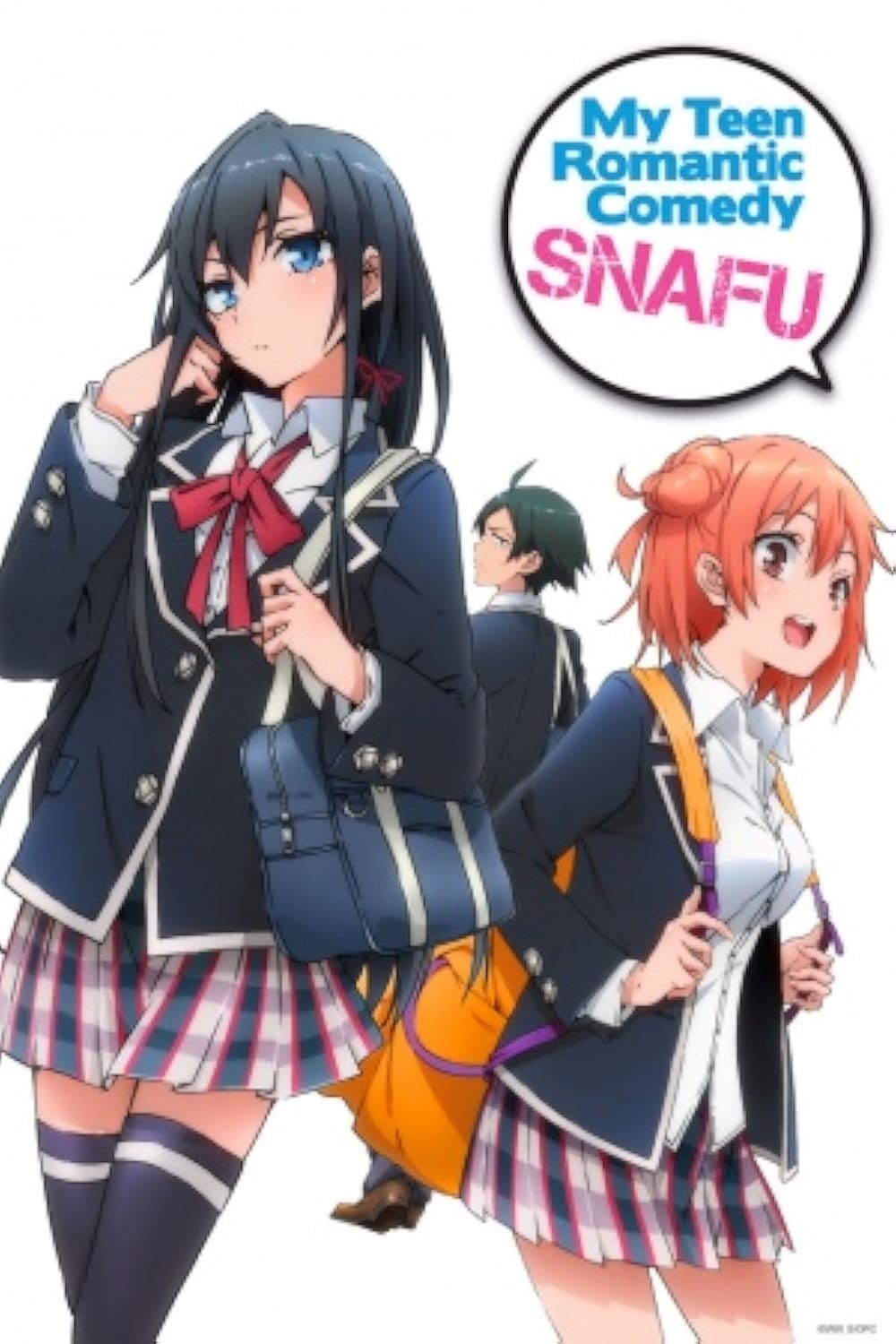
Wataru Watari's light novel series, adapted into an anime across three seasons, presents a deliberately unromantic view of adolescent social life. The story follows Hachiman Hikigaya, a high school student whose bitter experiences have led him to believe that youth is a lie and genuine relationships are impossible. Forced into the Service Club by his teacher Shizuka Hiratsuka, he works alongside the aloof and brilliant Yukino Yukinoshita and the outwardly cheerful Yui Yuigahama, solving other students' problems while grappling with their own emotional blind spots.
The series aired in three installments: the first season in 2013 produced by Brain's Base, and the second and third seasons produced by Feel in 2015 and 2020 respectively. Each season deepens the psychological complexity of its trio, moving from episodic problem-solving to a sustained examination of what it means to want something real from other people. The show's sharp dialogue and refusal to romanticize its characters' flaws have made it a touchstone for viewers who find typical high school anime unsatisfying.
Stream
Availability and pricing can change. Confirm on the provider's site before purchasing.
Hachiman Hikigaya enters his second year of high school with a philosophy forged in humiliation: expecting nothing from others prevents disappointment. After writing an essay that his teacher finds disturbingly nihilistic, Shizuka Hiratsuka steers him toward the Service Club, a room where students can bring their troubles. There he meets Yukino Yukinoshita, a girl as isolated as he is but for different reasons, her intelligence and sharp tongue have made her a target for envy rather than friendship. Their first request comes from Yui Yuigahama, a popular girl who wants to learn to bake cookies for someone she has wronged. Yui's warmth and social ease stand in stark opposition to Hachiman and Yukino's guardedness, but she too carries insecurities that the club will gradually expose.
Over the course of the first season, the Service Club takes on a series of requests that force Hachiman to confront his methods. He habitually solves problems by sacrificing himself, taking blame, absorbing social punishment, because he believes his reputation is already worthless. Yukino finds this approach cowardly and dishonest, while Yui wants everyone to get along without anyone getting hurt. Their disagreements are not merely procedural; they reveal fundamentally different ideas about what helping people actually means.
The second season expands the club's orbit. New characters arrive: Iroha Isshiki, a scheming first-year student council candidate who manipulates Hachiman into managing her campaign, and the mysterious Hayato Hayama, whose effortless popularity masks a deep reluctance to disrupt social harmony. The season's arc centers on a cultural festival and a prom, events that force the characters to coordinate across cliques and confront the gap between the roles they perform and the people they are. Hachiman's cynical strategies begin to fray as he finds himself wanting outcomes that cannot be achieved through self-sacrifice alone.
By the third season, the Service Club's original trio has grown close enough to hurt one another. The remaining episodes focus on a single, prolonged request: Yukino asks the club to help her plan a Christmas event, but the real problem is the unspoken tension among the three of them. Hachiman must choose between the comfortable distance he has always maintained and the terrifying prospect of wanting something specific from someone. The season traces the slow, painful process of the characters learning to articulate what they actually need, rather than what they think they deserve.
Critical Consensus
My Youth Romantic Comedy Is Wrong, as I Expected stands out for its introspective take on adolescent alienation. Sharp dialogue and complex character development elevate it beyond typical high school fare, offering a nuanced exploration of social facades and genuine connection.
“A surprisingly thoughtful take on teenage angst, blending humor with genuine emotional depth.”
Anime News Network
Anime News Network
“The series masterfully dissects social interactions, making even mundane school events feel significant.”
IGN
IGN
“Oregairu is a rare beast: a romantic comedy that refuses to romanticize its characters' flaws.”
The Fandom Post
The Fandom Post
Takuya Eguchi
Hachiman Hikigaya
Nao Tōyama
Yui Yuigahama
Saori Hayami
Yukino Yukinoshita
Shizuka Itō
Shizuka Hiratsuka
Yui Ishikawa
Iroha Isshiki
Mai Nakahara
Haruno Yukinoshita
Kōki Uchiyama
Hayato Hayama
Ayane Sakura
Nao Tomori
Azumi Asakura
Saki Kawasaki
Aya Hirano
Kei Ama
Directors
Ai Yoshimura, Kei Oikawa
Writers
Shotaro Sugawara, Keiichiro Daichi
Composers
Satoshi Hiraide, Taku Iwasaki
Crunchyroll Anime Awards (2016)
Best Female Character: Won
Join the community
fans discussing