 United States
“The show brought unflinching honesty (and Claire Danes) to teen TV, setting a new standard for adolescent storytelling.”
Matthew Gilbert
The Boston Globe
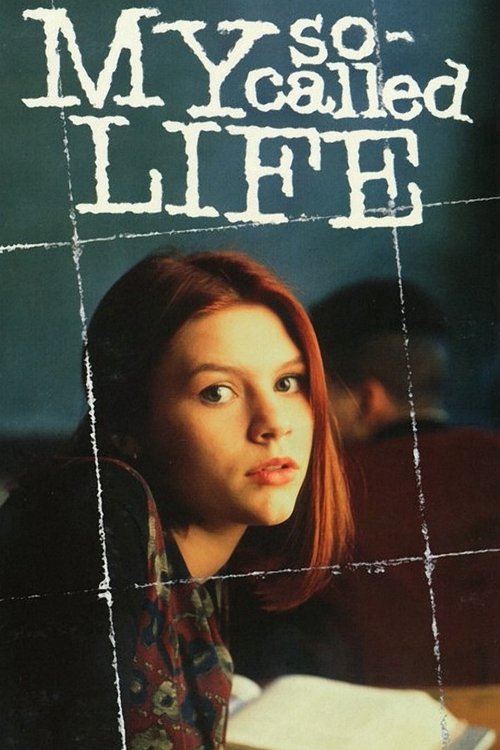
Angela Chase is 15, and everything feels like it's happening at once. My So-Called Life premiered on ABC on August 25, 1994, created by Winnie Holzman, and it turned the ordinary chaos of tenth grade into something close to poetry. Claire Danes plays Angela, a Pittsburgh kid who dyes her hair crimson and starts running with Rayanne Graff (A. J. Langer), a friend her parents can't stand. At home, Patty and Graham Chase (Bess Armstrong and Tom Irwin) are trying to keep a marriage and a family steady while their daughter seems to be turning into someone they don't recognize. Devon Gummersall's Brian Krakow, the neighbor who has loved Angela from across the street for years, and Wilson Cruz's Enrique Vasquez, Rayanne's exuberant best friend, round out a cast that feels like it was pulled from an actual high school hallway.
The show ran for 19 episodes between August 1994 and January 1995, though ABC ordered and promoted a second season that never materialized on air. Holzman wrote teenagers who talk in circles and mean every word, and the series treats their problems with the seriousness they deserve. It's a drama with comic edges, rated TV-14, and each episode runs about 48 minutes, giving scenes room to breathe.
Critics took to it right away, and its reputation has only grown since the cancellation. The rating sits at 7.7 out of 10, but the numbers undersell the devotion. This is a show about the feeling that no one has ever been 15 before, and it makes that feeling universal.
Stream
Availability and pricing can change. Confirm on the provider's site before purchasing.
Angela Chase opens the pilot by explaining that she has recently dyed her hair "crimson glow" and started running with a new crowd. That crowd is led by Rayanne Graff, a reckless, charismatic classmate whose home life is chaotic and whose friendship with Angela alarms Angela's parents. Rounding out the trio is Enrique "Rickie" Vasquez, Rayanne's warm, flamboyant best friend, a gay Latinx teenager navigating an unstable home situation and the casual homophobia of his school. The series is set in the fictional Pittsburgh suburb of Liberty, Pennsylvania, and its world is small and specific: the Chase kitchen, the school hallway, the parking lot, the pizza place.
At home, Angela's parents Patty and Graham are trying to hold together a marriage and a household while their eldest daughter seems to be transforming into someone they don't recognize. Patty, a controlling but loving former high-school queen bee, and Graham, a gentle, restless restaurateur-in-waiting, anchor the adult storylines, which the show treats with as much seriousness as the teen ones. Angela's younger sister Danielle and her former best friend Sharon Cherski round out the family and social circle. The central object of Angela's obsession is Jordan Catalano, a beautiful, inarticulate, barely literate classmate who can't quite commit to anything, least of all a coherent sentence. Across the street lives Brian Krakow, the awkward, brilliant neighbor who has loved Angela quietly for years and who serves as the show's narrator-in-spirit through his unrequited devotion.
The central conflict is internal as much as external: Angela is trying to figure out who she is, what she believes, and how to be a person, while her parents try to figure out how to let her do that without losing her. Each episode takes a small, ordinary event, a school dance, a substitute teacher, a Halloween party, a parent-teacher conference, and treats it with the emotional weight of a major life event, because to a 15-year-old it is one. Holzman's writing captures the way teenagers talk in circles and contradictions and mean every word, and the series refuses to condescend to its characters.
Over the course of the season, Angela navigates her first serious relationship, her parents' marital strain, Rayanne's self-destructive behavior, Rickie's precarious home life, and her own shifting sense of self. The season builds toward a climactic episode in which several of these threads converge, but the series was cancelled before its story could be fully resolved. A second season was ordered by ABC but never produced; the network cancelled the show in May 1995 before production began. The "Specials" listed in some databases are not narrative episodes but DVD extras and behind-the-scenes material.
Critical Consensus
My So-Called Life is widely regarded as one of the finest teen dramas ever produced, praised for its emotional honesty, Winnie Holzman's literate scripts, and Claire Danes's extraordinary performance. Critics highlight its refusal to moralize and its nuanced treatment of homophobia, alcoholism, and child abuse. Its influence on later coming-of-age television is frequently noted.
“The show brought unflinching honesty (and Claire Danes) to teen TV, setting a new standard for adolescent storytelling.”
Matthew Gilbert
The Boston Globe
“Created in response to shows like 90210, My So-Called Life offered a grounded, realistic alternative to glossy teen soaps.”
Michael Ausiello
TVLine
“A bastion of teen angst, the series remains a touchstone for authentic portrayals of adolescence.”
Rotten Tomatoes Critic Consensus
Rotten Tomatoes
Claire Danes
Angela Chase
Bess Armstrong
Patty Chase
Tom Irwin
Graham Chase
Wilson Cruz
Enrique "Rickie" Vasquez
Devon Gummersall
Brian Krakow
A.J. Langer
Rayanne Graff
Jared Leto
Jordan Catalano
Devon Odessa
Sharon Cherski
Lisa Wilhoit
Danielle Chase
Directors
Scott Winant, Mark Piznarski, Claudia Weill
Writer
Winnie Holzman
Producers
Edward Zwick, Marshall Herskovitz
Golden Globe Awards (1995)
Best Actress in a Television Series – Drama (Claire Danes): Won
Primetime Emmy Awards (1995)
Outstanding Lead Actress in a Drama Series (Claire Danes): Won
Primetime Emmy Awards (1995)
Outstanding Drama Series: Nominated
Primetime Emmy Awards (1995)
Outstanding Writing for a Drama Series (Winnie Holzman, for the pilot): Nominated
Primetime Emmy Awards (1995)
Outstanding Supporting Actress in a Drama Series (A.J. Langer): Nominated
Peabody Awards (1995)
Peabody Award: Won
Television Critics Association Awards (1995)
Outstanding Achievement in Drama: Won
Join the community
fans discussing