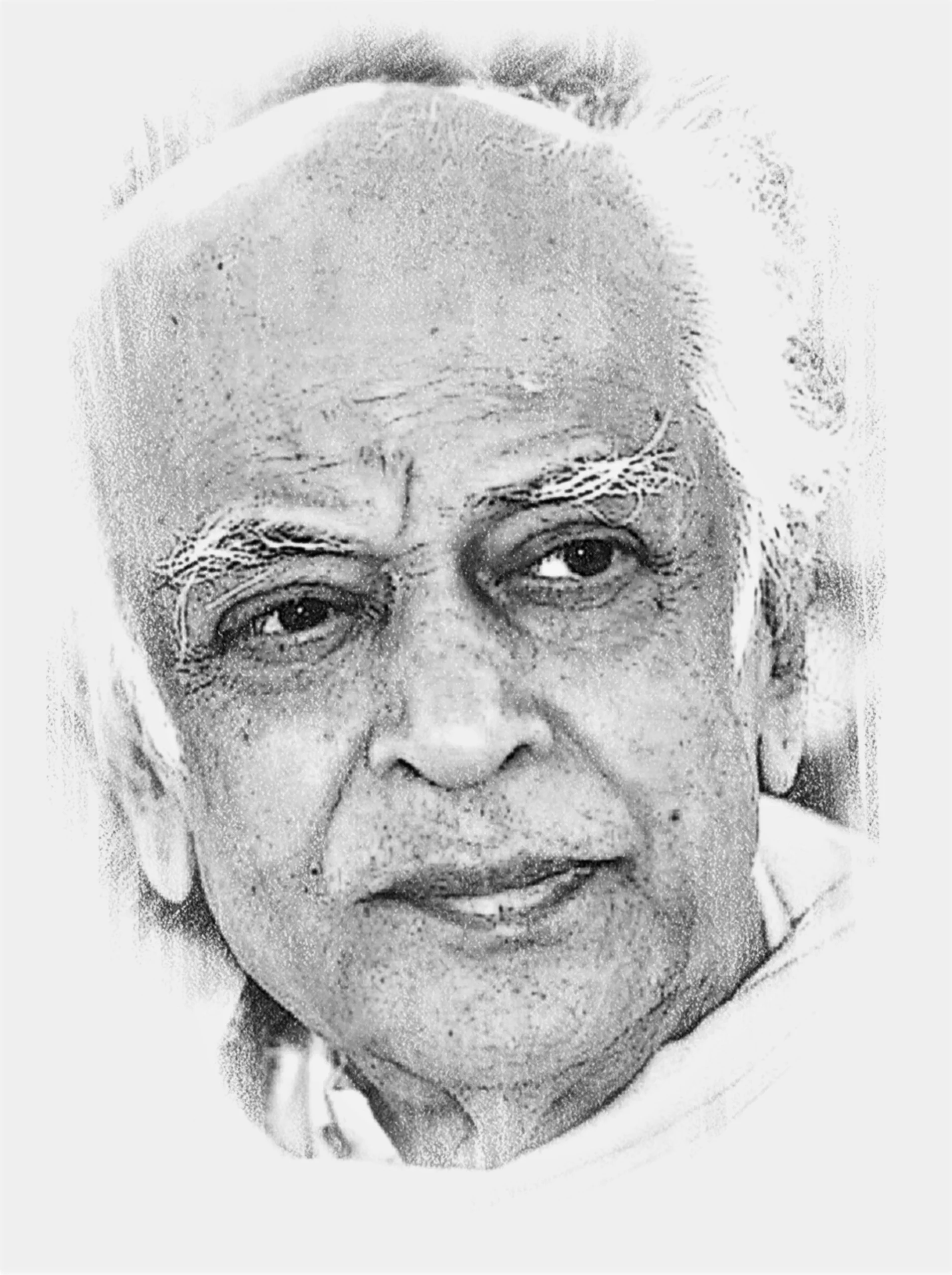
Muzharul Islam
 Bangladesh
Architect•urban planner•educator•activist
Also known as: Majharul Islam, Mazharul Islam
Birthday
December 25, 1923
Birth Sign
Sagittarius
Birthplace
Murshidabad, British India (now West Bengal, India)
Age
Died at 88
About
Muzharul Islam was a Bangladeshi architect, urban planner, educator, and activist, widely regarded as the father of Bengali modernism and a grand master of regional modernism in South Asia. His work, spanning the 1950s through the 1980s, defined the architectural identity of a newly independent nation. Islam's designs, rooted in a deep understanding of climate, context, and local materials, set a global standard for Tropical Modern Architecture.
Beyond his own buildings, Islam shaped the profession itself. As a professor and mentor, he directed the course of architectural education in Bangladesh and brought international figures like Louis Kahn, Richard Neutra, and Paul Rudolph to work in Dhaka, creating a fertile exchange between global modernism and local traditions. His legacy lives on in the institutions, public buildings, and civic spaces that continue to serve Bangladesh today.
Early Life & Background
Muzharul Islam was born on December 25, 1923, in Murshidabad, a historic city in the Bengal region of British India. Growing up in a period of political ferment, he witnessed the push for independence and the eventual partition of 1947, events that would shape his commitment to building a modern nation.
He pursued architecture with determination, traveling to the United States to study at the University of Oregon, where he earned his Bachelor of Architecture in June 1952. The Pacific Northwest's modernist scene and the teachings of figures like Pietro Belluschi left a lasting impression. After graduation, Islam returned to a postcolonial Pakistan, where he became the first professionally trained modern architect in what would later become Bangladesh. His early work in the 1950s, including private residences and small public buildings, already showed a keen sensitivity to the tropical climate and local building traditions.
Career Growth
Muzharul Islam's breakthrough came in the 1960s, when he took on major public commissions that defined the architectural character of Dhaka. He designed the Jahangirnagar University campus, the Chittagong University campus, and the Dhaka College of Fine Arts, among others. These projects demonstrated a modernism that was distinctly Bengali, using brick, concrete, and shading devices to respond to heat and monsoon rains.
Islam's influence extended through his role as an educator and activist. He served as a professor at the Bangladesh University of Engineering and Technology (BUET) and mentored a generation of architects. He also lobbied to bring international masters to Bangladesh, most notably Louis Kahn, whose National Assembly Building in Dhaka became a landmark of modern architecture. Islam's own works, such as the Public Library in Dhaka, are celebrated for their spatial quality and climatic intelligence. In 2022, a monograph by Swiss architect Niklaus Graber became the first international book dedicated to his work, and in 2023, ArchDaily featured his architecture, underscoring his global recognition.
Career Timeline
Public Image & Style
Muzharul Islam is remembered as a pioneer and a principled activist. In the media, he is often called the father of Bengali modernism, a title that reflects his role in shaping the nation's architectural identity. His public persona was that of a rigorous intellectual, deeply committed to social and cultural progress. He was known for his fierce independence, often clashing with bureaucrats and politicians to protect the integrity of his designs. Architects and students revere him as a mentor who demanded excellence and encouraged experimentation. His works, such as the Dhaka College of Fine Arts, are considered icons of Bangladeshi modernism, and his legacy is celebrated in exhibitions and publications both locally and internationally.
Fame & Fandom (iFAMOUS Rankings)
The community surrounding Muzharul Islam operates not through social media rallies or fan clubs, but through the rigorous preservation of architectural heritage and academic study. His adherents are architects, historians, and students who organize under institutional banners like the Institute of Architects Bangladesh to campaign for the UNESCO nomination of his works, treating his built legacy as a living monument rather than a celebrity product. This professional reverence functions as his fandom, characterized by a dedication to Tropical Modernism and the protection of his intellectual property. Despite this deep global respect, iFANN's Global Fame Engine has evaluated Muzharul Islam, yet he does not currently hold a placement in the published rankings such as the Global Top 1,000 or any Top-100 scope list. Consequently, no specific numerical rank or score is assigned to his current standing in the worldwide fame hierarchy. His fanbase has no formal name.
Interesting Facts and Legends
Muzharul Islam's name occasionally appears as Majharul Islam or Mazharul Islam in academic databases, creating minor confusion regarding his records. He was a fervent advocate for architectural education, instrumental in establishing the architecture department at BUET and shaping the curriculum that trained a generation of leaders. His modernist sensibilities were ignited during his studies in Oregon, where the regional modernism of Frank Lloyd Wright left a lasting impression. Known for his privacy, he rarely granted interviews, preferring to carry a sketchbook filled with vernacular details from his travels. Beyond these documented facts, legend holds that his collaboration with Louis Kahn on the Jatiya Sangsad Bhaban was a masterclass in contrapuntal design, blending monumental vision with local context. Another enduring story recounts his political courage during the 1971 Liberation War, where he refused to compromise his principles against authoritarian demands, a stance that cemented his reputation as an activist architect. These narratives, alongside the annual tributes on his death anniversary, form the core mythology of his life.
Notable Quotes
“I believe architecture is a social art, not a private luxury.”
“The climate of Bengal is not a problem; it is a resource.”
“Modernism must be rooted in the soil of the country.”
Family & Personal Life
Details about Muzharul Islam's family life remain largely private. He was born in Murshidabad, but little is known about his parents or siblings. He spent most of his career in Dhaka, where he lived with his family. His dedication to architecture was such that his home often doubled as a studio, where he hosted students and colleagues for intense discussions about design. He is survived by his children, though they have chosen to stay out of the public eye, preserving his legacy through the Muzharul Islam Foundation.
Notable Connections
Muzharul Islam collaborated with several prominent international architects, including Louis Kahn, Richard Neutra, and Paul Rudolph, whom he invited to work in Dhaka. Swiss architect Niklaus Graber spent 14 years researching and writing the first international monograph on Islam. Photographer Wahiduzzaman Ratul has exhibited photographs of Islam's buildings, and Maruf Raihan, founder of Studio Biporit, created an infographic tracing his career.
Relationships & Dating History
Muzharul Islam was a private individual, and little is known about his romantic relationships. He was married, though details about his wife and the timeline of their marriage are not publicly documented. He is believed to have been married for most of his adult life, with his wife supporting his demanding career. At the time of his death in 2012, he was married, but his wife's name has not been publicly revealed. The couple had children, who have since maintained a low profile.
Death & Aftermath
Died
July 15, 2012 (aged 88)
Death Place
Unknown
Cause of Death
Unknown
Net Worth (Estate Value)
$5 Million
iFANN Editorial Team estimate
As a deceased architect, Muzharul Islam's net worth is primarily tied to his estate and the ongoing value of his architectural legacy. During his lifetime, he earned a modest income from his architectural practice and academic salary, never amassing great personal wealth. After his death in 2012, his estate has been managed by his family, with the Muzharul Islam Foundation overseeing preservation and promotion of his works. Per iFANN's editorial analysis, the estate's financial value is estimated at $5 Million as of 2026, based on the recognition of his architectural drawings, archives, and intellectual property rights. Revenue streams include licensing of his designs for publications, exhibitions, and educational materials. The estate has also benefited from the growing international interest in his work, with the 2022 monograph and subsequent exhibitions boosting the value of his archive.
Awards Won (2)
Muzharul Islam received several national honors for his contributions to architecture. In 1999, he was awarded the Independence Day Award, Bangladesh's highest civilian honor, for his role in shaping the nation's architectural heritage. He also received the Bangladesh Shilpakala Academy Award and was recognized by the Institute of Architects Bangladesh for his lifetime achievements.
1993 · Architecture
Contribution to architecture
1999 · Architecture
Lifetime achievement in architecture
Known For
Dhaka College of Fine Arts
1963 · Architect
Jahangirnagar University Campus
1965 · Master planner and architect
Chittagong University Campus
1970 · Master planner and architect
Public Library, Dhaka
1965 · Architect
Keywords
Sources
Quick Facts
- Profession
- Architect, urban planner, educator, activist
- Born
- December 25, 1923
- Birthplace
- Murshidabad, British India
- Died
- July 15, 2012
- Death Place
- Dhaka, Bangladesh
- Gender
- Male
- Birth Sign
- Sagittarius
- Education
- University of Oregon (B.Arch, 1952)
Personal Details
- Full Name
- Muzharul Islam
- Education
- Bachelor of Architecture, University of Oregon, 1952
Frequently Asked Questions
Who is Muzharul Islam?
When and where was Muzharul Islam born?
When did Muzharul Islam die?
What is Muzharul Islam known for?
What was Muzharul Islam's architectural style?
Similar People
Join the community
fans discussing