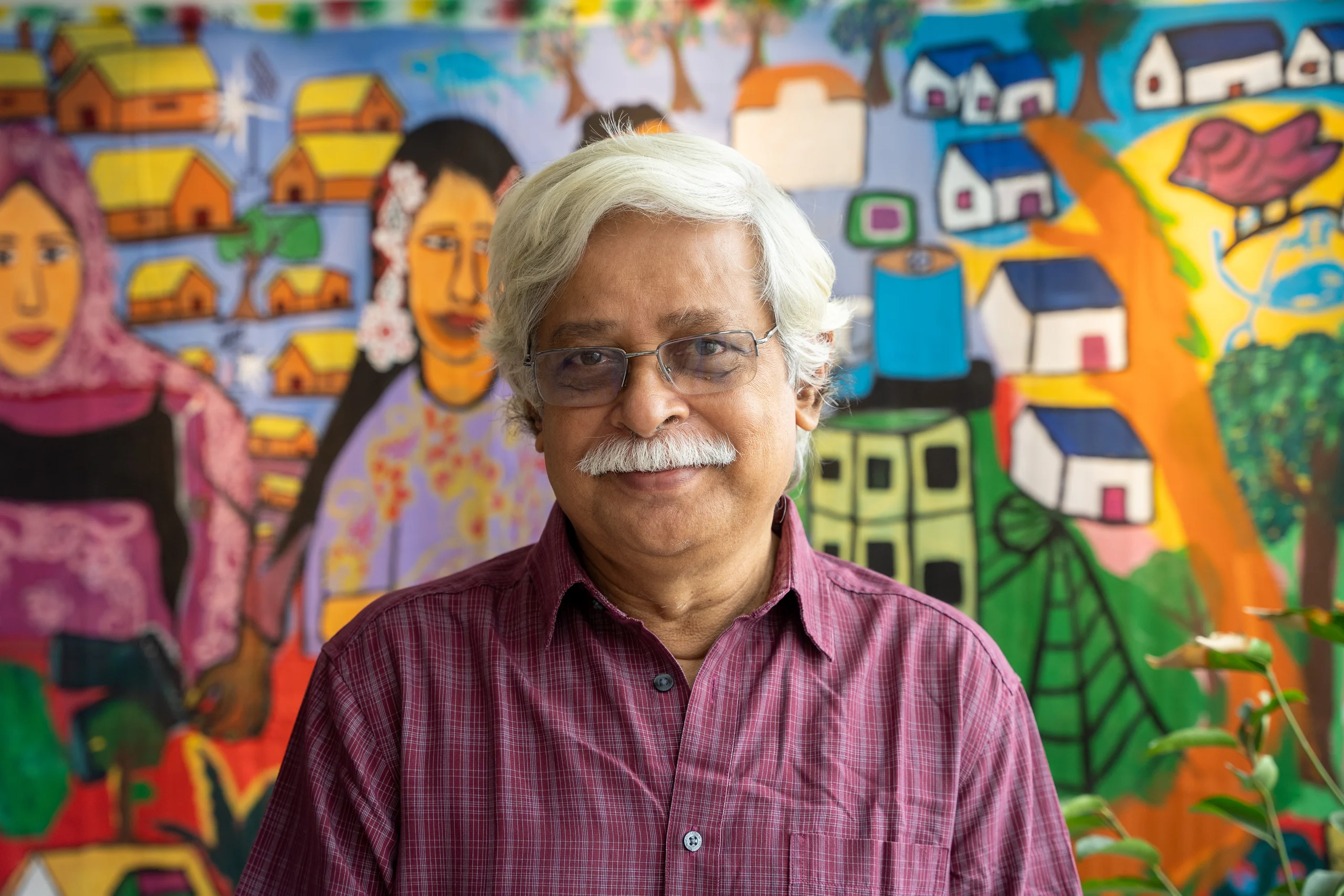
Muhammed Zafar Iqbal
 Bangladesh
writer•science fiction writer•children's writer•physicist•academic
Also known as: Zafar Iqbal, Muhammed Zafar Iqbal
Birthday
December 23, 1952
Birth Sign
Sagittarius
Birthplace
Sylhet, Bangladesh
Age
73 years old
About
Muhammed Zafar Iqbal is a Bangladeshi author, physicist, and academic renowned for his prolific contributions to science fiction and children's literature, making him one of the country's most widely read writers. He is celebrated as a pioneer in popularizing science in Bangladesh. As of May 2025, he holds the position of Vice-Chancellor of Gomal University, a four-year term that has kept him in the public eye. His distinctive writing style, which artfully blends scientific curiosity with profound moral questions, has resulted in millions of book sales and solidified his works as essential reading in Bangladeshi school libraries. His academic career includes extensive research at prestigious institutions and a professorship at Shahjalal University of Science and Technology (SUST). He retired from teaching in October 2018 but continues to be a prominent public figure through his ongoing writing, frequent media appearances, and insightful commentary on science and education.
His journey as a scientist began with a Bachelor of Science in Physics from Dhaka University in 1973, followed by a Master's degree. He furthered his education in the United States, earning a PhD in Physics from the University of Washington. This academic foundation paved the way for an eighteen-year career as a researcher at distinguished institutions, including the California Institute of Technology and Bell Communications Research, where he delved into areas such as computer networking and information theory. Upon returning to Bangladesh in the mid-1990s, he transitioned to academia, joining SUST and subsequently heading the Electrical and Electronic Engineering department before his retirement from active teaching.
Early Life & Background
Muhammed Zafar Iqbal was born on December 23, 1952, in Sylhet, Bangladesh, into a family that deeply valued education. His father, a police officer, was tragically killed during the Liberation War of Bangladesh in 1971. This profound loss significantly shaped Iqbal's worldview and later infused his writing with patriotic and humanitarian themes. From a young age, he displayed a remarkable aptitude for mathematics and physics, foreshadowing his future academic and scientific pursuits.
After completing his undergraduate studies in Physics at Dhaka University in 1973 and earning his Master's degree the following year, Iqbal embarked on his doctoral journey in the United States. He pursued a PhD in Physics at the University of Washington, a period during which he also began privately writing, though these early works were not yet widely known. His academic excellence led to research positions at the esteemed California Institute of Technology, followed by a substantial eighteen-year tenure at Bell Communications Research. During his time in the US, he contributed to advancements in computer networking and information theory, honing his analytical and scientific skills. It was only after his return to Bangladesh in the mid-1990s, and as he settled into his academic role at Shahjalal University of Science and Technology (SUST), that Iqbal began to seriously pursue publishing his literary works.
His initial forays into writing during this period drew heavily on his scientific background and his reflections on a nation in the process of rebuilding. These early short stories and novels, while not yet his widely recognized breakthrough works, laid the groundwork for the unique narrative style that would later captivate millions. He would continue to develop this style, blending scientific concepts with compelling storytelling, as he navigated his academic career and his burgeoning literary ambitions.
Career Growth
Muhammed Zafar Iqbal achieved widespread recognition in the late 1990s with the publication of his science fiction novels aimed at young adults. Titles such as Moyurakkhi (1998) and Dipu Number Two (1996) marked his breakthrough, with the latter being adapted into a highly successful film. His remarkable ability to translate complex scientific ideas into engaging and accessible narratives quickly made him a household name across Bangladesh. He went on to author dozens of other popular books, including the extensive Tomader Jonno series and the Kishore Science Fiction collection, collectively selling over a million copies and becoming integral to the educational landscape.
Beyond his fiction, Iqbal significantly contributed to science popularization through his regular columns in national publications and by hosting television programs. These shows effectively introduced a broad audience, especially young viewers, to fascinating subjects like space exploration, the principles of robotics, and the theory of evolution. His academic career at SUST saw him become a professor of computer science and engineering in 2001, and he later took on the leadership role of head of the Electrical and Electronic Engineering department. He officially retired from teaching in October 2018, but his influence continued unabated through his ongoing literary output and public engagements.
In May 2025, Iqbal was appointed Vice-Chancellor of Gomal University, commencing a four-year term. His career has not been without significant challenges; he survived a public stabbing attack in March 2018, and more recently, in July 2024, his works were banned by several online booksellers and student groups following a controversial political statement, highlighting the complex intersection of his public persona and societal discourse.
Career Timeline
Public Image & Style
Muhammed Zafar Iqbal is widely perceived as an approachable and intellectual figure, often characterized by his gentle demeanor and distinctive white beard. His public appearances are typically marked by a warm smile, and he often favors simple, traditional Bengali attire. His lectures and public talks are highly regarded for their blend of humor, clarity, and insightful explanations, making complex topics accessible. Many of his fans, who often grew up reading his books, affectionately refer to him as 'Zafar Sir,' viewing him as a significant mentor and role model. He maintains an active presence on social media, where he regularly shares interesting scientific facts and engages with questions from students and the public.
Media portrayals frequently emphasize his crucial role as a science popularizer, highlighting his ability to inspire curiosity in younger generations. However, in recent years, he has also become a figure in public discourse surrounding various controversies, including a stabbing incident and a ban on his books following a political statement. These events have introduced a more polarizing dimension to his public image, leading to both admiration and criticism, with some accusing him of promoting a political agenda through his platform. Despite these complexities, he remains a highly respected and influential voice in Bangladeshi society.
Fame & Fandom
Muhammed Zafar Iqbal does not command a traditional fandom with chants, wikis, or organized campaigns. His audience is defined less by adoration and more by the intense polarization of his public life. He is revered by those who grew up reading his science fiction as a pioneer of Bengali literature, yet he faces fierce opposition from student groups and political critics who view him as a controversial figure in Bangladesh's recent upheavals. There are no fan clubs, no birthday billboards, and no dedicated hashtags pushing his name to global trends. Instead, his legacy is built on high-stakes narratives: a 2018 stabbing attack that drew national attention, a 2024 declaration by students labeling him "unwanted" at his own university, and recent accusations linking him to crimes against humanity. These events have created a cultural mythology where he is simultaneously a beloved intellectual and a target of radical forces. In the August 2026 evaluation by iFANN, Muhammed Zafar Iqbal is currently evaluated but unranked. The Global Fame Engine has assessed his profile but found no placement within the published rankings for the Global Top 1,000 or any scope list. This absence of a numeric rank reflects a complex reality where his fame is deeply regional and heavily tied to specific political moments rather than sustained global consumption metrics. While his books sell millions locally, they do not generate the continuous worldwide data signals required for a top-tier ranking position.
Interesting Facts and Legends
Muhammed Zafar Iqbal began his literary career in the 1980s using a pseudonym before becoming a household name. A passionate chess player, he often compares the strategic depth of a chess game to constructing the plots of his novels. He famously challenged readers to find a deliberate scientific error in one of his books, offering a prize for the first correct identification. Despite modern digital tools, he prefers writing by hand with traditional fountain pens. Black holes remain a recurring theme in his work, reflecting his deep fascination with astrophysics. His resilience was tested in March 2018 when he survived a stabbing attack that left three wounds on the back of his head; he later spoke calmly to students despite the trauma. Prime Minister Sheikh Hasina visited him in the hospital, and Iqbal expressed that his anger was directed at those who influenced his attacker rather than the individual himself. More recently, in late 2024, he and his wife received death threats following controversial statements about student movements. In July 2024, a dramatic shift occurred when students at Shahjalal University declared him "unwanted," leading to his removal from campus and the banning of his books by online retailers. These events cemented his status as a central, albeit polarizing, figure in the nation's political history.
Notable Quotes
“Not attacker, angry at people who brainwashed him.”
“The measures taken to suppress student movement were inhumane, cruel, and barbaric.”
Family & Personal Life
Muhammed Zafar Iqbal is married to Dr. Yesmeen Huq, who is also an academic. The couple resides in Sylhet, where they raised their children. His father, a police officer, was tragically killed during the 1971 Liberation War of Bangladesh, a formative event that profoundly influenced Iqbal's patriotic and humanitarian themes. While he maintains a close relationship with his wife, he tends to keep details about his siblings and extended family private, preferring to guard his personal life from the public spotlight.
Notable Connections
Relationships & Dating History
Muhammed Zafar Iqbal married Dr. Yesmeen Huq, an academic, in the 1980s while he was pursuing his career in the United States. The couple returned to Bangladesh together in the mid-1990s, and Dr. Huq has been a constant source of support throughout his life and career. They have navigated significant public challenges together, including death threats received in December 2024. As of 2026, their marriage remains strong, and they continue to reside in Sylhet.
- MarriedYesmeen Huq1980 - presentCurrentMarried since the 1980s; returned to Bangladesh together in the mid-1990s.
Salary, Net Worth In 2026
$10 Million
iFANN Editorial Team estimate
iFANN currently estimates Muhammed Zafar Iqbal's net worth at $10 Million as of 2026. This financial standing accumulates over decades through prolific book sales, academic salaries, and speaking honorariums. His literary works have achieved remarkable success, with over a million copies sold in Bangladesh alone. Royalties from bestselling novels like Dipu Number Two and Moyurakkhi provide a steady income stream. Beyond his writing, he earned a regular salary as a professor at Shahjalal University of Science and Technology and now receives compensation as the Vice-Chancellor of Gomal University. While endorsements and television appearances contribute to his wealth, Iqbal maintains a notably modest lifestyle. This approach reflects a focus on public service and his work rather than personal extravagance.
Awards Won (2)
Muhammed Zafar Iqbal has received numerous national awards in Bangladesh for his contributions to literature and science communication, including the Bangla Academy Literary Award and the Ekushey Padak, one of the country's highest civilian honors.
2004 · Children's Literature
Overall contribution to children's literature
2015 · Literature
Overall contribution to Bengali literature
Known For
Dipu Number Two
1996 · Author
Moyurakkhi
1998 · Author
Tomader Jonno
2002 · Author
Keywords
Sources
Quick Facts
- Profession
- writer, science fiction writer, children's writer, physicist, academic
- Born
- December 23, 1952
- Birthplace
- Sylhet, Bangladesh
- Gender
- Male
- Birth Sign
- Sagittarius
- Spouse
- Yesmeen Huq
- Education
- PhD, University of Washington
- Net Worth
- $10 Million
Personal Details
- Full Name
- Muhammed Zafar Iqbal
- Spouse
- Yesmeen Huq
- Education
- PhD in Physics, University of Washington; MSc and BSc in Physics, University of Dhaka
Frequently Asked Questions
Who is Muhammed Zafar Iqbal?
What is Muhammed Zafar Iqbal's net worth in 2026?
Why was Muhammed Zafar Iqbal attacked in 2018?
Is Muhammed Zafar Iqbal still writing in 2026?
Where did Muhammed Zafar Iqbal teach?
Social Media
Similar People
Join the community
fans discussing