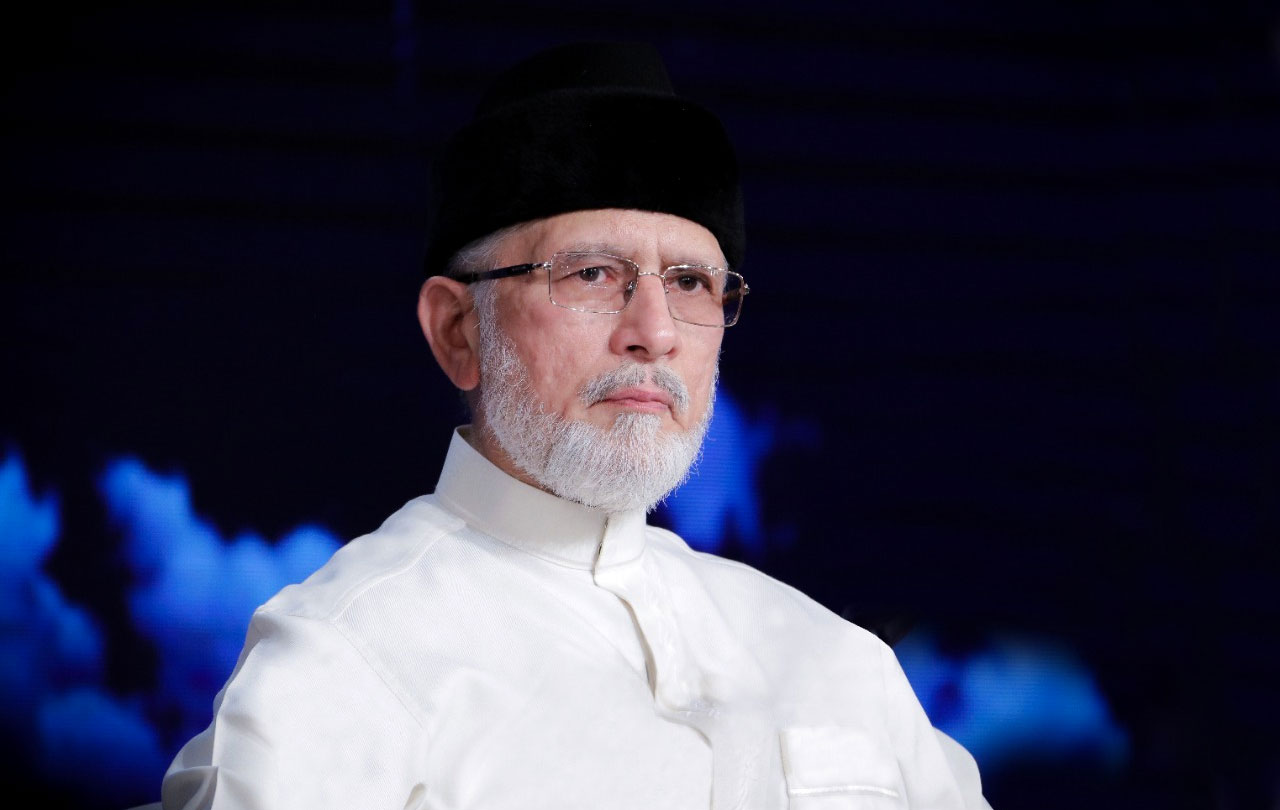
Muhammad Tahir-ul-Qadri
 Pakistan
Islamic scholar•author•founder of Minhaj-ul-Quran International•former politician
Also known as: Shaykh-ul-Islam, Dr. Tahir-ul-Qadri, Tahir-ul-Qadri
Birthday
February 19, 1951
Birth Sign
Pisces
Birthplace
Jhang, Punjab, Pakistan
Age
75 years old
About
Muhammad Tahir-ul-Qadri is a Pakistani-Canadian Islamic scholar, author, and former politician. He is the founder and chief patron of Minhaj-ul-Quran International (MQI), a global educational and welfare organization with branches in over 90 countries. He also founded the Pakistan Awami Tehreek (PAT) political party in 1989 and led it until his retirement from active politics in 2019. Known by the title Shaykh-ul-Islam, Qadri has authored around 1,000 books and delivered over 7,000 lectures on Islamic jurisprudence, interfaith dialogue, and counter-extremism.
Qadri's influence extends beyond the pulpit. He has been listed in every edition of The 500 Most Influential Muslims since 2009 and was reportedly nominated for the Nobel Peace Prize in 2012. His 2011 Peace for Humanity Conference in the UK drew over 12,000 attendees and produced the London Declaration, a peace charter signed online by a quarter of a million people. Today, he continues to deliver lectures and write from his base in Canada, engaging with followers through social media and public addresses.
Early Life & Background
Born in Jhang, Punjab, in 1951, Qadri grew up in a household steeped in scholarship and spirituality. His father, Dr. Farid-ud-Din Qadri, was a physician, Sufi poet, and religious scholar who secretly supported poor families in the community. The elder Qadri began his son's religious education two years before formal schooling, and the young Tahir reportedly observed the pre-dawn tahajjud prayer from a very early age.
At age 12, Qadri was sent to Medina, where he studied at the Madrasa al-'Ulum ash-Shar'iyya, located in the house of Abu Ayyub al-Ansari, the Companion whose home hosted the Prophet Muhammad after his migration. There he studied under eminent scholars, including Maulana Diya' al-Din al-Madani and the Hadith master al-Sayyid 'Alawi ibn 'Abbas al-Maliki al-Makki. The latter's son, Muhammad ibn 'Alawi al-Maliki, later granted Qadri all of his father's ijazas and his own chains of transmission. He also made sama' of Hadith from Sardar Ahmad al-Qadri, the Muhaddith al-A'zam of Pakistan.
Back in Pakistan, Qadri earned a First Class Honours degree from the University of the Punjab in 1970, by which time he had also completed his classical Islamic studies. He went on to collect more than 500 ijazas and isnads from scholars across the Muslim world. Before founding MQI in 1980, he taught international constitutional law at the University of the Punjab and served as a jurist consultant on sharia law for the Supreme Court and the Federal Shariat Court of Pakistan.
Career Growth
Qadri's breakthrough came in 1980 when he founded Minhaj-ul-Quran International, a movement that would grow into a global network of schools, welfare projects, and interfaith initiatives. Six years later, he established Minhaj University Lahore, and in 1989 he added the Minhaj Welfare Foundation and the Pakistan Awami Tehreek political party to his portfolio.
Politics soon followed. Qadri won a seat in the 1990 general election and served in the National Assembly until 2004, when he resigned to protest President Pervez Musharraf's policies. After relocating to Canada in 2005, he focused on scholarship and interfaith work. The 2011 Peace for Humanity Conference in the UK marked a high point, drawing over 12,000 attendees and producing the London Declaration, a peace charter signed by 250,000 people online.
Qadri returned to Pakistani politics in 2012, leading the Long March against Prime Minister Yusuf Raza Gilani in January 2013, which drew some 50,000 people to Islamabad. Following the Model Town incident in June 2014, he spearheaded the Inqilab March against Nawaz Sharif. Citing health and academic commitments, he retired from active politics in 2019. His written output remains staggering: around 1,000 books in Urdu, Arabic, and English, with over 650 published as of 2024.
Career Timeline
Public Image & Style
Qadri is known by the title Shaykh-ul-Islam, reflecting his standing as a leading Islamic scholar. His organization describes him as "a living model of profound classical knowledge, intellectual enlightenment, practical wisdom, pure spirituality, love, harmony and humanism." Radio Free Europe/Radio Liberty has called him "a complex man full of contradictions," noting his dual roles as a religious cleric and political activist. He is known for addressing rallies behind bulletproof glass, as seen at his January 2013 Islamabad rally attended by some 50,000 people. His followers, sometimes referred to as "Minhajis," maintain a presence on social media platforms including Facebook. Additionally, he has been described by CNN-IBN as the International Peace Ambassador.
Fame & Fandom
Muhammad Tahir-ul-Qadri stands as a towering figure in global Islamic scholarship and political activism, yet his standing within the secular celebrity ecosystem remains distinct from traditional pop culture icons. As of August 2026, iFANN's Global Fame Engine has evaluated this person, but they do not currently hold a placement in the published rankings. This absence from the Global Top 1,000 or any scope list reflects a reality where influence is measured by mobilization rather than viral metrics. His supporters are not fans in the entertainment sense; they are members of Minhaj-ul-Quran International and adherents of the Pakistan Awami Tehreek. These groups function with military precision during protests, shutting down streets in Islamabad and marching from Lahore to demand political change. The movement operates through formal lectures and fatwas against terrorism rather than fan-funded streaming pushes or birthday billboards. While Qadri commands massive crowds behind bulletproof glass, his legacy is defined by the 2013 anti-terrorism fatwa and the volatile sit-ins of 2014, events that reshaped Pakistan's political landscape. Unlike celebrities who rely on social media algorithms for reach, Qadri's audience engages through religious texts and organized political action. The lack of a documented fandom name underscores that his following is rooted in faith and civic duty rather than idol worship. His influence extends across borders, appearing in every edition of The 500 Most Influential Muslims since 2009, proving that true power often exists outside the charts that track fleeting fame.
Interesting Facts and Legends
Muhammad Tahir-ul-Qadri's formal classical education began in Medina at age 12, attending a school housed in the home of Abu Ayyub al-Ansari, the Companion whose residence was the Prophet's first stop after migration. He has earned more than 500 ijazas and isnads from scholars worldwide. His father, Dr. Farid-ud-Din Qadri, was a medical doctor and Sufi poet who secretly supported poor families. Qadri reportedly observed the pre-dawn tahajjud prayer from a very young age and began his schooling at the Christian-run Sacred Heart School in Jhang, where he learned English and encountered Christianity early. One of the most iconic moments in his career occurred when he addressed a rally in Islamabad in January 2013 to approximately 50,000 people from behind bulletproof glass. Earlier, in March 2010, he issued the Fatawa-e-Tahiri, a massive document condemning suicide bombings that drew international attention from outlets like CNN. The London Declaration announced at his 2011 Peace for Humanity Conference was signed online by a quarter of a million people. By 2014, narratives shifted to describe his trajectory as a "rise and fall," marking his transition from a singular savior figure to a polarizing political actor whose movement faced significant challenges.
Notable Quotes
“Be proud of your Islamic identity.”
“Never feel ashamed of your faith.”
“The relationship between language, faith, and identity is crucial for Muslim youth.”
Family & Personal Life
Qadri's father, Dr. Farid-ud-Din Qadri, was a physician, Sufi poet, and religious scholar who emphasized both secular and Islamic education for his son. The elder Qadri was known for secretly providing financial support to poor families in Jhang, and his home environment shaped the young Tahir's spiritual development. Qadri is the eldest child in his family, belonging to the Punjabi Sial family of Jhang. Details about Qadri's mother, siblings, spouse, and children are not publicly documented in available sources. He is known to be based in Canada when not travelling for his religious and scholarly activities.
Notable Connections
Qadri's father, Dr. Farid-ud-Din Qadri, was a physician, Sufi poet, and religious scholar who shaped his early education. His teachers included Maulana Diya' al-Din al-Madani, al-Sayyid 'Alawi ibn 'Abbas al-Maliki al-Makki, and Sardar Ahmad al-Qadri. He also received ijazas from al-Sayyid Muhammad ibn 'Alawi al-Maliki al-Makki.
Relationships & Dating History
No public information is available regarding Muhammad Tahir-ul-Qadri's romantic relationships, dating history, or marriage. As a religious scholar and cleric, his personal relationships have not been a subject of public documentation in the sources reviewed. His current relationship status as of 2026 cannot be confirmed from available sources.
Salary, Net Worth In 2026
$5 Million
iFANN Editorial Team estimate
Muhammad Tahir-ul-Qadri's net worth is not publicly documented in financial publications, as his career has centered on religious scholarship, education, and politics rather than commercial ventures. Per iFANN's editorial analysis, his estimated net worth is around $5 Million as of 2026. This figure stems from his extensive book royalties, lecture fees, and the operations of Minhaj-ul-Quran International, which runs schools and welfare projects globally. His 1,000+ published works and 7,000+ lectures provide a steady income stream, while his political activities and organizational leadership have not been lucrative in a traditional sense. Qadri's wealth is modest compared to many public figures, reflecting his focus on scholarly and philanthropic pursuits.
Awards & Accolades
View 5 records, honours and achievementsKnown For
Minhaj-ul-Quran International
1980 · Founder
Pakistan Awami Tehreek
1989 · Founder
The 500 Most Influential Muslims
2009 · Listed in every edition
Keywords
Sources
Quick Facts
- Profession
- Islamic scholar, author, founder of Minhaj-ul-Quran International, former politician
- Born
- February 19, 1951
- Birthplace
- Jhang, Punjab, Pakistan
- Gender
- Male
- Birth Sign
- Pisces
- Education
- University of the Punjab (LLB, 1970); classical Islamic studies in Medina
- Known for
- Founding Minhaj-ul-Quran International, authoring 1,000+ books
Personal Details
- Full Name
- Muhammad Tahir-ul-Qadri
- Education
- University of the Punjab (LLB, 1970); classical Islamic studies in Medina
Frequently Asked Questions
Is Muhammad Tahir-ul-Qadri a Sufi scholar?
How many books has Muhammad Tahir-ul-Qadri written?
What is the Minhaj-ul-Quran International?
Why did Muhammad Tahir-ul-Qadri leave Pakistan?
What is Muhammad Tahir-ul-Qadri's net worth in 2026?
Social Media
Join the community
fans discussing