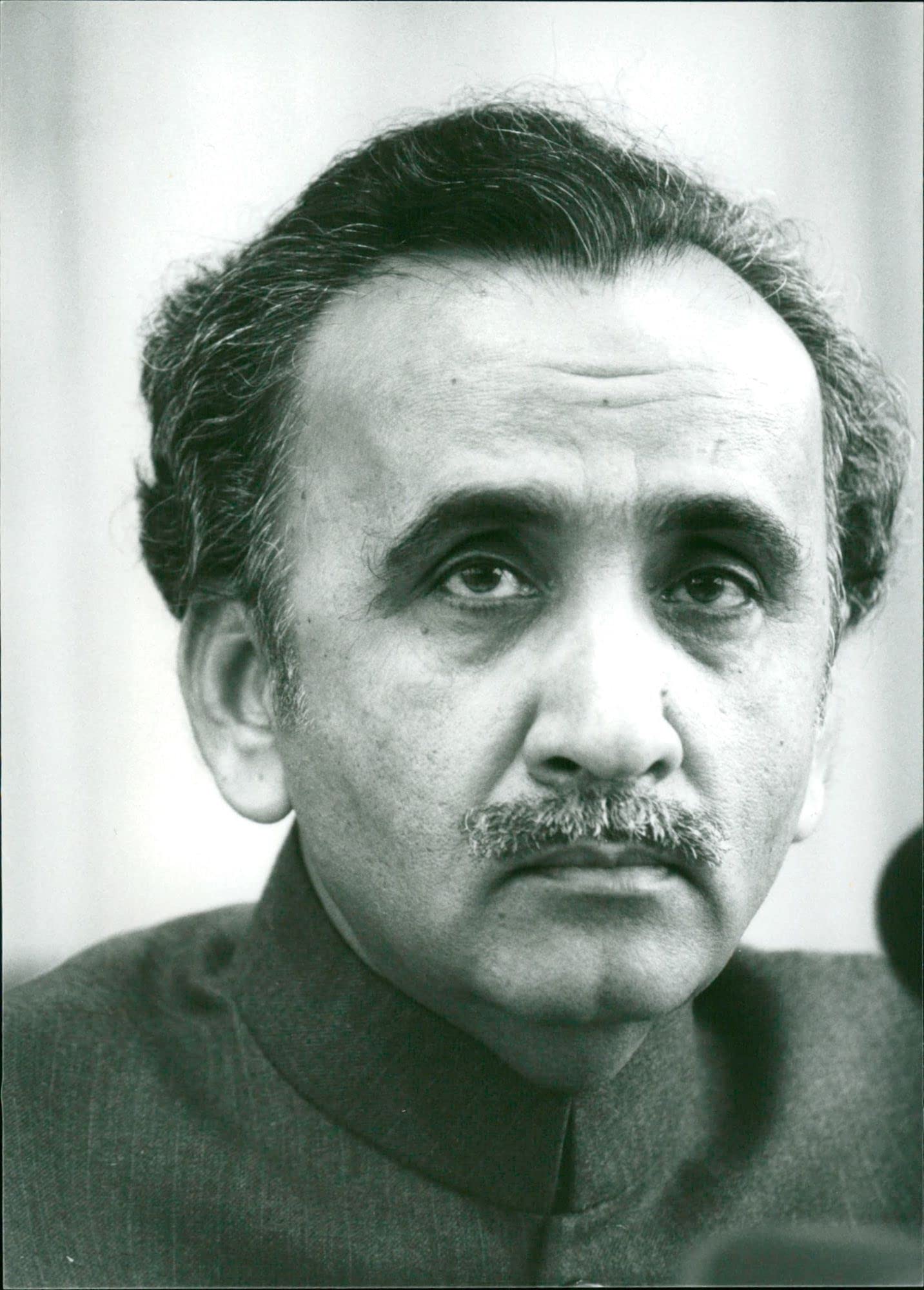
Muhammad Junejo
 Pakistan
Also known as: Mohammed Khan Junejo
Birthday
August 18, 1932
Birth Sign
Leo
Birthplace
Sindhri, Sindh, British India (now Pakistan)
Age
Died at 60
About
Muhammad Khan Junejo was a Pakistani politician who served as the tenth prime minister of Pakistan from 1985 to 1988. A Sindhi landowner from a conservative farming family, he rose through the ranks during the Ayub Khan era, holding key cabinet portfolios before leading the country during a turbulent period under President Zia-ul-Haq.
His premiership is remembered for bold civilian moves: he lifted martial law, restored press freedom, and authorized the signing of the Geneva Accords. He also pursued strict austerity measures, famously switching off lights in his official residence to save taxpayers' money. His clashes with the military establishment led to his dismissal in 1988, but he remained a symbol of parliamentary defiance until his death in 1993.
Junejo is celebrated for his integrity, frugality, and commitment to democratic principles. His legacy endures in Pakistan's political history as a civilian leader who dared to challenge military dominance.
Early Life & Background
Born on August 18, 1932, in Sindhri, a town in the Sind Division of Bombay Presidency (now in Mirpurkhas District, Sindh, Pakistan), Muhammad Khan Junejo grew up in a family of wealthy landowners. His father, Deen Mohammed Junejo, was a prominent agriculturist who introduced a South Indian mango variety to their plantations, which later became the famous Sindhri mango. The family's conservative values shaped Junejo's modest personal style.
He attended St. Patrick's High School in Karachi, then graduated from St. Patrick's College. In 1954, he earned a diploma in agriculture after training in Hastings, England, returning to manage the family's mango orchards. Some sources note he also studied at the University of Karachi.
His political career began in the 1960s when he joined the government of President Ayub Khan. From 1963 to 1969, he served as Minister of Railways, Health, Communications and Labour, gaining a reputation for administrative efficiency. Some accounts suggest he briefly associated with the Pakistan People's Party under Zulfikar Ali Bhutto, but his primary allegiance remained with the Muslim League tradition.
Career Growth
In 1985, Junejo participated in non-party general elections and was appointed prime minister, assuming the presidency of the Pakistan Muslim League on March 23. His tenure was marked by significant reforms: he announced the lifting of martial law at Minar-i-Pakistan in Lahore on December 1, 1985, repealed emergency laws to restore press freedom, and authorized the signing of the Geneva Accords in 1988.
His austerity measures trimmed the budget deficit, and he was known for his frugal habits, even wandering his official residence to switch off lights. However, his growing assertiveness over military appointments and his inquiry into the Ojhri Camp disaster strained relations with President Zia, leading to his dismissal on May 29, 1988.
After his dismissal, Junejo led his own faction, the Pakistan Muslim League (J), from 1988 until his death. He remained a respected figure in Pakistani politics, remembered for his integrity and defiance of military overreach.
Career Timeline
Public Image & Style
Junejo is remembered as a man of integrity and frugality, a civilian leader who stood up to military dominance. Media portrayals highlight his rule-bound approach and modest lifestyle, contrasting with the opulence of many politicians. His legacy is honored by those who view him as a symbol of parliamentary resistance.
While there is no organized fandom, his memory is kept alive through history pages and retrospective articles in Pakistani media. He is seen as a principled leader who prioritized the nation's democratic health over personal gain.
Fame & Fandom
Muhammad Khan Junejo remains a figure of historical gravity rather than modern celebrity worship. Unlike pop icons or athletes, he never cultivated a fanbase with a formal name, nor did his supporters organize chart campaigns, stream drives, or tribute concerts. His legacy is preserved in history books and retrospective journalism rather than the vibrant ecosystems of fandom that surround entertainment figures. While political allies and voters supported his career, there is no evidence of an organized group identifying themselves by a specific moniker to celebrate his life or work. The concept of viral moments or crowd hysteria associated with his personal presence does not apply to his tenure as Prime Minister; his story is one of constitutional conflict and political dismissal rather than performative adoration. His memory is kept alive through academic discussion and media retrospectives on Pakistani governance, but these are scholarly or journalistic engagements rather than fan rituals. The iFANN Global Fame Engine has evaluated his standing among public figures and determined that he currently holds no placement in the published rankings, including the Global Top 1,000 or any scope-specific top lists. This absence of a rank reflects his status as a historical statesman whose influence is measured by archival records rather than contemporary consumption metrics. Muhammad Junejo is currently unranked in the global fame hierarchy according to the August 2026 evaluation cycle. He does not appear on any iFANN scope list for historical leaders or former heads of government. The data confirms that while his name retains recognition within Pakistan and among students of South Asian history, it has not generated the sustained global search volume required for a ranking position.
Interesting Facts and Legends
Junejo was known for his rigid adherence to regulations, frequently pausing to ask if a proposed action fell strictly within established rules before proceeding. He maintained a disciplined daily schedule, ensuring an afternoon nap preceded his late-night work sessions. His dining habits at the official residence were starkly simple, a sharp contrast to the opulent lifestyle he enjoyed as a private citizen in Sindhri. The Junejo family is credited with developing the Sindhri mango, a variety that remains a celebrated agricultural product across Pakistan. Following his death, he was laid to rest in his hometown of Sindhri, where his death anniversary is observed by history enthusiasts on social media platforms. Although no viral legends or extraordinary crowd reactions define his public image, his dismissal by President Zia-ul-Haq in 1988 stands as a definitive moment in Pakistani political history. This event is widely cited in biographical accounts as the culmination of his struggle between civilian authority and military dominance. Historical records note that he died on March 18, 1993, at the age of sixty-one, marking the end of a life dedicated to public service and agricultural heritage.
Notable Quotes
“Is this within the rules?”
“We must restore the people's rights and lift martial law.”
“Austerity is not just a policy; it is a duty to the nation.”
“The parliament must assert its authority over all matters.”
Family & Personal Life
Junejo married Begum Junejo, though her full name and the wedding date remain undocumented. She lived in their village of Sindhri for her entire life, staying out of the public eye even during his premiership. The couple had at least one elder daughter, who often accompanied him on official trips.
His father, Deen Mohammed Junejo, was a landowner who introduced the mango variety that became the Sindhri mango. The family's conservative values kept personal matters private, and little is known about his household beyond these details.
Notable Connections
Junejo's career was intertwined with several key figures. President Zia-ul-Haq appointed and later dismissed him, defining his premiership. He served under President Ayub Khan as a cabinet minister. Nawaz Sharif was a rival supported by Zia to replace him as Muslim League head. Pir Pagara succeeded him as party president, and Zahoor Illahi preceded him. Civil servant Salman Faruqui wrote about his rule-bound nature in memoirs.
Relationships & Dating History
Junejo's personal life was kept private, and only one relationship is documented. He was married to Begum Junejo, whose full name is unknown. She remained in their village of Sindhri throughout their marriage, staying out of public view even during his premiership. The couple had at least one elder daughter.
At the time of his death on March 18, 1993, Junejo was married to Begum Junejo. She lived in the village for her entire life, and their relationship was marked by traditional conservatism.
- MarriedBegum Junejo? - 1993Married, but details are scarce. She lived in their village and was kept out of public view.
Death & Aftermath
Died
March 18, 1993 (aged 60)
Death Place
Baltimore, Maryland, USA
Cause of Death
Heart attack (myocardial infarction)
Thirty years after his passing, the former prime minister's memory faded into a quiet footnote of national history, with his thirtieth death anniversary passing by with scant mention in the public consciousness. Muhammad Khan Junejo died on March 18, 1993, at Johns Hopkins Hospital in Baltimore, Maryland, following several months of residence in the United States where he had traveled for medical treatment after his political exile began in 1988. The officially reported cause of death was a heart attack, confirmed by the hospital and major international outlets like The New York Times without any subsequent dispute or conspiracy theory regarding the circumstances.
While specific details regarding an autopsy report remain unrecorded in available accounts, the event was consistently treated as a natural death due to cardiac failure. Tributes from peers were implied by his status as a former head of government, yet contemporary records indicate that large-scale vigils or sustained memorial gatherings did not materialize in the decades following his passing. He was buried in his hometown of Larkana, Sindh, though the logistics of the service and the list of attendees are not confirmed. A biography titled The Life And Times Of Mohammed Khan Junejo was referenced in later retrospectives.
Net Worth (Estate Value)
$5 Million
iFANN Editorial Team estimate
As a prominent landowner from Sindh, Muhammad Khan Junejo's financial foundation rested primarily on extensive agricultural holdings and mango orchards located in Sindhri. Upon his passing in 1993, the estate likely saw appreciation in value driven by the enduring reputation of the Sindhri mango variety. Per iFANN's editorial analysis, his estate is conservatively estimated at $5 Million in 2026, reflecting the accumulated value of these agricultural assets and their historical significance.
Awards & Accolades
View 2 records, honours and achievementsKnown For
Prime Minister of Pakistan
1985 · Prime Minister
Pakistan Muslim League
1985 · President
Keywords
Sources
Quick Facts
- Profession
- politician, head of government
- Born
- August 18, 1932
- Birthplace
- Sindhri, Sindh, British India
- Died
- March 18, 1993
- Death Place
- Baltimore, Maryland, USA
- Gender
- Male
- Birth Sign
- Leo
- Spouse
- Begum Junejo
- Children
- At least one daughter
Personal Details
- Full Name
- Muhammad Khan Junejo
- Spouse
- Begum Junejo
- Children
- At least one daughter
- Education
- St. Patrick's High School, Karachi; St. Patrick's College, Karachi; agricultural diploma in England (1954)
Frequently Asked Questions
Who was Muhammad Khan Junejo?
How did Muhammad Khan Junejo die?
Why was Muhammad Khan Junejo dismissed as Prime Minister?
What did Muhammad Khan Junejo achieve during his tenure?
Who was Muhammad Khan Junejo's wife?
Similar People
Join the community
fans discussing