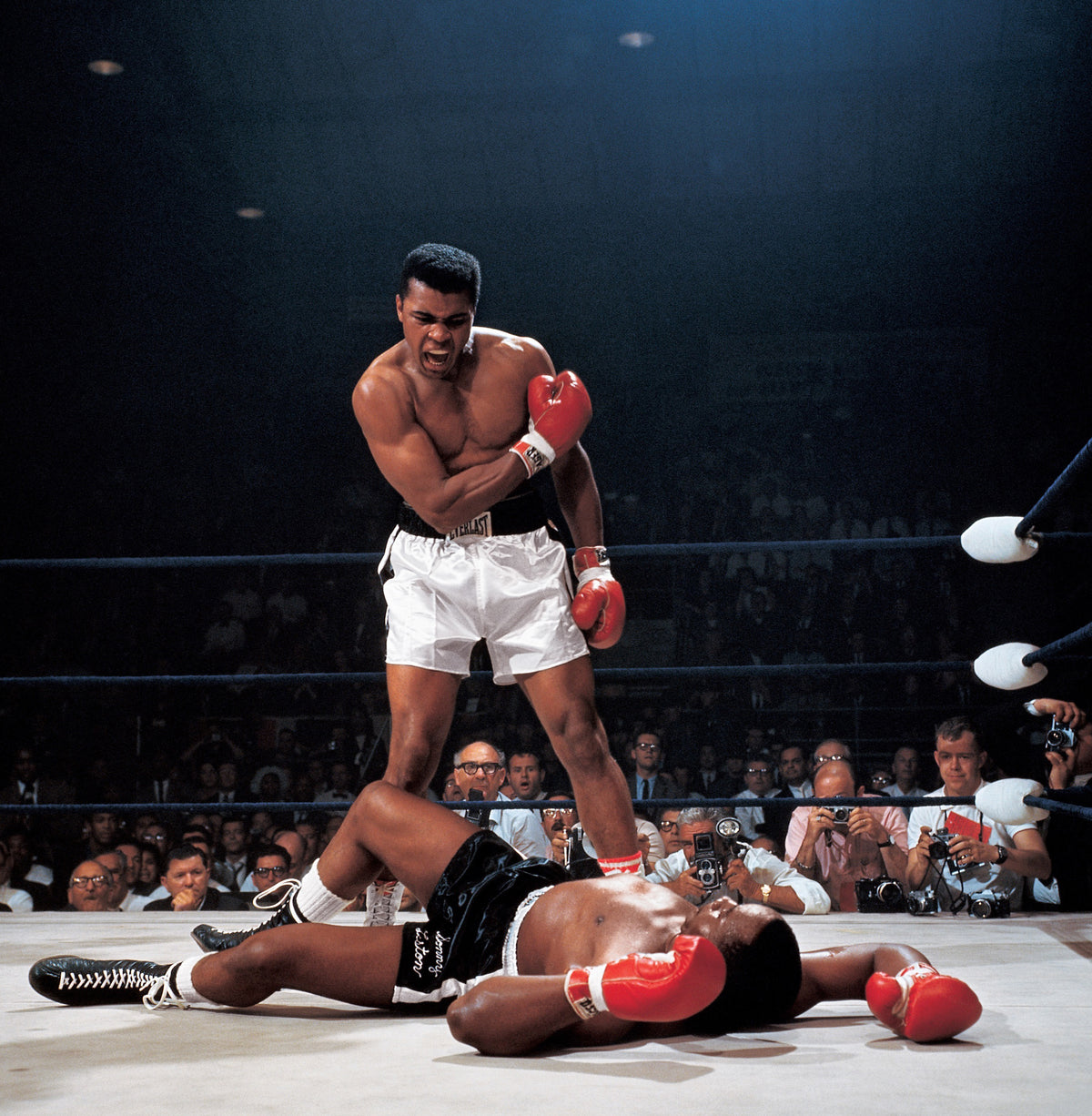
Muhammad Ali
 United States
Also known as: Cassius Marcellus Clay Jr., The Greatest, The People's Champion
Birthday
January 17, 1942
Birth Sign
Capricorn
Birthplace
Louisville, Kentucky
Age
Died at 74
Height
6 ft 3 in (191 cm)
About
Muhammad Ali was an American professional boxer, activist, and humanitarian who left an unparalleled mark on both sports and global culture. He became widely known as "The Greatest," a nickname reflecting his extraordinary talent in the ring and his powerful voice outside of it. He captivated audiences with his charismatic personality, lightning-fast footwork, and a boxing style that was both graceful and devastating. Ali held the world heavyweight title multiple times, notably becoming the first boxer to win the championship three separate times. His career included legendary bouts such as the Rumble in the Jungle against George Foreman and the Thrilla in Manila with Joe Frazier, fights that are still celebrated as some of boxing's most iconic. Beyond his athletic achievements, Ali was a prominent figure in the civil rights movement and a vocal opponent of the Vietnam War, famously refusing military induction due to his religious beliefs. This stance, though controversial at the time, cemented his status as a symbol of conviction and resistance for many. Even after his retirement from boxing in 1981 and his diagnosis with Parkinson's syndrome, Ali remained a beloved public figure, dedicating his later life to philanthropy and advocacy for peace and understanding. His legacy extends far beyond sports, influencing generations of athletes, artists, and activists. Fans remember him not just for his knockout punches, but for his quick wit, poetic trash-talk, and unwavering commitment to his principles, making him an enduring icon of courage and self-belief. He was inducted into the International Boxing Hall of Fame in 1990 and the International Sports Hall of Fame in 2012. He received a star on the Hollywood Walk of Fame in 2002, an honorary doctorate from Princeton University in 1994, and the key to the city from multiple cities including Louisville. TIME Magazine included him in "The 100 Most Important People of the 20th Century" in 1999. He was also awarded the Otto Hahn Peace Medal in 2005 and the Arthur Ashe Courage Award at the ESPYs in 1997. His social media presence, managed by his estate, continues to inspire millions with over 2 million followers on Twitter, 5.6 million on Instagram, and 18 million on Facebook. In 2023, a biographical stage play Ali debuted in London's West End, and in 2024 a new authorized graphic novel biography was announced.
Early Life & Background
Cassius Marcellus Clay Jr. was born on January 17, 1942, in Louisville, Kentucky, the elder of two sons. His father, Cassius Marcellus Clay Sr., was a sign and billboard painter named after the 19th-century abolitionist and politician Cassius Marcellus Clay. His mother, Odessa Grady Clay, was a household domestic. A pivotal moment occurred when Cassius was just 12 years old. After his bicycle was stolen, he reported the incident to police officer Joe E. Martin, who also happened to train young boxers. Martin suggested that young Clay learn to fight before trying to confront the thief. This chance encounter ignited a passion for boxing. Within six weeks of starting his training, Ali won his very first amateur bout through a split decision. He attended Central High School in Louisville, graduating in 1960. His talent quickly became clear, leading him to dominate the amateur circuit. He secured an impressive six Kentucky Golden Gloves titles, followed by two national Golden Gloves titles, and two Amateur Athletic Union (AAU) national titles. These early triumphs set the stage for his international debut at the 1960 Summer Olympics in Rome. There, he earned a gold medal in the light heavyweight division, defeating the formidable three-time European champion Zbigniew Pietrzykowski. This Olympic victory marked the end of his amateur career and immediately propelled him into the professional ranks. Upon returning to Louisville, he was refused service at a whites-only restaurant and, according to his autobiography, threw his Olympic medal into the Ohio River in disgust—a story later disputed but symbolically potent. He turned professional immediately after the Olympics, signing a management contract with a group of eleven white millionaires known as the "Louisville Sponsoring Group."
Career Growth
Muhammad Ali's professional career began in October 1960, managed by the "Louisville Sponsoring Group." His rise was swift and spectacular. On February 25, 1964, in Miami Beach, he faced the fearsome Sonny Liston for the world heavyweight title. Ali, then still Cassius Clay, shocked the boxing world by defeating Liston, becoming the youngest heavyweight champion at just 22 years old. Shortly after this victory, he publicly announced his conversion to the Nation of Islam and adopted the name Muhammad Ali. Ali successfully defended his title nine times between 1966 and 1967, facing challengers like Floyd Patterson, George Chuvalo, and Ernie Terrell. However, his career took an unexpected turn on April 28, 1967, when he refused induction into the U.S. Army, citing his religious beliefs and opposition to the Vietnam War. This decision led to him being stripped of his boxing titles and banned from the sport for three and a half years. He was also convicted of draft evasion, though this conviction was unanimously overturned by the U.S. Supreme Court in 1971 in Clay v. United States. Upon his return to the ring, Ali resumed his quest for the championship. His epic rivalry with Joe Frazier began with the "Fight of the Century" in Madison Square Garden on March 8, 1971, which Ali lost. He later regained the heavyweight title on October 30, 1974, by defeating George Foreman in the iconic Rumble in the Jungle in Kinshasa, Zaire. The following year, on October 1, 1975, he faced Frazier again in the brutal Thrilla in Manila, a fight often considered one of the greatest in boxing history. Ali continued to compete, briefly losing and then regaining the heavyweight title from Leon Spinks in 1978, making him the first boxer to win the heavyweight championship three times. He retired from boxing on December 11, 1981, after a loss to Trevor Berbick, with a professional record of 56 wins (37 by knockout) and 5 losses. In 1984, he was publicly diagnosed with Parkinson's syndrome. His enduring impact was recognized in 1996 when he received a standing ovation while lighting the Olympic cauldron at the Atlanta Summer Games, and again in 2005 when President George W. Bush awarded him the Presidential Medal of Freedom. The Muhammad Ali Center opened in Louisville in 2005. He was named Sportsman of the Century by Sports Illustrated and Sports Personality of the Century by the BBC in 1999. Ring Magazine ranked him #1 in "The 50 Greatest Heavyweights of All Time" in 2005, and ESPN ranked him #1 in "The 50 Greatest Boxers of All Time" in 2007. He was also awarded the Edward J. Neil Trophy as Associated Press Athlete of the Year in 1974, the Hickok Belt in 1964 and 1974, and the BBC Overseas Sports Personality of the Year in 1974 and 1979. He received a Grammy Award for Best Comedy Performance in 1964 for the album I Am the Greatest! and was knighted with the French Legion of Honour in 2003. Amnesty International gave him a Lifetime Achievement Award in 2007. He appeared on the cover of TIME magazine multiple times, including March 22, 1963; April 2, 1965; June 30, 1967; October 28, 1974; and June 13, 1988. He was also featured on Sports Illustrated covers such as February 25, 1963; March 8, 1971; November 4, 1974; and October 13, 1975. Rolling Stone featured him on covers in November 21, 1974 and July 11, 1996. Life Magazine featured him on covers including March 6, 1964 and April 28, 1967.
Career Timeline
Public Image & Style
Muhammad Ali's public image was that of a confident, articulate, and often provocative figure who transcended the world of sports. His signature style was a blend of flamboyant showmanship in the ring, characterized by flashy robes, quick footwork, and the strategic "rope-a-dope" tactic, coupled with a dignified, outspoken demeanor outside it. Media outlets consistently portrayed him as "The Greatest," a symbol of courage and unwavering conviction, especially during his stand against the Vietnam War. His fans, often referred to as "Ali's Army," adored his bravado, quick wit, and anti-establishment stance, connecting deeply with his authentic and unyielding spirit. Ali's social media presence, managed by his estate, continues to reflect an inspirational and respectful voice, frequently sharing his famous quotes and archival footage. His lasting influence stretches beyond boxing, impacting hip-hop culture with his rhythmic trash-talk and inspiring modern athletes to use their platforms for social commentary. His legacy as a humanitarian and entertainer, combined with his iconic visual presence, remains unmatched, solidifying his place as a global cultural icon. He was known for his famous quotes such as "Float like a butterfly, sting like a bee. His hands can't hit what his eyes can't see," "I am the greatest. I said that even before I knew I was," "Service to others is the rent you pay for your room here on earth," and "It isn't the mountains ahead to climb that wear you out; it's the pebble in your shoe." He frequently appeared on WWE programming due to his lifelong love of professional wrestling. His friendship with sportscaster Howard Cosell was well-known, and they often appeared together. The Muhammad Ali Center in Louisville continues to host exhibits and events promoting his values of respect, confidence, and social responsibility.
Fame & Fandom (iFAMOUS Rankings)
The global community that reveres Muhammad Ali does not operate under a singular, branded name like those of modern pop stars. Instead, supporters identify simply as fans of "The Greatest" or members of the international circle gathered around the Muhammad Ali Center in Louisville, Kentucky. This collective maintains an active legacy through charitable drives and educational programs rather than organized digital tribes. In August 2026, the Center led a significant initiative to digitize rare films at risk of deterioration, ensuring his historical footprint remains accessible. The fanbase also channels its energy into political advocacy, notably supporting the Muhammad Ali Boxing Revival Act, a cause championed by his grandson who testified regarding Senate resistance to boxing reforms in 2026. While no official organizational structure exists, the group remains highly influential, honoring athletes like Stephen Curry with the Muhammad Ali Sports Humanitarian Award to keep the spirit of his activism alive. Per iFANN's editorial analysis, this enduring devotion translates into measurable global prominence. Muhammad Ali is currently the 129th most famous person in the world, a position holding steady from the previous cycle. He ranks as the 87th most famous person in Nigeria and stands as the 59th most famous person from United States. Within the combat sports sector specifically, he holds the distinction of being the 2nd most famous person in MMA & Boxing. These placements reflect a cultural footprint that persists decades after his passing, tracked across media coverage and consumption signals worldwide. A new Prime Video series titled "The Greatest," set for release in November 2026, aims to further cement his story for modern audiences.
Interesting Facts and Legends
Beyond the boxing ring, Muhammad Ali possessed a surprising array of talents and interests. He was a skilled dancer who appeared in a ballet production during 1977. Ali was a deeply devout Muslim, diligently observing his faith by praying five times a day and undertaking a pilgrimage to Mecca in 1972. The famous "rope-a-dope" boxing tactic, which Ali used to great effect, was actually conceived by his legendary trainer, Angelo Dundee. He maintained a close friendship with Malcolm X, who served as a significant mentor to him before Ali's formal conversion to the Nation of Islam. Ali also recorded two spoken-word albums: I Am the Greatest! in 1963 and the children's album The Adventures of Ali and His Gang vs. Mr. Tooth Decay in 1976. He was also a lifelong fan of professional wrestling, making frequent appearances on WWE programming. He had a Guinness World Record for most heavyweight world title victories at the time of his retirement. His physical attributes included a height of 6 feet 3 inches (191 cm), a reach of 78 inches (198 cm), and a fighting weight between 210 and 225 pounds. He was associated with trainers Joe E. Martin and Angelo Dundee, rivals Joe Frazier, George Foreman, and Sonny Liston, and mentors Malcolm X and Elijah Muhammad. Ali died on June 3, 2016, at age 74. The most recent major project about him is the 2021 PBS documentary series Muhammad Ali directed by Ken Burns. A universally retold incident involves his refusal to be drafted into the Vietnam War in 1967, where he famously declared, "I ain't got no quarrel with them Viet Cong," leading to a three-year ban until the Supreme Court overturned the conviction in 1971. Another legendary moment occurred during the "Rumble in the Jungle" in Kinshasa, Zaire, on October 30, 1974. In this verified event, Ali utilized the "rope-a-dope" strategy against George Foreman, allowing Foreman to punch himself out before knocking him out in the eighth round to reclaim the heavyweight championship. Fans frequently recount Ali's pre-fight trash talk, such as predicting he would knock out Frazier in the 15th round, which became a viral incident of its era and remains part of the lore told to newcomers.
Notable Quotes
“Float like a butterfly, sting like a bee. His hands can't hit what his eyes can't see.”
“I am the greatest. I said that even before I knew I was.”
“Service to others is the rent you pay for your room here on earth.”
“It isn't the mountains ahead to climb that wear you out; it's the pebble in your shoe.”
“I'm not the greatest; I'm the double greatest.”
Family & Personal Life
Muhammad Ali was the elder of two sons born to Cassius Marcellus Clay Sr., a sign and billboard painter, and Odessa Grady Clay, a household domestic. His father was named after the 19th-century abolitionist and politician Cassius Marcellus Clay. Ali had one younger brother. He was married four times. With his second wife, Khalilah Ali (born Belinda Boyd), he had four children: Maryum (born 1968), twins Jamillah and Rasheda (born 1970), and Muhammad Ali Jr. (born 1972). Later, with his third wife, Veronica Porché Ali, he had two daughters, Hana (born 1976) and Laila Ali (born 1977), who followed in his footsteps to become a professional boxer. In 1986, he married his childhood friend, Yolanda "Lonnie" Williams, and together they adopted a son named Asaad Amin (born 1986). Lonnie played an important role in managing his business affairs and providing care during his long battle with Parkinson's syndrome, a testament to their deep bond. He also had two other daughters from other relationships, bringing his total number of children to nine. Ali's daughter Laila had a successful boxing career, and his son Muhammad Ali Jr. has been involved in public appearances. The family maintains a low profile, with Lonnie Williams serving as executor of his estate.
Notable Connections
Muhammad Ali worked closely with his longtime trainer Angelo Dundee, who helped shape his distinctive boxing style. His legendary rivalries included epic bouts against fellow heavyweight champions Joe Frazier and George Foreman, as well as Sonny Liston. Outside the ring, Ali was mentored by influential figures like Malcolm X and Elijah Muhammad. His daughter, Laila Ali, followed his path into professional boxing, carrying on the family legacy. He also had a notable on-screen dynamic with sportscaster Howard Cosell, who often interviewed him.
Relationships & Dating History
Muhammad Ali had a notable public dating history, marked by four marriages throughout his life. His first marriage was to Sonji Roi, a cocktail waitress and model. They married in 1964, just nine days after he won his first heavyweight title, but their union was brief, ending in divorce in 1966 after 16 months. Their split was largely attributed to Roi's reluctance to fully embrace the conservative dress and lifestyle codes of the Nation of Islam, which Ali had recently joined. They did not have any children together. Ali's second marriage was to Belinda Boyd, who converted to Islam and adopted the name Khalilah Ali. They married in 1967 and had four children: Maryum, born in 1968; twin daughters Jamillah and Rasheda, born in 1970; and a son, Muhammad Ali Jr., born in 1972. This marriage lasted for ten years, ending in divorce in 1977 after Ali began an extramarital relationship with Veronica Porché. He then married Veronica Porché Ali, a model and actress, in 1977. Their relationship began while he was still married to Khalilah. Veronica and Ali had two daughters together: Hana, born in 1976, and Laila Ali, born in 1977. Laila later pursued her own successful career as a professional boxer, following in her father's footsteps. This marriage concluded in divorce in 1986. His final marriage was to Yolanda "Lonnie" Williams, a childhood friend from Louisville. They married in 1986 and adopted a son, Asaad Amin, who was born that same year. Lonnie became a devoted partner, managing his business affairs and providing care during his long battle with Parkinson's syndrome. Their marriage lasted until Ali's death in 2016. As of 2026, Muhammad Ali is deceased, and his widow, Yolanda "Lonnie" Williams, remains the executor of his estate.
- DivorcedSonji Roi1964 - 1966They divorced after she refused to adopt the Nation of Islam's lifestyle codes.
- DivorcedBelinda Boyd (Khalilah Ali)1967 - 1977They had four children: Maryum, Jamillah, Rasheda, and Muhammad Ali Jr.
- DivorcedVeronica Porché Ali1977 - 1986They had two daughters, Hana and Laila Ali.
- WidowedYolanda 'Lonnie' Williams1986 - 2016They adopted a son, Asaad Amin, and she managed his affairs during his illness.
Death & Aftermath
Died
June 3, 2016 (aged 74)
Death Place
Phoenix, Arizona, USA
Cause of Death
Septic shock due to Parkinson's disease
The announcement of Muhammad Ali's passing triggered an immediate and global outpouring of grief, with tributes flowing from world leaders including U.S. President Barack Obama and Pope Francis alongside fellow athletes like Mike Tyson and Floyd Mayweather Jr. Vigils sprang up spontaneously in his hometown of Louisville, Kentucky, and major cities worldwide, while sporting events observed moments of silence in his honor. Commercial interest surged immediately following the news, with notable increases in sales of documentaries, music albums, and merchandise as fans sought to commemorate the cultural icon.
Ali died on June 3, 2016, at the Banner Good Samaritan Medical Center in Phoenix, Arizona, at the age of 74. His final days were spent in the hospital after being admitted for respiratory issues, a decline that followed decades of managing Parkinson's disease which had severely impacted his motor functions and speech. The cause of death was officially confirmed as septic shock resulting from complications related to his long-term battle with the neurological disorder. A private funeral service took place on June 9, 2016, at the Kentucky Exposition Center in Louisville, attended by thousands of mourners including former President Bill Clinton and boxing legends.
The ceremony featured performances by Stevie Wonder and Quincy Jones before Ali was laid to rest in a private plot at Cave Hill Cemetery adjacent to his wife Lonnie Ali. Posthumously, his legacy has been sustained through the continued operation of the Muhammad Ali Family Foundation and the Muhammad Ali Center in Louisville, while new books and tributes continue to be published to honor his humanitarian work and historic career.
Net Worth (Estate Value)
$80 Million
iFANN Editorial Team estimate
As things stand in 2026, the estate of Muhammad Ali is valued at an estimated $80 million, managed by his widow, Yolanda "Lonnie" Williams. Research by the iFANN Editorial Team puts this valuation firmly at $80 Million, reflecting the careful stewardship of his commercial legacy since his passing in 2016. Since his death, the estate has continued to generate substantial revenue through various strategic ventures, maintaining his financial standing. A significant portion of this income comes from licensing his iconic name and image. His likeness is used in merchandise, various video games such as those from EA Sports, and numerous documentaries and biographical projects, including the acclaimed 2021 Ken Burns documentary Muhammad Ali. The estate also earns considerable royalties from Ali's two autobiographies, The Greatest: My Own Story and The Soul of a Butterfly, which continue to sell well and introduce his story to new generations. Posthumous film and documentary deals, along with the ongoing operations of the Muhammad Ali Center in Louisville, Kentucky, further contribute to the estate's financial health. The estate carefully controls the intellectual property rights to his famous phrases, such as "Float like a butterfly, sting like a bee," and his name for commercial use, ensuring a steady stream of income. The value of his estate has grown steadily since his death, reflecting the enduring global appeal and commercial viability of the Muhammad Ali brand.
Awards Won (328)
Muhammad Ali received numerous accolades throughout his illustrious career, cementing his status as one of history's most celebrated athletes. He notably won an Olympic gold medal in 1960 and was honored as Ring Magazine Fighter of the Year an impressive six times. His humanitarian efforts were recognized with the Presidential Medal of Freedom in 2005. Ali was also named Sportsman of the Century by Sports Illustrated and Sports Personality of the Century by the BBC, highlighting his profound impact beyond the boxing ring.
1964 · Comedy Album
I Am the Greatest!
2005 · Civilian Honor
Lifetime Achievements
Known For
Rumble in the Jungle
1974 · Himself
Thrilla in Manila
1975 · Himself
1960 Summer Olympics
1960 · Light Heavyweight Gold Medalist
Keywords
Quick Facts
- Profession
- boxer, activist, humanitarian
- Born
- January 17, 1942
- Birthplace
- Louisville, Kentucky
- Died
- June 3, 2016
- Death Place
- Scottsdale
- Gender
- Male
- Spouse
- Yolanda Williams
- Birth Sign
- Capricorn
Personal Details
- Full Name
- Cassius Marcellus Clay Jr.
- Height
- 6 ft 3 in (191 cm)
- Spouse
- Yolanda Williams
- Children
- Maryum Ali · Jamillah Ali · Rasheda Ali · Muhammad Ali Jr. · Hana Ali · Laila Ali · Asaad Amin
- Education
- Central High School
Filmography
2
Total
0
Film
0
TV
Frequently Asked Questions
What is Muhammad Ali known for?
How many times was Muhammad Ali married?
What was Muhammad Ali's net worth in 2026?
How old was Muhammad Ali when he died?
Did Muhammad Ali have children?
Join the community
fans discussing